

Copyright © National Academy of Sciences. All rights reserved.
Solar and Space Physics: A Science for a Technological Society
SOLAR AND SPACE PHYSICS: RECENT DISCOVERIES, FUTURE FRONTIERS
47
shown that at the small spatial scales where reconnection occurs, the decoupling of ion and electron
motion as a result of their very different mass plays a key role in facilitating the rapid rate of reconnection seen in the observations. Ions become demagnetized in a much larger region than did the electrons,
which changes the forces that accelerate particles away from the x-line compared with the usual MHD
description. These ideas led to predictions that facilitated the first direct detection of the ion diffusion region
(where the ions decouple from the magnetic field) in the magnetosphere and in the laboratory, as well as
glimpses of the much smaller electron diffusion region (where the electrons decouple from the magnetic
field). The observations in the vicinity of the diffusion region revealed surprisingly that reconnection can
accelerate electrons to hundreds of kiloelectronvolts, potentially providing a seed population for subsequent
acceleration in the inner magnetosphere to form the electron radiation belts. Discoveries were also made
regarding the triggering and modulation of reconnection. Prior to around 2000, computational resources
had simulations limited to two spatial dimensions. New capabilities to perform fully three-dimensional
simulations revealed that the added dimension facilitates the growth of plasma instabilities that may break
up the diffusion region, making reconnection highly turbulent.
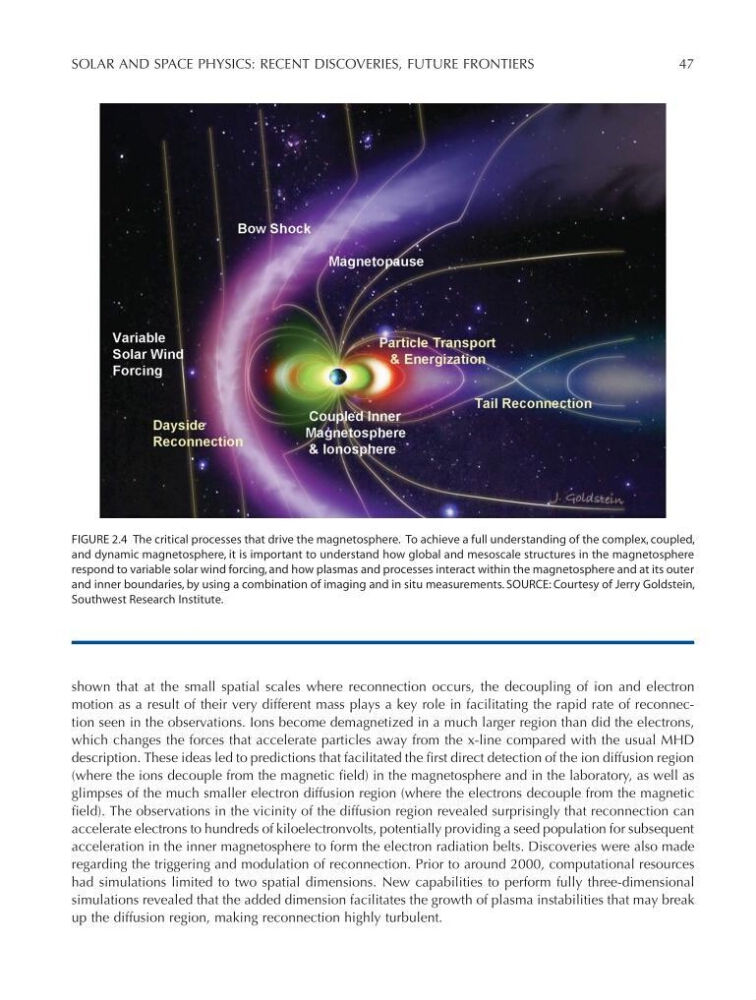
FIGURE 2.4 The critical processes that drive the magnetosphere. To achieve a full understanding of the complex, coupled,
and dynamic magnetosphere, it is important to understand how global and mesoscale structures in the magnetosphere
respond to variable solar wind forcing, and how plasmas and processes interact within the magnetosphere and at its outer
and inner boundaries, by using a combination of imaging and in situ measurements. SOURCE: Courtesy of Jerry Goldstein,
Southwest Research Institute.
Figure 2-4 and 9-9
Solar and Space Physics: A Science for a Technological Society
SOLAR AND SPACE PHYSICS: RECENT DISCOVERIES, FUTURE FRONTIERS
47
shown that at the small spatial scales where reconnection occurs, the decoupling of ion and electron
motion as a result of their very different mass plays a key role in facilitating the rapid rate of reconnection seen in the observations. Ions become demagnetized in a much larger region than did the electrons,
which changes the forces that accelerate particles away from the x-line compared with the usual MHD
description. These ideas led to predictions that facilitated the first direct detection of the ion diffusion region
(where the ions decouple from the magnetic field) in the magnetosphere and in the laboratory, as well as
glimpses of the much smaller electron diffusion region (where the electrons decouple from the magnetic
field). The observations in the vicinity of the diffusion region revealed surprisingly that reconnection can
accelerate electrons to hundreds of kiloelectronvolts, potentially providing a seed population for subsequent
acceleration in the inner magnetosphere to form the electron radiation belts. Discoveries were also made
regarding the triggering and modulation of reconnection. Prior to around 2000, computational resources
had simulations limited to two spatial dimensions. New capabilities to perform fully three-dimensional
simulations revealed that the added dimension facilitates the growth of plasma instabilities that may break
up the diffusion region, making reconnection highly turbulent.
FIGURE 2.4 The critical processes that drive the magnetosphere. To achieve a full understanding of the complex, coupled,
and dynamic magnetosphere, it is important to understand how global and mesoscale structures in the magnetosphere
respond to variable solar wind forcing, and how plasmas and processes interact within the magnetosphere and at its outer
and inner boundaries, by using a combination of imaging and in situ measurements. SOURCE: Courtesy of Jerry Goldstein,
Southwest Research Institute.
Figure 2-4 and 9-9