

Copyright © National Academy of Sciences. All rights reserved.
Solar and Space Physics: A Science for a Technological Society
248
SOLAR AND SPACE PHYSICS: A SCIENCE FOR A TECHNOLOGICAL SOCIETY
and regional context could be used to complement a reduced payload, in particular to help understand
why certain energy inputs result in particular outflow rates.
Table 9.3 summarizes the contributions MISTE would make to the SWMI critical science goals. The
SWMI panel believes that these contributions would enable great progress toward the applicable objectives, but in recognition of probable budget constraints over the coming decade, the panel developed the
following SWMI imperative:
SWMI Imperative: If resources permit, initiate a strategic mission like MISTE to simultaneously measure
the inflow of energy to the upper atmosphere and the response of the ionosphere-thermosphere system to
this input, in particular the outflow back to the magnetosphere.
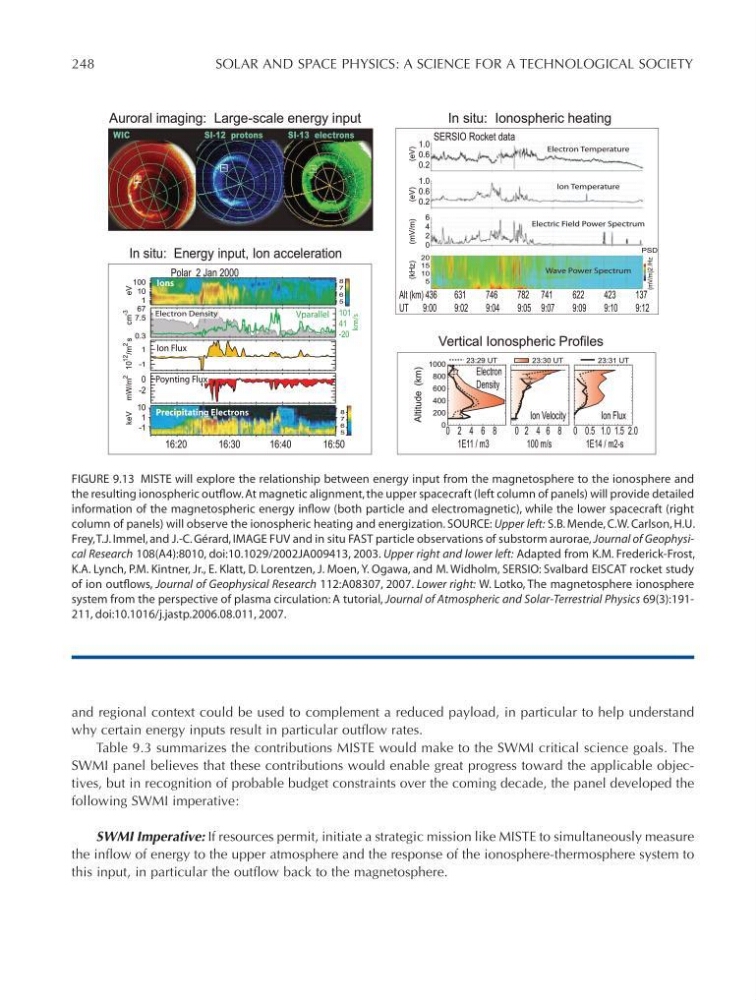
FIGURE 9.13 MISTE will explore the relationship between energy input from the magnetosphere to the ionosphere and
the resulting ionospheric outflow. At magnetic alignment, the upper spacecraft (left column of panels) will provide detailed
information of the magnetospheric energy inflow (both particle and electromagnetic), while the lower spacecraft (right
column of panels) will observe the ionospheric heating and energization. SOURCE: Upper left: S.B. Mende, C.W. Carlson, H.U.
Frey, T.J. Immel, and J.-C. Gérard, IMAGE FUV and in situ FAST particle observations of substorm aurorae, Journal of Geophysical Research 108(A4):8010, doi:10.1029/2002JA009413, 2003. Upper right and lower left: Adapted from K.M. Frederick-Frost,
K.A. Lynch, P.M. Kintner, Jr., E. Klatt, D. Lorentzen, J. Moen, Y. Ogawa, and M. Widholm, SERSIO: Svalbard EISCAT rocket study
of ion outflows, Journal of Geophysical Research 112:A08307, 2007. Lower right: W. Lotko, The magnetosphere ionosphere
system from the perspective of plasma circulation: A tutorial, Journal of Atmospheric and Solar-Terrestrial Physics 69(3):191211, doi:10.1016/j.jastp.2006.08.011, 2007.
MISTE will resolve energy input, heating, and outflow.
Auroral imaging: Large-scale energy input
WIC
SI-12 protons
SI-13 electrons
In situ: Energy input, Ion acceleration
km/s
Ion Flux
Precipitating Electrons
Ions
Vparallel
Polar 2 Jan 2000
16:20
16:30
16:40
16:50
keV mW/m 10 /m s
cm
eV
2
12 2
-3
100
10
1
67
7.5
0.3
101
41
-20
8
7
6
5
8
7
6
5
1
-1
0
-2
10
1
-1
Electron Density
In situ: Ionospheric heating
Vertical Ionospheric Profiles
(kHz)
(mV/m)
(eV)
(eV)
Alt (km) 436
631
746
782 741
622
423
137
UT 9:00
9:02
9:04
9:05 9:07
9:09
9:10
9:12
1.0
0.6
0.2
1.0
0.6
0.2
6
4
2
0
20
15
10
5
PSD
(mV/m)2 /Hz
SERSIO Rocket data
Electron Temperature
Ion Temperature
Electric Field Power Spectrum
Wave Power Spectrum
0 2 4 6 8
0 2 4 6 8 0 0.5 1.0 1.5 2.0
1E11 / m3
100 m/s
1E14 / m2-s
Altitude (km)
1000
800
600
400
200
0
Electron
Density
Ion Velocity
Ion Flux
23:29 UT
23:30 UT
23:31 UT
Poynting Flux
Figure 9-13
Solar and Space Physics: A Science for a Technological Society
248
SOLAR AND SPACE PHYSICS: A SCIENCE FOR A TECHNOLOGICAL SOCIETY
and regional context could be used to complement a reduced payload, in particular to help understand
why certain energy inputs result in particular outflow rates.
Table 9.3 summarizes the contributions MISTE would make to the SWMI critical science goals. The
SWMI panel believes that these contributions would enable great progress toward the applicable objectives, but in recognition of probable budget constraints over the coming decade, the panel developed the
following SWMI imperative:
SWMI Imperative: If resources permit, initiate a strategic mission like MISTE to simultaneously measure
the inflow of energy to the upper atmosphere and the response of the ionosphere-thermosphere system to
this input, in particular the outflow back to the magnetosphere.
FIGURE 9.13 MISTE will explore the relationship between energy input from the magnetosphere to the ionosphere and
the resulting ionospheric outflow. At magnetic alignment, the upper spacecraft (left column of panels) will provide detailed
information of the magnetospheric energy inflow (both particle and electromagnetic), while the lower spacecraft (right
column of panels) will observe the ionospheric heating and energization. SOURCE: Upper left: S.B. Mende, C.W. Carlson, H.U.
Frey, T.J. Immel, and J.-C. Gérard, IMAGE FUV and in situ FAST particle observations of substorm aurorae, Journal of Geophysical Research 108(A4):8010, doi:10.1029/2002JA009413, 2003. Upper right and lower left: Adapted from K.M. Frederick-Frost,
K.A. Lynch, P.M. Kintner, Jr., E. Klatt, D. Lorentzen, J. Moen, Y. Ogawa, and M. Widholm, SERSIO: Svalbard EISCAT rocket study
of ion outflows, Journal of Geophysical Research 112:A08307, 2007. Lower right: W. Lotko, The magnetosphere ionosphere
system from the perspective of plasma circulation: A tutorial, Journal of Atmospheric and Solar-Terrestrial Physics 69(3):191211, doi:10.1016/j.jastp.2006.08.011, 2007.
MISTE will resolve energy input, heating, and outflow.
Auroral imaging: Large-scale energy input
WIC
SI-12 protons
SI-13 electrons
In situ: Energy input, Ion acceleration
km/s
Ion Flux
Precipitating Electrons
Ions
Vparallel
Polar 2 Jan 2000
16:20
16:30
16:40
16:50
keV mW/m 10 /m s
cm
eV
2
12 2
-3
100
10
1
67
7.5
0.3
101
41
-20
8
7
6
5
8
7
6
5
1
-1
0
-2
10
1
-1
Electron Density
In situ: Ionospheric heating
Vertical Ionospheric Profiles
(kHz)
(mV/m)
(eV)
(eV)
Alt (km) 436
631
746
782 741
622
423
137
UT 9:00
9:02
9:04
9:05 9:07
9:09
9:10
9:12
1.0
0.6
0.2
1.0
0.6
0.2
6
4
2
0
20
15
10
5
PSD
(mV/m)2 /Hz
SERSIO Rocket data
Electron Temperature
Ion Temperature
Electric Field Power Spectrum
Wave Power Spectrum
0 2 4 6 8
0 2 4 6 8 0 0.5 1.0 1.5 2.0
1E11 / m3
100 m/s
1E14 / m2-s
Altitude (km)
1000
800
600
400
200
0
Electron
Density
Ion Velocity
Ion Flux
23:29 UT
23:30 UT
23:31 UT
Poynting Flux
Figure 9-13