

Copyright © National Academy of Sciences. All rights reserved.
Solar and Space Physics: A Science for a Technological Society
REPORT OF THE PANEL ON ATMOSPHERE-IONOSPHERE-MAGNETOSPHERE INTERACTIONS
193
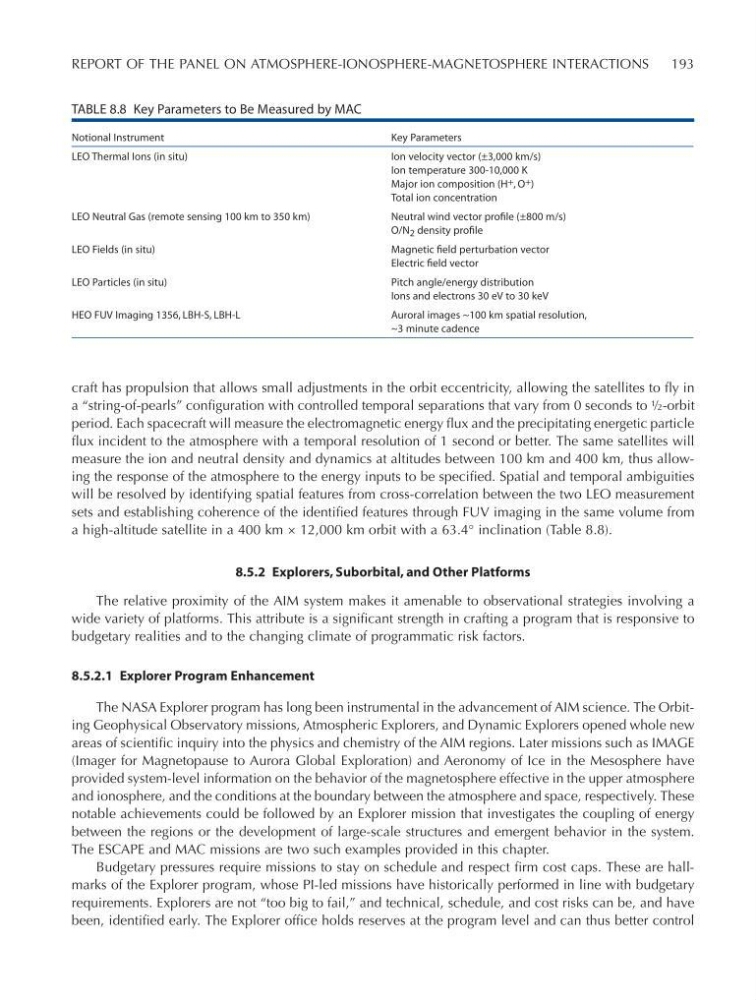
TABLE 8.8 Key Parameters to Be Measured by MAC
Notional Instrument
Key Parameters
LEO Thermal Ions (in situ)
Ion velocity vector (±3,000 km/s)
Ion temperature 300-10,000 K
Major ion composition (H + , O + )
Total ion concentration
LEO Neutral Gas (remote sensing 100 km to 350 km)
Neutral wind vector profile (±800 m/s)
O/N 2 density profile
LEO Fields (in situ)
Magnetic field perturbation vector
Electric field vector
LEO Particles (in situ)
Pitch angle/energy distribution
Ions and electrons 30 eV to 30 keV
HEO FUV Imaging 1356, LBH-S, LBH-L
Auroral images ~100 km spatial resolution,
~3 minute cadence
craft has propulsion that allows small adjustments in the orbit eccentricity, allowing the satellites to fly in
a “string-of-pearls” configuration with controlled temporal separations that vary from 0 seconds to ½-orbit
period. Each spacecraft will measure the electromagnetic energy flux and the precipitating energetic particle
flux incident to the atmosphere with a temporal resolution of 1 second or better. The same satellites will
measure the ion and neutral density and dynamics at altitudes between 100 km and 400 km, thus allowing the response of the atmosphere to the energy inputs to be specified. Spatial and temporal ambiguities
will be resolved by identifying spatial features from cross-correlation between the two LEO measurement
sets and establishing coherence of the identified features through FUV imaging in the same volume from
a high-altitude satellite in a 400 km × 12,000 km orbit with a 63.4° inclination (Table 8.8).
8.5.2 Explorers, Suborbital, and Other Platforms
The relative proximity of the AIM system makes it amenable to observational strategies involving a
wide variety of platforms. This attribute is a significant strength in crafting a program that is responsive to
budgetary realities and to the changing climate of programmatic risk factors.
8.5.2.1 Explorer Program Enhancement
The NASA Explorer program has long been instrumental in the advancement of AIM science. The Orbiting Geophysical Observatory missions, Atmospheric Explorers, and Dynamic Explorers opened whole new
areas of scientific inquiry into the physics and chemistry of the AIM regions. Later missions such as IMAGE
(Imager for Magnetopause to Aurora Global Exploration) and Aeronomy of Ice in the Mesosphere have
provided system-level information on the behavior of the magnetosphere effective in the upper atmosphere
and ionosphere, and the conditions at the boundary between the atmosphere and space, respectively. These
notable achievements could be followed by an Explorer mission that investigates the coupling of energy
between the regions or the development of large-scale structures and emergent behavior in the system.
The ESCAPE and MAC missions are two such examples provided in this chapter.
Budgetary pressures require missions to stay on schedule and respect firm cost caps. These are hallmarks of the Explorer program, whose PI-led missions have historically performed in line with budgetary
requirements. Explorers are not “too big to fail,” and technical, schedule, and cost risks can be, and have
been, identified early. The Explorer office holds reserves at the program level and can thus better control
Solar and Space Physics: A Science for a Technological Society
REPORT OF THE PANEL ON ATMOSPHERE-IONOSPHERE-MAGNETOSPHERE INTERACTIONS
193
TABLE 8.8 Key Parameters to Be Measured by MAC
Notional Instrument
Key Parameters
LEO Thermal Ions (in situ)
Ion velocity vector (±3,000 km/s)
Ion temperature 300-10,000 K
Major ion composition (H + , O + )
Total ion concentration
LEO Neutral Gas (remote sensing 100 km to 350 km)
Neutral wind vector profile (±800 m/s)
O/N 2 density profile
LEO Fields (in situ)
Magnetic field perturbation vector
Electric field vector
LEO Particles (in situ)
Pitch angle/energy distribution
Ions and electrons 30 eV to 30 keV
HEO FUV Imaging 1356, LBH-S, LBH-L
Auroral images ~100 km spatial resolution,
~3 minute cadence
craft has propulsion that allows small adjustments in the orbit eccentricity, allowing the satellites to fly in
a “string-of-pearls” configuration with controlled temporal separations that vary from 0 seconds to ½-orbit
period. Each spacecraft will measure the electromagnetic energy flux and the precipitating energetic particle
flux incident to the atmosphere with a temporal resolution of 1 second or better. The same satellites will
measure the ion and neutral density and dynamics at altitudes between 100 km and 400 km, thus allowing the response of the atmosphere to the energy inputs to be specified. Spatial and temporal ambiguities
will be resolved by identifying spatial features from cross-correlation between the two LEO measurement
sets and establishing coherence of the identified features through FUV imaging in the same volume from
a high-altitude satellite in a 400 km × 12,000 km orbit with a 63.4° inclination (Table 8.8).
8.5.2 Explorers, Suborbital, and Other Platforms
The relative proximity of the AIM system makes it amenable to observational strategies involving a
wide variety of platforms. This attribute is a significant strength in crafting a program that is responsive to
budgetary realities and to the changing climate of programmatic risk factors.
8.5.2.1 Explorer Program Enhancement
The NASA Explorer program has long been instrumental in the advancement of AIM science. The Orbiting Geophysical Observatory missions, Atmospheric Explorers, and Dynamic Explorers opened whole new
areas of scientific inquiry into the physics and chemistry of the AIM regions. Later missions such as IMAGE
(Imager for Magnetopause to Aurora Global Exploration) and Aeronomy of Ice in the Mesosphere have
provided system-level information on the behavior of the magnetosphere effective in the upper atmosphere
and ionosphere, and the conditions at the boundary between the atmosphere and space, respectively. These
notable achievements could be followed by an Explorer mission that investigates the coupling of energy
between the regions or the development of large-scale structures and emergent behavior in the system.
The ESCAPE and MAC missions are two such examples provided in this chapter.
Budgetary pressures require missions to stay on schedule and respect firm cost caps. These are hallmarks of the Explorer program, whose PI-led missions have historically performed in line with budgetary
requirements. Explorers are not “too big to fail,” and technical, schedule, and cost risks can be, and have
been, identified early. The Explorer office holds reserves at the program level and can thus better control