

Copyright © National Academy of Sciences. All rights reserved.
Solar and Space Physics: A Science for a Technological Society
126
SOLAR AND SPACE PHYSICS: A SCIENCE FOR A TECHNOLOGICAL SOCIETY
proper cadence, within a budget profile that should be attainable. The recommended program addresses in
a cost-effective manner many of the most important and interesting science objectives, but the anticipated
budget significantly constrains what can be accomplished. Built on top of the existing research foundation, the core program recommended here ensures that a proper distribution of resources is achieved. In
particular, it restores a balance between small, medium, and large missions.
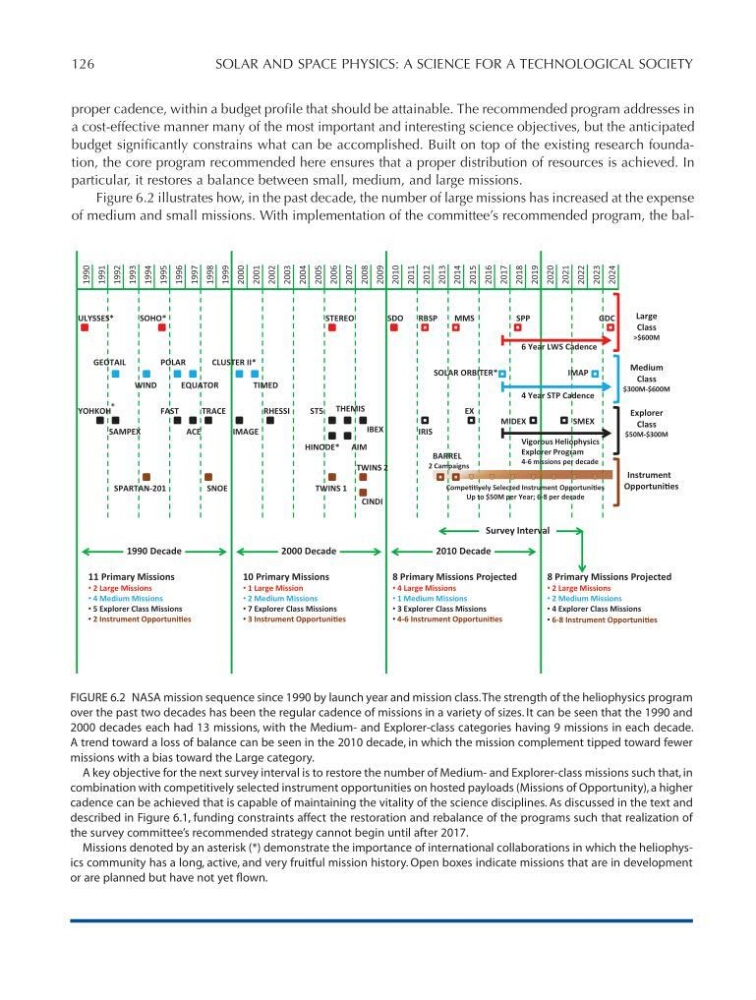
Figure 6.2 illustrates how, in the past decade, the number of large missions has increased at the expense
of medium and small missions. With implementation of the committee’s recommended program, the balFIGURE 6.2 NASA mission sequence since 1990 by launch year and mission class. The strength of the heliophysics program
over the past two decades has been the regular cadence of missions in a variety of sizes. It can be seen that the 1990 and
2000 decades each had 13 missions, with the Medium- and Explorer-class categories having 9 missions in each decade.
A trend toward a loss of balance can be seen in the 2010 decade, in which the mission complement tipped toward fewer
missions with a bias toward the Large category.
A key objective for the next survey interval is to restore the number of Medium- and Explorer-class missions such that, in
combination with competitively selected instrument opportunities on hosted payloads (Missions of Opportunity), a higher
cadence can be achieved that is capable of maintaining the vitality of the science disciplines. As discussed in the text and
described in Figure 6.1, funding constraints affect the restoration and rebalance of the programs such that realization of
the survey committee’s recommended strategy cannot begin until after 2017.
Missions denoted by an asterisk (*) demonstrate the importance of international collaborations in which the heliophysics community has a long, active, and very fruitful mission history. Open boxes indicate missions that are in development
or are planned but have not yet flown.
1990
1991
1992
1993
1994
1995
1996
1997
1998
1999
2000
2001
2002
2003
2004
2005
2006
2007
2008
2009
2010
2011
2012
2013
2014
2015
2016
2017
2018
2019
2020
2021
2022
2023
2024
*
ULYSSES*
SOHO*
STEREO
SDO
RBSP
MMS
SPP
GDC
GEOTAIL
WIND
POLAR
EQUATOR
CLUSTER II*
TIMED
SOLAR ORBITER*
IMAP
YOHKOH
SAMPEX
FAST
ACE
TRACE
IMAGE
RHESSI
ST5 THEMIS
IBEX
HINODE* AIM
IRIS
EX
MIDEX
SMEX
SPARTAN-201
SNOE
TWINS 1
TWINS 2
CINDI
11 Primary Missions
• 2 Large Missions
• 4 Medium Missions
• 5 Explorer Class Missions
• 2 Instrument OpportuniƟes
10 Primary Missions
• 1 Large Mission
• 2 Medium Missions
• 7 Explorer Class Missions
• 3 Instrument OpportuniƟes
8 Primary Missions Projected
• 4 Large Missions
• 1 Medium Missions
• 3 Explorer Class Missions
• 4-6 Instrument OpportuniƟes
1990 Decade
2000 Decade
2010 Decade
Large
Class
>$600M
Medium
Class
$300M-$600M
Explorer
Class
$50M-$300M
Instrument
OpportuniƟes
Survey Interval
8 Primary Missions Projected
• 2 Large Missions
• 2 Medium Missions
• 4 Explorer Class Missions
• 6-8 Instrument OpportuniƟes
6 Year LWS Cadence
4 Year STP Cadence
Vigorous Heliophysics
Explorer Program
4-6 missions per decade
CompeƟƟvely Selected Instrument OpportuniƟes
Up to $50M per Year; 6-8 per decade
BARREL
2 Campaigns
Figure 6-2
Solar and Space Physics: A Science for a Technological Society
126
SOLAR AND SPACE PHYSICS: A SCIENCE FOR A TECHNOLOGICAL SOCIETY
proper cadence, within a budget profile that should be attainable. The recommended program addresses in
a cost-effective manner many of the most important and interesting science objectives, but the anticipated
budget significantly constrains what can be accomplished. Built on top of the existing research foundation, the core program recommended here ensures that a proper distribution of resources is achieved. In
particular, it restores a balance between small, medium, and large missions.
Figure 6.2 illustrates how, in the past decade, the number of large missions has increased at the expense
of medium and small missions. With implementation of the committee’s recommended program, the balFIGURE 6.2 NASA mission sequence since 1990 by launch year and mission class. The strength of the heliophysics program
over the past two decades has been the regular cadence of missions in a variety of sizes. It can be seen that the 1990 and
2000 decades each had 13 missions, with the Medium- and Explorer-class categories having 9 missions in each decade.
A trend toward a loss of balance can be seen in the 2010 decade, in which the mission complement tipped toward fewer
missions with a bias toward the Large category.
A key objective for the next survey interval is to restore the number of Medium- and Explorer-class missions such that, in
combination with competitively selected instrument opportunities on hosted payloads (Missions of Opportunity), a higher
cadence can be achieved that is capable of maintaining the vitality of the science disciplines. As discussed in the text and
described in Figure 6.1, funding constraints affect the restoration and rebalance of the programs such that realization of
the survey committee’s recommended strategy cannot begin until after 2017.
Missions denoted by an asterisk (*) demonstrate the importance of international collaborations in which the heliophysics community has a long, active, and very fruitful mission history. Open boxes indicate missions that are in development
or are planned but have not yet flown.
1990
1991
1992
1993
1994
1995
1996
1997
1998
1999
2000
2001
2002
2003
2004
2005
2006
2007
2008
2009
2010
2011
2012
2013
2014
2015
2016
2017
2018
2019
2020
2021
2022
2023
2024
*
ULYSSES*
SOHO*
STEREO
SDO
RBSP
MMS
SPP
GDC
GEOTAIL
WIND
POLAR
EQUATOR
CLUSTER II*
TIMED
SOLAR ORBITER*
IMAP
YOHKOH
SAMPEX
FAST
ACE
TRACE
IMAGE
RHESSI
ST5 THEMIS
IBEX
HINODE* AIM
IRIS
EX
MIDEX
SMEX
SPARTAN-201
SNOE
TWINS 1
TWINS 2
CINDI
11 Primary Missions
• 2 Large Missions
• 4 Medium Missions
• 5 Explorer Class Missions
• 2 Instrument OpportuniƟes
10 Primary Missions
• 1 Large Mission
• 2 Medium Missions
• 7 Explorer Class Missions
• 3 Instrument OpportuniƟes
8 Primary Missions Projected
• 4 Large Missions
• 1 Medium Missions
• 3 Explorer Class Missions
• 4-6 Instrument OpportuniƟes
1990 Decade
2000 Decade
2010 Decade
Large
Class
>$600M
Medium
Class
$300M-$600M
Explorer
Class
$50M-$300M
Instrument
OpportuniƟes
Survey Interval
8 Primary Missions Projected
• 2 Large Missions
• 2 Medium Missions
• 4 Explorer Class Missions
• 6-8 Instrument OpportuniƟes
6 Year LWS Cadence
4 Year STP Cadence
Vigorous Heliophysics
Explorer Program
4-6 missions per decade
CompeƟƟvely Selected Instrument OpportuniƟes
Up to $50M per Year; 6-8 per decade
BARREL
2 Campaigns
Figure 6-2