

Chapitre 7
209
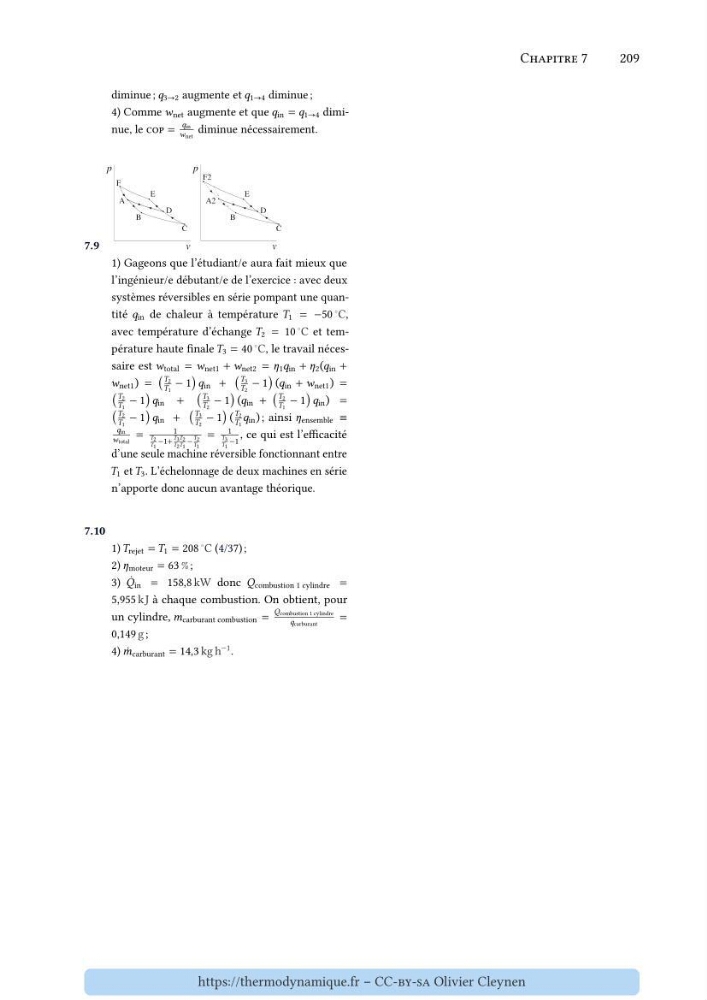
diminue ; í µí± 3→2 augmente et í µí± 1→4 diminue ;
4) Comme í µí±¤ net augmente et que í µí± in = í µí± 1→4 diminue, le cop =
í µí± in
í µí±¤ net
diminue nécessairement.
7.9
1) Gageons que l’étudiant/e aura fait mieux que
l’ingénieur/e débutant/e de l’exercice : avec deux
systèmes réversibles en série pompant une quantité í µí± in de chaleur à température í µí± 1 = −50
◦ C,
avec température d’échange í µí± 2 = 10
◦ C et température haute finale í µí± 3 = 40
◦ C, le travail nécessaire est í µí±¤ total = í µí±¤ net1 + í µí±¤ net2 = í µí¼ 1 í µí± in + í µí¼ 2 (í µí± in +
í µí±¤ net1 ) = (
í µí± 2
í µí± 1
− 1 ) í µí± in + (
í µí± 3
í µí± 2
− 1 ) (í µí± in + í µí±¤ net1 ) =
(
í µí± 2
í µí± 1
− 1 ) í µí± in + (
í µí± 3
í µí± 2
− 1 ) (í µí± in + (
í µí± 2
í µí± 1
− 1 ) í µí± in ) =
(
í µí± 2
í µí± 1
− 1 ) í µí± in + (
í µí± 3
í µí± 2
− 1 ) (
í µí± 2
í µí± 1
í µí± in ) ; ainsi í µí¼ ensemble ≡
í µí± in
í µí±¤ total
=
1
í µí± 2
í µí± 1
−1+
í µí± 3 í µí± 2
í µí± 2 í µí± 1
−
í µí± 2
í µí± 1
=
1
í µí± 3
í µí± 1
−1
, ce qui est l’efficacité
d’une seule machine réversible fonctionnant entre
í µí± 1 et í µí± 3 . L’échelonnage de deux machines en série
n’apporte donc aucun avantage théorique.
7.10
1) í µí± rejet = í µí± 1 = 208
◦ C (4/37) ;
2) í µí¼ moteur = 63 % ;
3) ̇
í µí± in = 158,8 kW donc í µí± combustion 1 cylindre =
5,955 kJ à chaque combustion. On obtient, pour
un cylindre, í µí± carburant combustion =
í µí± combustion 1 cylindre
í µí± carburant
=
0,149 g ;
4) ̇
í µí± carburant = 14,3 kg h
−1 .
https://thermodynamique.fr – CC-by-sa Olivier Cleynen
209
diminue ; í µí± 3→2 augmente et í µí± 1→4 diminue ;
4) Comme í µí±¤ net augmente et que í µí± in = í µí± 1→4 diminue, le cop =
í µí± in
í µí±¤ net
diminue nécessairement.
7.9
1) Gageons que l’étudiant/e aura fait mieux que
l’ingénieur/e débutant/e de l’exercice : avec deux
systèmes réversibles en série pompant une quantité í µí± in de chaleur à température í µí± 1 = −50
◦ C,
avec température d’échange í µí± 2 = 10
◦ C et température haute finale í µí± 3 = 40
◦ C, le travail nécessaire est í µí±¤ total = í µí±¤ net1 + í µí±¤ net2 = í µí¼ 1 í µí± in + í µí¼ 2 (í µí± in +
í µí±¤ net1 ) = (
í µí± 2
í µí± 1
− 1 ) í µí± in + (
í µí± 3
í µí± 2
− 1 ) (í µí± in + í µí±¤ net1 ) =
(
í µí± 2
í µí± 1
− 1 ) í µí± in + (
í µí± 3
í µí± 2
− 1 ) (í µí± in + (
í µí± 2
í µí± 1
− 1 ) í µí± in ) =
(
í µí± 2
í µí± 1
− 1 ) í µí± in + (
í µí± 3
í µí± 2
− 1 ) (
í µí± 2
í µí± 1
í µí± in ) ; ainsi í µí¼ ensemble ≡
í µí± in
í µí±¤ total
=
1
í µí± 2
í µí± 1
−1+
í µí± 3 í µí± 2
í µí± 2 í µí± 1
−
í µí± 2
í µí± 1
=
1
í µí± 3
í µí± 1
−1
, ce qui est l’efficacité
d’une seule machine réversible fonctionnant entre
í µí± 1 et í µí± 3 . L’échelonnage de deux machines en série
n’apporte donc aucun avantage théorique.
7.10
1) í µí± rejet = í µí± 1 = 208
◦ C (4/37) ;
2) í µí¼ moteur = 63 % ;
3) ̇
í µí± in = 158,8 kW donc í µí± combustion 1 cylindre =
5,955 kJ à chaque combustion. On obtient, pour
un cylindre, í µí± carburant combustion =
í µí± combustion 1 cylindre
í µí± carburant
=
0,149 g ;
4) ̇
í µí± carburant = 14,3 kg h
−1 .
https://thermodynamique.fr – CC-by-sa Olivier Cleynen