

112
Chapitre 4
Solutions des exercices
4.1 1) í µí±£ 1 =
í µí± 1
í µí± 1
= 0,4 m
3 kg
−1 ; í µí¼ 1 =
1
í µí±£ 1
= 2,5 kg m
−3
2) í µí± 1 =
í µí± í µí± 1
í µí±£ 1
= 2,103 bar.
4.2 1) í µí± 1 =
í µí± 1 í µí± 1
í µí± í µí± 1
= 3,006 kg ; í µí±£ 1 = 0,3991 m
3 kg
−1 ;
í µí¼ 1 = 2,505 kg m
−3 ; í µí± 1 = 2 bar ;
í µí± 2 = í µí± 1 ; í µí±£ 1 = í µí±£ 2 ; í µí¼ 1 = í µí¼ 2 ; í µí± 2 =
í µí± í µí± 2
í µí±£ 2
= 2,395 bar.
2) í µí± 3 = 2,51 kg, ainsi í µí± échap. = í µí± 3 − í µí± 2 0,4959 kg ;
3) í µí± 4 =
í µí± í µí± 4 í µí± 4
í µí± 4
= 1,67 bar.
4.3 Δí µí±¢ = í µí± í µí±£ í µí± 3 − í µí±¢ 1 = −622 kJ kg
−1 (se calcule simplement avec la température finale et ne dépend pas
de l’évolution ou des états intermédiaires).
4.4 í µí±¤ 1→2 = Δℎ = í µí± í µí± Δí µí± = +85,4 kJ kg
−1 (3/15 & 4/13)
4.5 1) Avec l’équation 3/15, í µí±¤ turbine = í µí± í µí± (í µí± B − í µí± A ) +
1
2 (í µí°¶
2
B − í µí°¶
2
A ) − í µí± A→B = −275 kJ kg
−1
2) ̇
í µí± =
̇
í µí± turbine
í µí±¤ turbine
= 3,64 kg s
−1
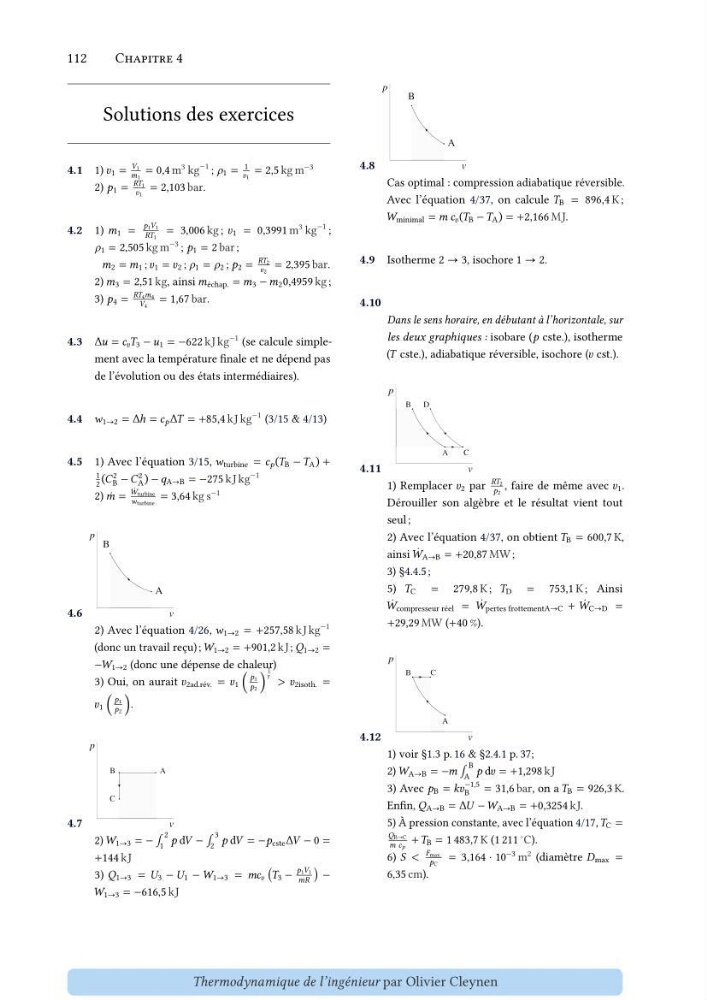
4.6
2) Avec l’équation 4/26, í µí±¤ 1→2 = +257,58 kJ kg
−1
(donc un travail reçu) ; í µí± 1→2 = +901,2 kJ ; í µí± 1→2 =
−í µí± 1→2 (donc une dépense de chaleur)
3) Oui, on aurait í µí±£ 2ad.rév. = í µí±£ 1 (
í µí± 1
í µí± 2 )
1
í µí»¾
> í µí±£ 2isoth. =
í µí±£ 1 (
í µí± 1
í µí± 2 ) .
4.7
2) í µí± 1→3 = − ∫
2
1
í µí± dí µí± − ∫
3
2
í µí± dí µí± = −í µí± cste Δí µí± − 0 =
+144 kJ
3) í µí± 1→3 = í µí± 3 − í µí± 1 − í µí± 1→3 = í µí±í µí± í µí±£ ( í µí± 3 −
í µí± 1 í µí± 1
í µí±í µí± ) −
í µí± 1→3 = −616,5 kJ
4.8
Cas optimal : compression adiabatique réversible.
Avec l’équation 4/37, on calcule í µí± B = 896,4 K ;
í µí± minimal = í µí± í µí± í µí±£ (í µí± B − í µí± A ) = +2,166 MJ.
4.9 Isotherme 2 → 3, isochore 1 → 2.
4.10
Dans le sens horaire, en débutant à l’horizontale, sur
les deux graphiques : isobare (í µí± cste.), isotherme
(í µí± cste.), adiabatique réversible, isochore (í µí±£ cst.).
4.11
1) Remplacer í µí±£ 2 par
í µí± í µí± 2
í µí± 2
, faire de même avec í µí±£ 1 .
Dérouiller son algèbre et le résultat vient tout
seul ;
2) Avec l’équation 4/37, on obtient í µí± B = 600,7 K,
ainsi ̇
í µí± A→B = +20,87 MW ;
3) §4.4.5 ;
5) í µí± C = 279,8 K ; í µí± D = 753,1 K ; Ainsi
̇
í µí± compresseur réel = ̇
í µí± pertes frottementA→C + ̇
í µí± C→D =
+29,29 MW (+40 %).
4.12
1) voir §1.3 p. 16 & §2.4.1 p. 37;
2) í µí± A→B = −í µí± ∫
B
A
í µí± dí µí±£ = +1,298 kJ
3) Avec í µí± B = í µí±í µí±£
−1,5
B
= 31,6 bar, on a í µí± B = 926,3 K.
Enfin, í µí± A→B = Δí µí± − í µí± A→B = +0,3254 kJ.
5) À pression constante, avec l’équation 4/17, í µí± C =
í µí± B→C
í µí± í µí± í µí±
+ í µí± B = 1 483,7 K (1 211
◦ C).
6) í µí± <
í µí°¹ max.
í µí± C
= 3,164 ⋅ 10
−3 m
2 (diamètre í µí°· max =
6,35 cm).
Thermodynamique de l’ingénieur par Olivier Cleynen
Chapitre 4
Solutions des exercices
4.1 1) í µí±£ 1 =
í µí± 1
í µí± 1
= 0,4 m
3 kg
−1 ; í µí¼ 1 =
1
í µí±£ 1
= 2,5 kg m
−3
2) í µí± 1 =
í µí± í µí± 1
í µí±£ 1
= 2,103 bar.
4.2 1) í µí± 1 =
í µí± 1 í µí± 1
í µí± í µí± 1
= 3,006 kg ; í µí±£ 1 = 0,3991 m
3 kg
−1 ;
í µí¼ 1 = 2,505 kg m
−3 ; í µí± 1 = 2 bar ;
í µí± 2 = í µí± 1 ; í µí±£ 1 = í µí±£ 2 ; í µí¼ 1 = í µí¼ 2 ; í µí± 2 =
í µí± í µí± 2
í µí±£ 2
= 2,395 bar.
2) í µí± 3 = 2,51 kg, ainsi í µí± échap. = í µí± 3 − í µí± 2 0,4959 kg ;
3) í µí± 4 =
í µí± í µí± 4 í µí± 4
í µí± 4
= 1,67 bar.
4.3 Δí µí±¢ = í µí± í µí±£ í µí± 3 − í µí±¢ 1 = −622 kJ kg
−1 (se calcule simplement avec la température finale et ne dépend pas
de l’évolution ou des états intermédiaires).
4.4 í µí±¤ 1→2 = Δℎ = í µí± í µí± Δí µí± = +85,4 kJ kg
−1 (3/15 & 4/13)
4.5 1) Avec l’équation 3/15, í µí±¤ turbine = í µí± í µí± (í µí± B − í µí± A ) +
1
2 (í µí°¶
2
B − í µí°¶
2
A ) − í µí± A→B = −275 kJ kg
−1
2) ̇
í µí± =
̇
í µí± turbine
í µí±¤ turbine
= 3,64 kg s
−1
4.6
2) Avec l’équation 4/26, í µí±¤ 1→2 = +257,58 kJ kg
−1
(donc un travail reçu) ; í µí± 1→2 = +901,2 kJ ; í µí± 1→2 =
−í µí± 1→2 (donc une dépense de chaleur)
3) Oui, on aurait í µí±£ 2ad.rév. = í µí±£ 1 (
í µí± 1
í µí± 2 )
1
í µí»¾
> í µí±£ 2isoth. =
í µí±£ 1 (
í µí± 1
í µí± 2 ) .
4.7
2) í µí± 1→3 = − ∫
2
1
í µí± dí µí± − ∫
3
2
í µí± dí µí± = −í µí± cste Δí µí± − 0 =
+144 kJ
3) í µí± 1→3 = í µí± 3 − í µí± 1 − í µí± 1→3 = í µí±í µí± í µí±£ ( í µí± 3 −
í µí± 1 í µí± 1
í µí±í µí± ) −
í µí± 1→3 = −616,5 kJ
4.8
Cas optimal : compression adiabatique réversible.
Avec l’équation 4/37, on calcule í µí± B = 896,4 K ;
í µí± minimal = í µí± í µí± í µí±£ (í µí± B − í µí± A ) = +2,166 MJ.
4.9 Isotherme 2 → 3, isochore 1 → 2.
4.10
Dans le sens horaire, en débutant à l’horizontale, sur
les deux graphiques : isobare (í µí± cste.), isotherme
(í µí± cste.), adiabatique réversible, isochore (í µí±£ cst.).
4.11
1) Remplacer í µí±£ 2 par
í µí± í µí± 2
í µí± 2
, faire de même avec í µí±£ 1 .
Dérouiller son algèbre et le résultat vient tout
seul ;
2) Avec l’équation 4/37, on obtient í µí± B = 600,7 K,
ainsi ̇
í µí± A→B = +20,87 MW ;
3) §4.4.5 ;
5) í µí± C = 279,8 K ; í µí± D = 753,1 K ; Ainsi
̇
í µí± compresseur réel = ̇
í µí± pertes frottementA→C + ̇
í µí± C→D =
+29,29 MW (+40 %).
4.12
1) voir §1.3 p. 16 & §2.4.1 p. 37;
2) í µí± A→B = −í µí± ∫
B
A
í µí± dí µí±£ = +1,298 kJ
3) Avec í µí± B = í µí±í µí±£
−1,5
B
= 31,6 bar, on a í µí± B = 926,3 K.
Enfin, í µí± A→B = Δí µí± − í µí± A→B = +0,3254 kJ.
5) À pression constante, avec l’équation 4/17, í µí± C =
í µí± B→C
í µí± í µí± í µí±
+ í µí± B = 1 483,7 K (1 211
◦ C).
6) í µí± <
í µí°¹ max.
í µí± C
= 3,164 ⋅ 10
−3 m
2 (diamètre í µí°· max =
6,35 cm).
Thermodynamique de l’ingénieur par Olivier Cleynen