

ForeSight
437
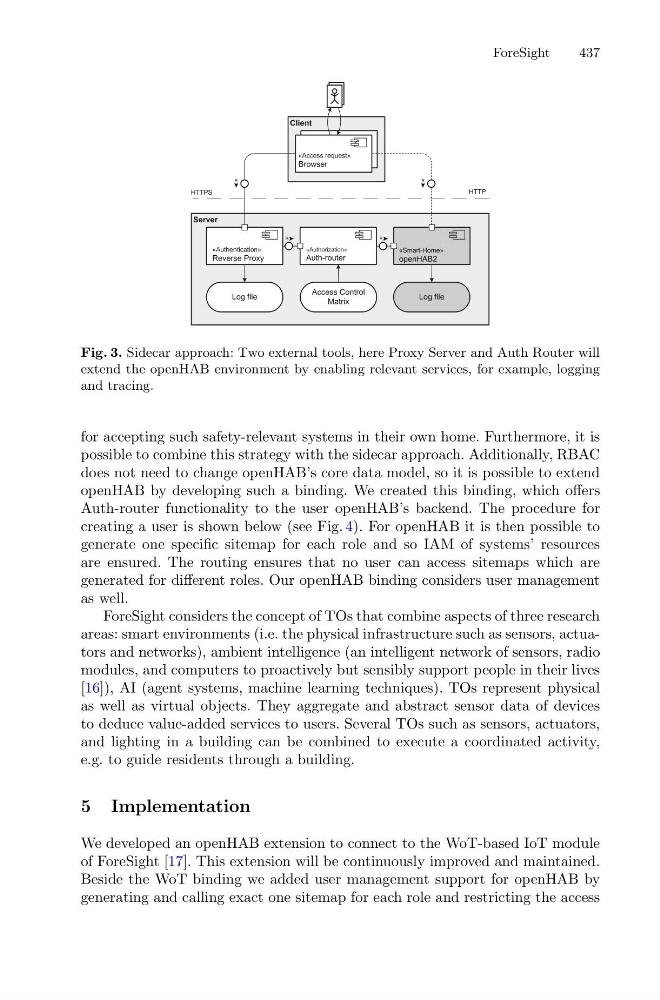
Fig. 3. Sidecar approach: Two external tools, here Proxy Server and Auth Router will
extend the openHAB environment by enabling relevant services, for example, logging
and tracing.
for accepting such safety-relevant systems in their own home. Furthermore, it is
possible to combine this strategy with the sidecar approach. Additionally, RBAC
does not need to change openHAB’s core data model, so it is possible to extend
openHAB by developing such a binding. We created this binding, which offers
Auth-router functionality to the user openHAB’s backend. The procedure for
creating a user is shown below (see Fig. 4). For openHAB it is then possible to
generate one specific sitemap for each role and so IAM of systems’ resources
are ensured. The routing ensures that no user can access sitemaps which are
generated for different roles. Our openHAB binding considers user management
as well.
ForeSight considers the concept of TOs that combine aspects of three research
areas: smart environments (i.e. the physical infrastructure such as sensors, actuators and networks), ambient intelligence (an intelligent network of sensors, radio
modules, and computers to proactively but sensibly support people in their lives
[16]), AI (agent systems, machine learning techniques). TOs represent physical
as well as virtual objects. They aggregate and abstract sensor data of devices
to deduce value-added services to users. Several TOs such as sensors, actuators,
and lighting in a building can be combined to execute a coordinated activity,
e.g. to guide residents through a building.
5 Implementation
We developed an openHAB extension to connect to the WoT-based IoT module
of ForeSight [17]. This extension will be continuously improved and maintained.
Beside the WoT binding we added user management support for openHAB by
generating and calling exact one sitemap for each role and restricting the access
437
Fig. 3. Sidecar approach: Two external tools, here Proxy Server and Auth Router will
extend the openHAB environment by enabling relevant services, for example, logging
and tracing.
for accepting such safety-relevant systems in their own home. Furthermore, it is
possible to combine this strategy with the sidecar approach. Additionally, RBAC
does not need to change openHAB’s core data model, so it is possible to extend
openHAB by developing such a binding. We created this binding, which offers
Auth-router functionality to the user openHAB’s backend. The procedure for
creating a user is shown below (see Fig. 4). For openHAB it is then possible to
generate one specific sitemap for each role and so IAM of systems’ resources
are ensured. The routing ensures that no user can access sitemaps which are
generated for different roles. Our openHAB binding considers user management
as well.
ForeSight considers the concept of TOs that combine aspects of three research
areas: smart environments (i.e. the physical infrastructure such as sensors, actuators and networks), ambient intelligence (an intelligent network of sensors, radio
modules, and computers to proactively but sensibly support people in their lives
[16]), AI (agent systems, machine learning techniques). TOs represent physical
as well as virtual objects. They aggregate and abstract sensor data of devices
to deduce value-added services to users. Several TOs such as sensors, actuators,
and lighting in a building can be combined to execute a coordinated activity,
e.g. to guide residents through a building.
5 Implementation
We developed an openHAB extension to connect to the WoT-based IoT module
of ForeSight [17]. This extension will be continuously improved and maintained.
Beside the WoT binding we added user management support for openHAB by
generating and calling exact one sitemap for each role and restricting the access