

4 Discussion
There are three potential ways to link older people with assistive technologies or smart
home technologies. The first one is to develop or innovate technologies as the initial
activity and then promote the technology to older people and finally evaluate the result
of impact. However, technologies that are acquired in ways that are not congruent with
seniors’ personal needs and circumstances run a higher risk of proving to be ineffective
or inappropriate resulting in poor levels of adoption [22]. The second way is to focus
on older people’s attitude and adoption upon assistive technologies - to optimize user
acceptance towards products by identifying and eliminating the barriers of adoption.
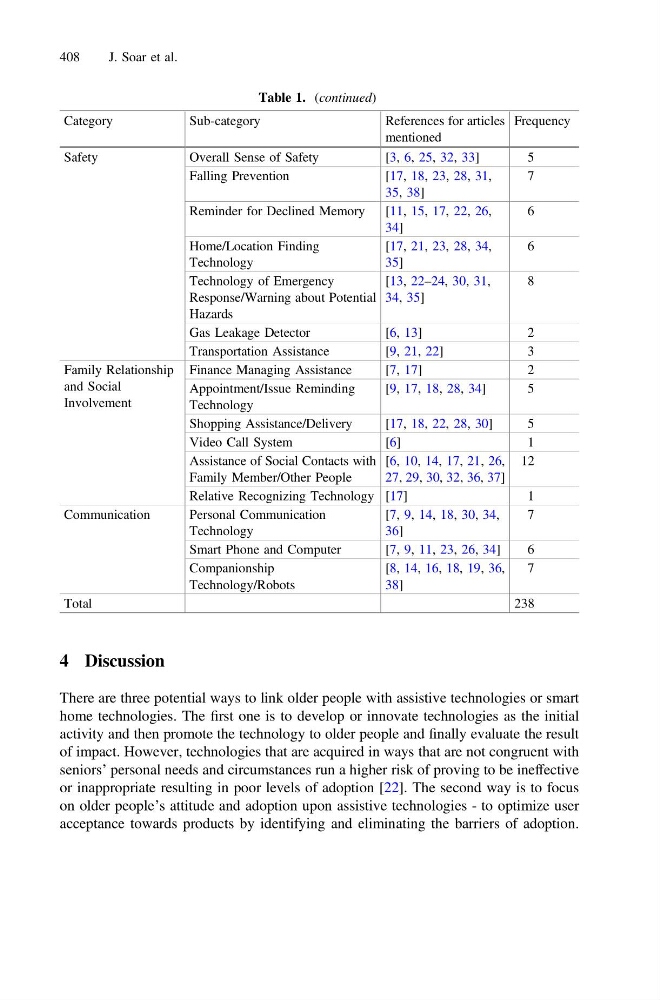
Table 1. (continued)
Category
Sub-category
References for articles
mentioned
Frequency
Safety
Overall Sense of Safety
[3, 6, 25, 32, 33]
5
Falling Prevention
[17, 18, 23, 28, 31,
35, 38]
7
Reminder for Declined Memory
[11, 15, 17, 22, 26,
34]
6
Home/Location Finding
Technology
[17, 21, 23, 28, 34,
35]
6
Technology of Emergency
Response/Warning about Potential
Hazards
[13, 22–24, 30, 31,
34, 35]
8
Gas Leakage Detector
[6, 13]
2
Transportation Assistance
[9, 21, 22]
3
Family Relationship
and Social
Involvement
Finance Managing Assistance
[7, 17]
2
Appointment/Issue Reminding
Technology
[9, 17, 18, 28, 34]
5
Shopping Assistance/Delivery
[17, 18, 22, 28, 30]
5
Video Call System
[6]
1
Assistance of Social Contacts with
Family Member/Other People
[6, 10, 14, 17, 21, 26,
27, 29, 30, 32, 36, 37]
12
Relative Recognizing Technology [17]
1
Communication
Personal Communication
Technology
[7, 9, 14, 18, 30, 34,
36]
7
Smart Phone and Computer
[7, 9, 11, 23, 26, 34]
6
Companionship
Technology/Robots
[8, 14, 16, 18, 19, 36,
38]
7
Total
238
408
J. Soar et al.
There are three potential ways to link older people with assistive technologies or smart
home technologies. The first one is to develop or innovate technologies as the initial
activity and then promote the technology to older people and finally evaluate the result
of impact. However, technologies that are acquired in ways that are not congruent with
seniors’ personal needs and circumstances run a higher risk of proving to be ineffective
or inappropriate resulting in poor levels of adoption [22]. The second way is to focus
on older people’s attitude and adoption upon assistive technologies - to optimize user
acceptance towards products by identifying and eliminating the barriers of adoption.
Table 1. (continued)
Category
Sub-category
References for articles
mentioned
Frequency
Safety
Overall Sense of Safety
[3, 6, 25, 32, 33]
5
Falling Prevention
[17, 18, 23, 28, 31,
35, 38]
7
Reminder for Declined Memory
[11, 15, 17, 22, 26,
34]
6
Home/Location Finding
Technology
[17, 21, 23, 28, 34,
35]
6
Technology of Emergency
Response/Warning about Potential
Hazards
[13, 22–24, 30, 31,
34, 35]
8
Gas Leakage Detector
[6, 13]
2
Transportation Assistance
[9, 21, 22]
3
Family Relationship
and Social
Involvement
Finance Managing Assistance
[7, 17]
2
Appointment/Issue Reminding
Technology
[9, 17, 18, 28, 34]
5
Shopping Assistance/Delivery
[17, 18, 22, 28, 30]
5
Video Call System
[6]
1
Assistance of Social Contacts with
Family Member/Other People
[6, 10, 14, 17, 21, 26,
27, 29, 30, 32, 36, 37]
12
Relative Recognizing Technology [17]
1
Communication
Personal Communication
Technology
[7, 9, 14, 18, 30, 34,
36]
7
Smart Phone and Computer
[7, 9, 11, 23, 26, 34]
6
Companionship
Technology/Robots
[8, 14, 16, 18, 19, 36,
38]
7
Total
238
408
J. Soar et al.