

principle component analysis (PCA) and Kalman filtering [2, 8]. The extraction of
features is one of the essential steps of computer-aided ECG diagnostic solutions.
Certain extensively used ECG signal feature extraction approaches are the “Wavelet
Transform” (WT), “Discrete Cosine Transform” (DCT) and “Short Time Fourier
Transform” (STFT). The pertinent signal features are afterward employed for the
classification purpose. Techniques adopted for this purpose are the “Naïve Bias”, the
“K-Nearest Neighbor” (KNN), the “Artificial Neural Networks” (ANN) and the
“Support Vector Machine” (SVM).
Classical ECG systems are by definition time-invariant [3, 4]. This can lead to
inefficient use of system resources and energy consumption [2, 5]. For such signals, an
effective solution can be achieved by diminishing the rates of data collection, processing and transmission [5]. In this framework, multirate signal processing tactics
have been employed [6]. The subsampling is intelligently employed in the suggested
framework. It allows overcoming the downsides of the counter fix rate ECG processing
approaches [3, 4]. Therefore, it allows realizing a simplified and power efficient ECG
wireless implant with a real-time compression of data.
2 Materials and Methods
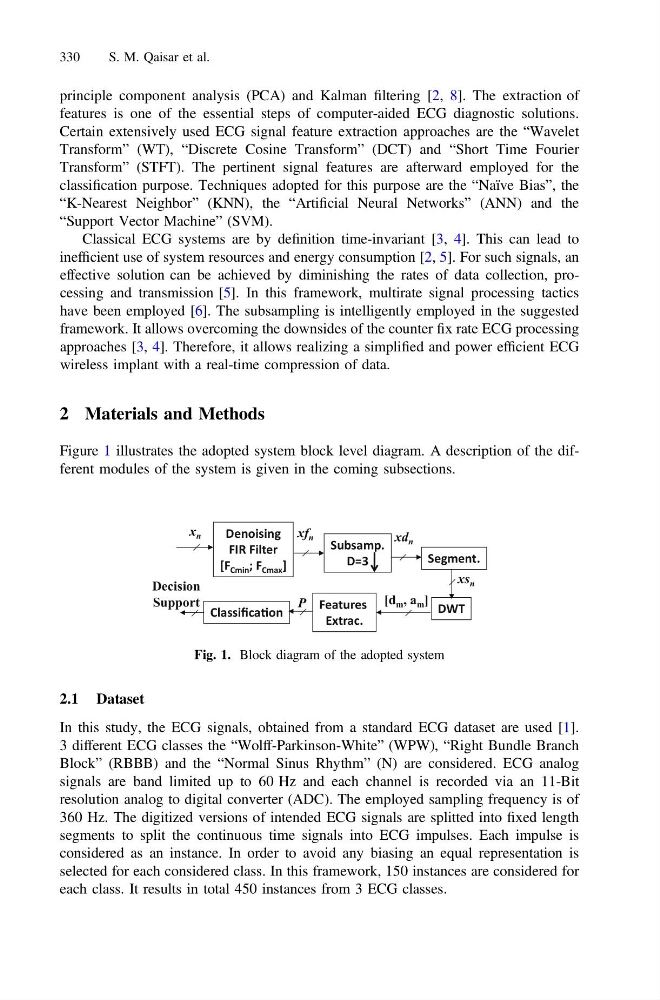
Figure 1 illustrates the adopted system block level diagram. A description of the different modules of the system is given in the coming subsections.
2.1 Dataset
In this study, the ECG signals, obtained from a standard ECG dataset are used [1].
3 different ECG classes the “Wolff-Parkinson-White” (WPW), “Right Bundle Branch
Block” (RBBB) and the “Normal Sinus Rhythm” (N) are considered. ECG analog
signals are band limited up to 60 Hz and each channel is recorded via an 11-Bit
resolution analog to digital converter (ADC). The employed sampling frequency is of
360 Hz. The digitized versions of intended ECG signals are splitted into fixed length
segments to split the continuous time signals into ECG impulses. Each impulse is
considered as an instance. In order to avoid any biasing an equal representation is
selected for each considered class. In this framework, 150 instances are considered for
each class. It results in total 450 instances from 3 ECG classes.
Denoising
FIR Filter
[F Cmin ; F Cmax ]
Segment.
P
DWT
Features
Extrac.
[d m , a m ]
Subsamp.
D=3
x n
xf n
ClassificaƟon
xd n
xs n
Decision
Support
Fig. 1. Block diagram of the adopted system
330
S. M. Qaisar et al.
features is one of the essential steps of computer-aided ECG diagnostic solutions.
Certain extensively used ECG signal feature extraction approaches are the “Wavelet
Transform” (WT), “Discrete Cosine Transform” (DCT) and “Short Time Fourier
Transform” (STFT). The pertinent signal features are afterward employed for the
classification purpose. Techniques adopted for this purpose are the “Naïve Bias”, the
“K-Nearest Neighbor” (KNN), the “Artificial Neural Networks” (ANN) and the
“Support Vector Machine” (SVM).
Classical ECG systems are by definition time-invariant [3, 4]. This can lead to
inefficient use of system resources and energy consumption [2, 5]. For such signals, an
effective solution can be achieved by diminishing the rates of data collection, processing and transmission [5]. In this framework, multirate signal processing tactics
have been employed [6]. The subsampling is intelligently employed in the suggested
framework. It allows overcoming the downsides of the counter fix rate ECG processing
approaches [3, 4]. Therefore, it allows realizing a simplified and power efficient ECG
wireless implant with a real-time compression of data.
2 Materials and Methods
Figure 1 illustrates the adopted system block level diagram. A description of the different modules of the system is given in the coming subsections.
2.1 Dataset
In this study, the ECG signals, obtained from a standard ECG dataset are used [1].
3 different ECG classes the “Wolff-Parkinson-White” (WPW), “Right Bundle Branch
Block” (RBBB) and the “Normal Sinus Rhythm” (N) are considered. ECG analog
signals are band limited up to 60 Hz and each channel is recorded via an 11-Bit
resolution analog to digital converter (ADC). The employed sampling frequency is of
360 Hz. The digitized versions of intended ECG signals are splitted into fixed length
segments to split the continuous time signals into ECG impulses. Each impulse is
considered as an instance. In order to avoid any biasing an equal representation is
selected for each considered class. In this framework, 150 instances are considered for
each class. It results in total 450 instances from 3 ECG classes.
Denoising
FIR Filter
[F Cmin ; F Cmax ]
Segment.
P
DWT
Features
Extrac.
[d m , a m ]
Subsamp.
D=3
x n
xf n
ClassificaƟon
xd n
xs n
Decision
Support
Fig. 1. Block diagram of the adopted system
330
S. M. Qaisar et al.