

A Novel On-Wrist Fall Detection System Using SDL Technique
189
3.1 Dataset
The data set has been collected throughout de Quadros et al. study [19]. In
fact, the signal acquisition was done by the use of three main triaxial IMU
sensors, i.e, accelerometer, gyroscope, and magnetometer which are embedded
in the GY-80 IMU model device. To acquire and register data signals from the
latter sensors, an Arduino Uno was integrated with the IMU device into a wristworn band at the non-dominant hand. The raw sensors data were obtained in a
100 Hz sampling rate and 4 g, 500 degrees/sec, and 0.88 Gs for the accelerometer,
gyroscope, and magnetometer respectively.
In order to make the data set more generalized and accurate, twenty-two
volunteers with different ages, heights, and weights were engaged in this experimental protocol. Each one performs two main event categories, namely, fall incidents and Activities of Daily Living (ADL). The recorded fall incident covers
forward to fall, backward fall, right-side fall, left-side fall, fall after rotating the
waist clockwise, and fall after rotating the waist counterclockwise. The ADL’s
performed activities enclose walking, clapping hands, moving an object, tying
shoes and sitting on a chair. The average duration of the recorded activities is
9.2 s, assuming that each one starts with a resting arm (resting state) followed
by a few steps before the activity’s performance.
For the sake of removing any external influence that affects the accelerometer
[6], the accelerometer data was preprocessed with a low pass filter with a window
size of 40 and a subtraction of a fixed value equal to 1 g to eliminate the gravityrelated information.
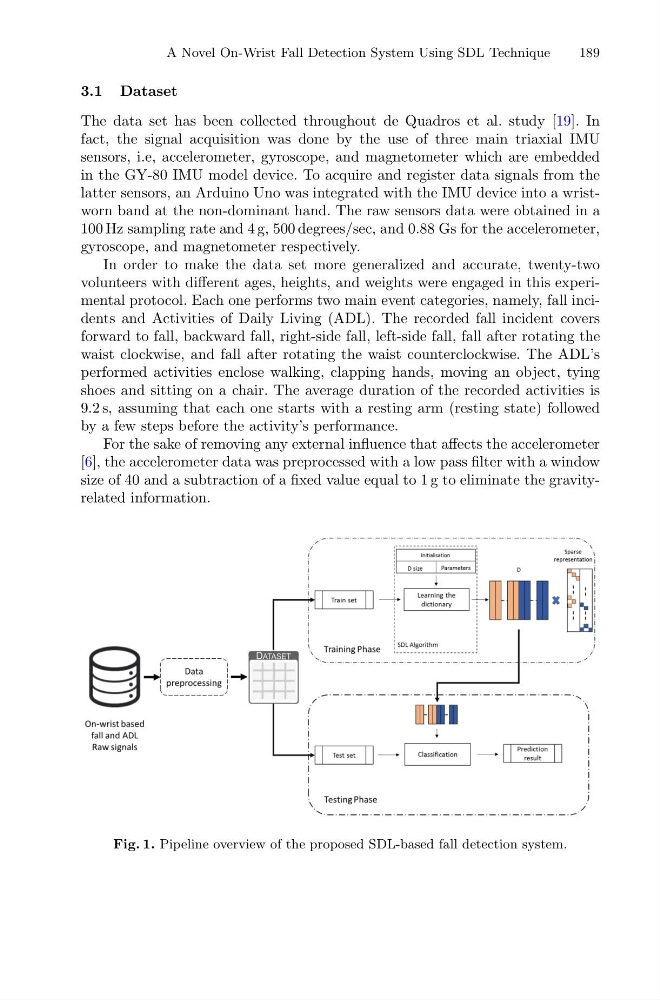
Fig. 1. Pipeline overview of the proposed SDL-based fall detection system.
189
3.1 Dataset
The data set has been collected throughout de Quadros et al. study [19]. In
fact, the signal acquisition was done by the use of three main triaxial IMU
sensors, i.e, accelerometer, gyroscope, and magnetometer which are embedded
in the GY-80 IMU model device. To acquire and register data signals from the
latter sensors, an Arduino Uno was integrated with the IMU device into a wristworn band at the non-dominant hand. The raw sensors data were obtained in a
100 Hz sampling rate and 4 g, 500 degrees/sec, and 0.88 Gs for the accelerometer,
gyroscope, and magnetometer respectively.
In order to make the data set more generalized and accurate, twenty-two
volunteers with different ages, heights, and weights were engaged in this experimental protocol. Each one performs two main event categories, namely, fall incidents and Activities of Daily Living (ADL). The recorded fall incident covers
forward to fall, backward fall, right-side fall, left-side fall, fall after rotating the
waist clockwise, and fall after rotating the waist counterclockwise. The ADL’s
performed activities enclose walking, clapping hands, moving an object, tying
shoes and sitting on a chair. The average duration of the recorded activities is
9.2 s, assuming that each one starts with a resting arm (resting state) followed
by a few steps before the activity’s performance.
For the sake of removing any external influence that affects the accelerometer
[6], the accelerometer data was preprocessed with a low pass filter with a window
size of 40 and a subtraction of a fixed value equal to 1 g to eliminate the gravityrelated information.
Fig. 1. Pipeline overview of the proposed SDL-based fall detection system.