

generate stable, but not tedious, activity schedules in the long term that will address
issue 3). We can address issue 2) by taking into account more activities. The studies
mentioned in Sect. 2 took into account a limited number of activities, implying that
these activities occupy the entire timeline, which is unrealistic.
3.2 Model of AS, MV, Resident Profile, and P
Mapping the Relationship Between AS and MV. A resident performs activities on
the basis of motivation, in which MVs quantify the degree of motivation. When an MV
is high, the resident may perform a sequence of activities to satisfy the motivation, e.g.,
if the value of hunger motivation is high, he/she will cook and eat.
We determined that a resident has 13 motivations at most, which correspond to 13 MV i -
AS i pairs: MV 1 : wash and brush teeth => sleep (at night) => wash and brush teeth,
MV 2 : sleep (at noon), MV 3 : take food => cook => take tableware => eat, MV 4 : take a
bath => get dressed => put clothes in wash machine, MV 5 : get dressed => go
out => get dressed, MV 6 : go to toilet (short duration), MV 7 : go to toilet (long duration),
MV 8 : watch TV, MV 9 : read, MV 10 : clean, MV 11 : take clothes out of washing machine,
MV 12 : wander, and MV 13 : relax. An AS consists of one or more activities, and activities
in the AS are performed in order without lag to satisfy the corresponding motivation
and decrease the corresponding MV i . MV i determines the possibility of performing ith
AS, P i .
AS and MV Are Adaptive to the Layout. The actual composition of an AS is also
adaptive to the layout like the evolution of MVs. An activity in an AS will be omitted if
its corresponding places are not in the layouts The mapping relationship of all activities
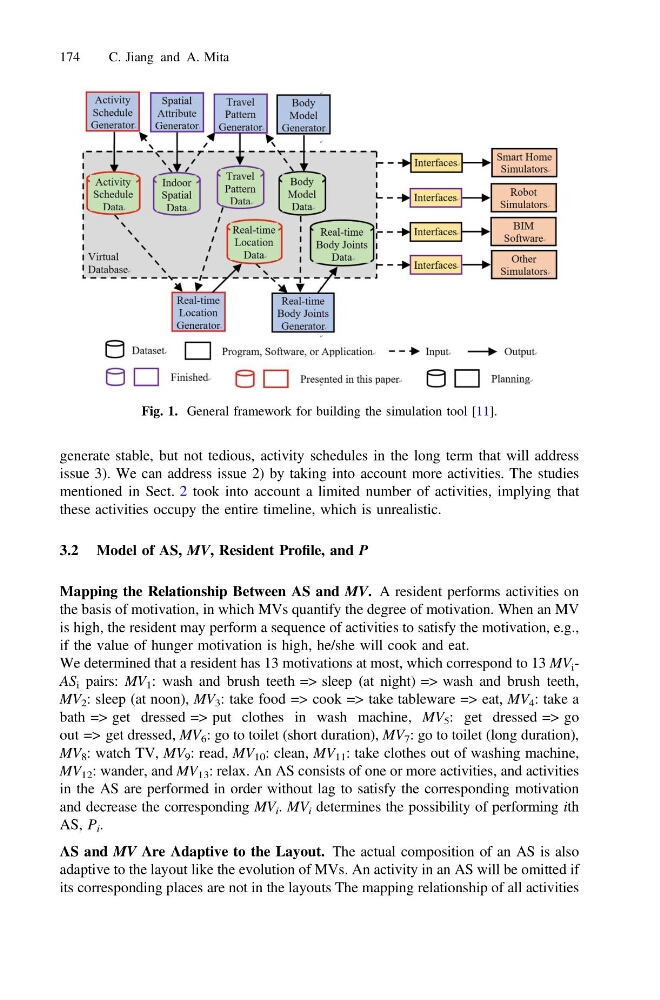
Fig. 1. General framework for building the simulation tool [11].
174
C. Jiang and A. Mita
issue 3). We can address issue 2) by taking into account more activities. The studies
mentioned in Sect. 2 took into account a limited number of activities, implying that
these activities occupy the entire timeline, which is unrealistic.
3.2 Model of AS, MV, Resident Profile, and P
Mapping the Relationship Between AS and MV. A resident performs activities on
the basis of motivation, in which MVs quantify the degree of motivation. When an MV
is high, the resident may perform a sequence of activities to satisfy the motivation, e.g.,
if the value of hunger motivation is high, he/she will cook and eat.
We determined that a resident has 13 motivations at most, which correspond to 13 MV i -
AS i pairs: MV 1 : wash and brush teeth => sleep (at night) => wash and brush teeth,
MV 2 : sleep (at noon), MV 3 : take food => cook => take tableware => eat, MV 4 : take a
bath => get dressed => put clothes in wash machine, MV 5 : get dressed => go
out => get dressed, MV 6 : go to toilet (short duration), MV 7 : go to toilet (long duration),
MV 8 : watch TV, MV 9 : read, MV 10 : clean, MV 11 : take clothes out of washing machine,
MV 12 : wander, and MV 13 : relax. An AS consists of one or more activities, and activities
in the AS are performed in order without lag to satisfy the corresponding motivation
and decrease the corresponding MV i . MV i determines the possibility of performing ith
AS, P i .
AS and MV Are Adaptive to the Layout. The actual composition of an AS is also
adaptive to the layout like the evolution of MVs. An activity in an AS will be omitted if
its corresponding places are not in the layouts The mapping relationship of all activities
Fig. 1. General framework for building the simulation tool [11].
174
C. Jiang and A. Mita