

5 Preliminary Validation of the Composite Index
and Conclusion
Validation metric is the correlation with specific corresponding summary measure(s) of
current well-being, self-reported by the respondent citizens through web and mobile
app. questionnaires as mentioned above. They can be summarized from two relevant
subset questionnaires: 1) European Social Survey (ESS), and 2) EuroQoL-5D (EQ5)
survey instrument, both standardized (with minor adaptations) and common for measuring well-being in multiple continuous and/or repeated relevant Europe-wide and
national-level studies, and robust to some degree against extreme fully subjective bias.
15 statements of the ESS questionnaire broadly cover social and most of the other
aspects of personal and community well-being that the respondent rates on a 5-degree
Likert scale (Strongly agree-4, Agree-3, Neither agree nor disagree-2, Disagree-1,
Strongly disagree-0), the total possible questionnaire score thus ranging from 0,
denoting the lowest/worst well-being, to 60 representing the optimum.
EQ5 instrument is focused on physical and mental health status and daily life
activities measured in 5 dimensions (mobility, self-care, usual activities,
pain/discomfort and anxiety/depression), also self-rated on a 5-degree scale from
perceived worst to best like in ESS. Last question asks for assessment of the respondent’s overall health state (hsa) on the current day, on the scale from 0 (worst) to 100
(best imaginable), also mapped to a number ranged from 1 to 5 by the formula
1 + 4 * hsa/100 for the purpose of this evaluation. Total cumulative EQ5 score thus
ranges from 6 to 30.
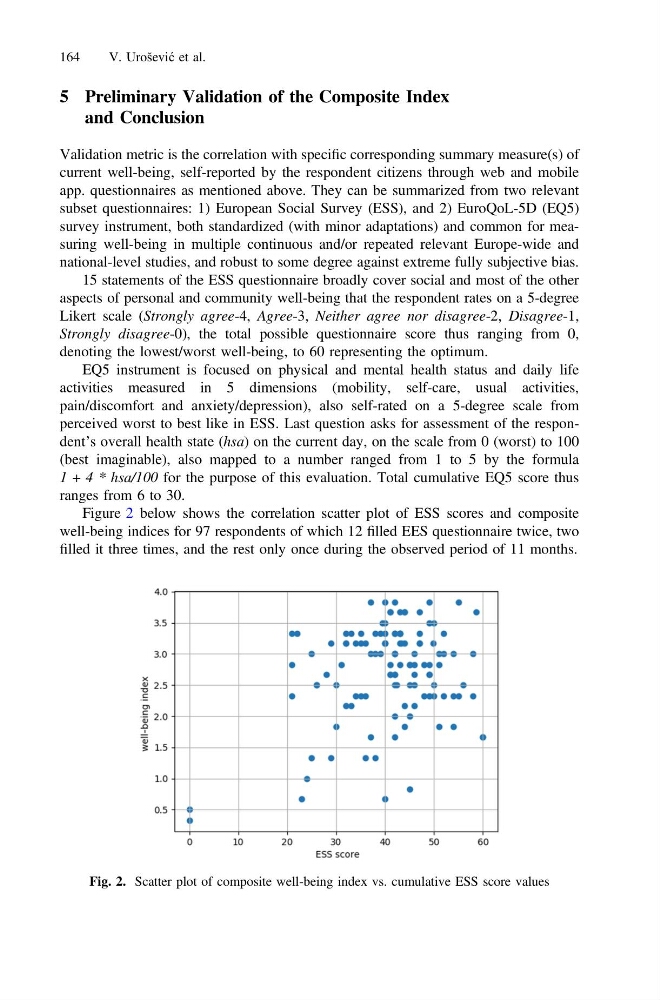
Figure 2 below shows the correlation scatter plot of ESS scores and composite
well-being indices for 97 respondents of which 12 filled EES questionnaire twice, two
filled it three times, and the rest only once during the observed period of 11 months.
Fig. 2. Scatter plot of composite well-being index vs. cumulative ESS score values
164
V. Urošević et al.
and Conclusion
Validation metric is the correlation with specific corresponding summary measure(s) of
current well-being, self-reported by the respondent citizens through web and mobile
app. questionnaires as mentioned above. They can be summarized from two relevant
subset questionnaires: 1) European Social Survey (ESS), and 2) EuroQoL-5D (EQ5)
survey instrument, both standardized (with minor adaptations) and common for measuring well-being in multiple continuous and/or repeated relevant Europe-wide and
national-level studies, and robust to some degree against extreme fully subjective bias.
15 statements of the ESS questionnaire broadly cover social and most of the other
aspects of personal and community well-being that the respondent rates on a 5-degree
Likert scale (Strongly agree-4, Agree-3, Neither agree nor disagree-2, Disagree-1,
Strongly disagree-0), the total possible questionnaire score thus ranging from 0,
denoting the lowest/worst well-being, to 60 representing the optimum.
EQ5 instrument is focused on physical and mental health status and daily life
activities measured in 5 dimensions (mobility, self-care, usual activities,
pain/discomfort and anxiety/depression), also self-rated on a 5-degree scale from
perceived worst to best like in ESS. Last question asks for assessment of the respondent’s overall health state (hsa) on the current day, on the scale from 0 (worst) to 100
(best imaginable), also mapped to a number ranged from 1 to 5 by the formula
1 + 4 * hsa/100 for the purpose of this evaluation. Total cumulative EQ5 score thus
ranges from 6 to 30.
Figure 2 below shows the correlation scatter plot of ESS scores and composite
well-being indices for 97 respondents of which 12 filled EES questionnaire twice, two
filled it three times, and the rest only once during the observed period of 11 months.
Fig. 2. Scatter plot of composite well-being index vs. cumulative ESS score values
164
V. Urošević et al.