

A Convolutional Neural Network for Lentigo Diagnosis
95
– A validation set of 60 images, divided equally between two classes of lentigo
and healthy. The validation set has been added to evaluate our training procedure. The main objective is to prevent over-fitting.
– A 54 RCM images testing set divided equally for healthy and lentigo classes.
Our classification method based on the InceptionV3 network is build using the
Keras library. The InceptionV3 model is configured to accept the greyscale RCM
images. As initialization, all RCM images were resized into new dimensions of
299 × 299 pixels and rescaled to help CNN processing. The parameter values of
data augmentation step are presented in Table 1. The shear, zoom and translation ranges vary from 0 to 1. We choose the value of 0.2 for each to enrich the
dataset without altering the image main features and confusing the system. The
rotation range varies to 0
◦ from 180
◦ and a small rotation angle was proposed
for the same reasons.
Table 1. Data augmentation parameters.
Parameter
value
Shear
0.2
Zoom
0.2
Rotation degree
20
◦
Horizontal translation 0.2
Vertical translation
0.2
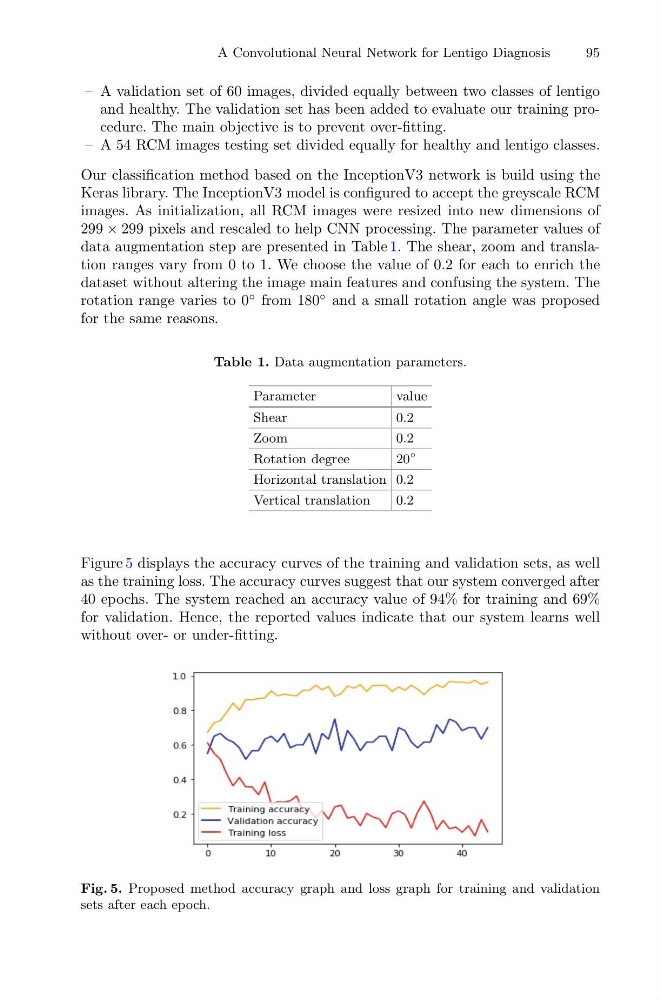
Figure 5 displays the accuracy curves of the training and validation sets, as well
as the training loss. The accuracy curves suggest that our system converged after
40 epochs. The system reached an accuracy value of 94% for training and 69%
for validation. Hence, the reported values indicate that our system learns well
without over- or under-fitting.
Fig. 5. Proposed method accuracy graph and loss graph for training and validation
sets after each epoch.
95
– A validation set of 60 images, divided equally between two classes of lentigo
and healthy. The validation set has been added to evaluate our training procedure. The main objective is to prevent over-fitting.
– A 54 RCM images testing set divided equally for healthy and lentigo classes.
Our classification method based on the InceptionV3 network is build using the
Keras library. The InceptionV3 model is configured to accept the greyscale RCM
images. As initialization, all RCM images were resized into new dimensions of
299 × 299 pixels and rescaled to help CNN processing. The parameter values of
data augmentation step are presented in Table 1. The shear, zoom and translation ranges vary from 0 to 1. We choose the value of 0.2 for each to enrich the
dataset without altering the image main features and confusing the system. The
rotation range varies to 0
◦ from 180
◦ and a small rotation angle was proposed
for the same reasons.
Table 1. Data augmentation parameters.
Parameter
value
Shear
0.2
Zoom
0.2
Rotation degree
20
◦
Horizontal translation 0.2
Vertical translation
0.2
Figure 5 displays the accuracy curves of the training and validation sets, as well
as the training loss. The accuracy curves suggest that our system converged after
40 epochs. The system reached an accuracy value of 94% for training and 69%
for validation. Hence, the reported values indicate that our system learns well
without over- or under-fitting.
Fig. 5. Proposed method accuracy graph and loss graph for training and validation
sets after each epoch.