

121
industries in the western parts of the empire.
4 The share of regional processing of
cotton never reached signifi cant proportions. The newly introduced boundaries did
not signifi cantly affect the everyday life of people, their communication and travel.
The effect of these borders became severely felt after the independence of the
Central Asian republics in 1991.
9.4 Geographical Rescaling After Independence
Independence in the Central Asian republics in 1991 brought about functioning
borders, something hitherto unknown. Confl icting interests of independent countries resulted in a multitude of unsolved problems. One was the delineation of international boundaries. In the aftermath of the dissolution of the Soviet Union, the
4 In his assessment of the Fergana experiment, Jonathan Thurman ( 1999 , p. 222) is highly critical
about its function: “Under Stalin, the Ferghana Valley had the misfortune of becoming the Soviet
model for an irrigated agricultural zone in the East. It was here that planned delivery of water in
Central Asia was fi rst applied and tested, and that cotton cultivation reached the most absurd proportions. Construction and maintenance programs focused on Ferghana as if it were another republic, separate from the rest of Uzbekistan. Throughout the Stalin era, the Soviet media commonly
spoke of ‘transferring the Ferghana experience’ in irrigation to other areas of Central Asia. This
would be done after World War II, with disastrous results”.
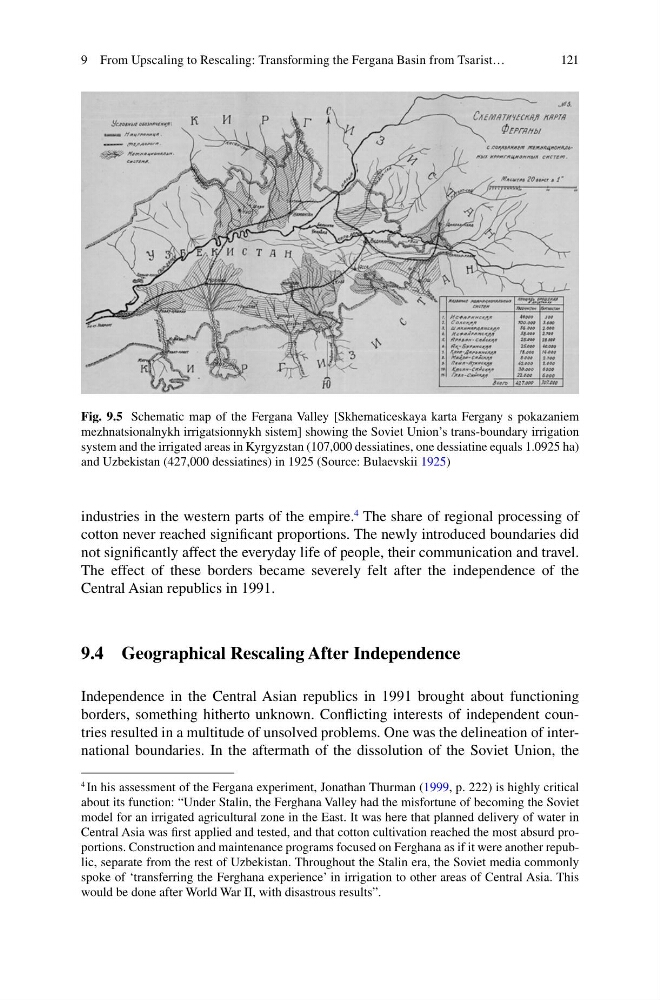
Fig. 9.5 Schematic map of the Fergana Valley [Skhematiceskaya karta Fergany s pokazaniem
mezhnatsionalnykh irrigatsionnykh sistem] showing the Soviet Union’s trans-boundary irrigation
system and the irrigated areas in Kyrgyzstan (107,000 dessiatines, one dessiatine equals 1.0925 ha)
and Uzbekistan (427,000 dessiatines) in 1925 (Source: Bulaevskii 1925 )
9 From Upscaling to Rescaling: Transforming the Fergana Basin from Tsarist…
industries in the western parts of the empire.
4 The share of regional processing of
cotton never reached signifi cant proportions. The newly introduced boundaries did
not signifi cantly affect the everyday life of people, their communication and travel.
The effect of these borders became severely felt after the independence of the
Central Asian republics in 1991.
9.4 Geographical Rescaling After Independence
Independence in the Central Asian republics in 1991 brought about functioning
borders, something hitherto unknown. Confl icting interests of independent countries resulted in a multitude of unsolved problems. One was the delineation of international boundaries. In the aftermath of the dissolution of the Soviet Union, the
4 In his assessment of the Fergana experiment, Jonathan Thurman ( 1999 , p. 222) is highly critical
about its function: “Under Stalin, the Ferghana Valley had the misfortune of becoming the Soviet
model for an irrigated agricultural zone in the East. It was here that planned delivery of water in
Central Asia was fi rst applied and tested, and that cotton cultivation reached the most absurd proportions. Construction and maintenance programs focused on Ferghana as if it were another republic, separate from the rest of Uzbekistan. Throughout the Stalin era, the Soviet media commonly
spoke of ‘transferring the Ferghana experience’ in irrigation to other areas of Central Asia. This
would be done after World War II, with disastrous results”.
Fig. 9.5 Schematic map of the Fergana Valley [Skhematiceskaya karta Fergany s pokazaniem
mezhnatsionalnykh irrigatsionnykh sistem] showing the Soviet Union’s trans-boundary irrigation
system and the irrigated areas in Kyrgyzstan (107,000 dessiatines, one dessiatine equals 1.0925 ha)
and Uzbekistan (427,000 dessiatines) in 1925 (Source: Bulaevskii 1925 )
9 From Upscaling to Rescaling: Transforming the Fergana Basin from Tsarist…