

growth chamber, we grew rice plants with addition of [1,214 C] sodium acetate.
This
14 C compound was supplied once to rice plants in the flooding water just
before blooming, and TF of 6.8 Æ 2.4 on average was obtained. In these tracer
experiments, rice plants were also cultivated without [1,214
C] sodium acetate as
negative controls in the same growth chamber as the
14 C-treated rice. Interestingly
14 C was detected even from the rice grains of negative control samples. These
results suggested that the
14 C-bearing gas, which was released from bacterial cells
in rice paddy soils, was fixed by the rice plants in the negative controls through
photosynthesis.
We also examined the possibility of root uptake of
14 C by stable isotope
techniques under field conditions [4]. If plant carbon originates from the atmospheric CO 2 , the δ
13 C values in crops can be calculated using the δ
13 C value, À8 ‰
in air [5], and the
13 C fractionation ratio in photosynthesis by rice plants of À18 to
À20 ‰ [6, 7]. The calculated δ
13 C values in our study ranged from À28 ‰ to
À26 ‰, and the results implied that no soil carbon contribution occurred for white
rice; however, by setting some conditions, for example,
13 C fractionation ratio of
19‰, we obtained the average TF value of 0.11 Æ 0.04 for white rice. To compare
these TF values obtained in laboratory and field experiments, it is necessary to pay
attention to the difference between [1,214 C] sodium acetate and the actual organic
compounds present in the natural soil.
Table 26.1 The partitioning ratios of
14
C into solid, liquid, and gas phases for each treatment.
Treatment
Partitioning ratio (%)
Solid phase
Liquid phase
Gas phase
Control
27.9
4.5
67.5
Autoclaving
0
98.0
2.0
Glutaraldehyde exposure
0
96.8
3.2
Cycloheximide exposure
29.3
4.8
65.9
a
b
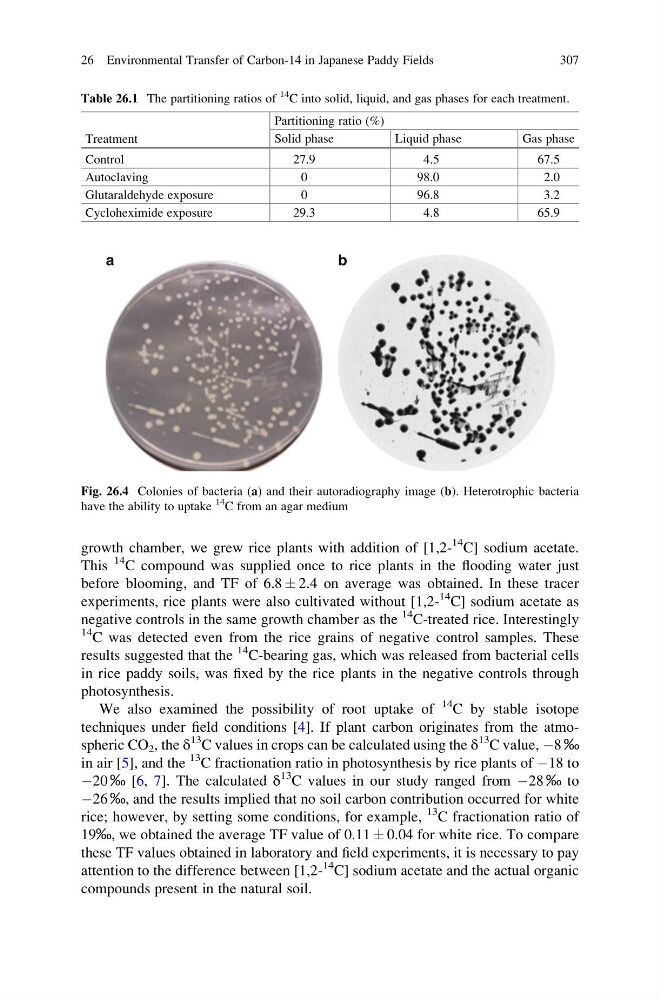
Fig. 26.4 Colonies of bacteria (a) and their autoradiography image (b). Heterotrophic bacteria
have the ability to uptake
14
C from an agar medium
26 Environmental Transfer of Carbon-14 in Japanese Paddy Fields
307
This
14 C compound was supplied once to rice plants in the flooding water just
before blooming, and TF of 6.8 Æ 2.4 on average was obtained. In these tracer
experiments, rice plants were also cultivated without [1,214
C] sodium acetate as
negative controls in the same growth chamber as the
14 C-treated rice. Interestingly
14 C was detected even from the rice grains of negative control samples. These
results suggested that the
14 C-bearing gas, which was released from bacterial cells
in rice paddy soils, was fixed by the rice plants in the negative controls through
photosynthesis.
We also examined the possibility of root uptake of
14 C by stable isotope
techniques under field conditions [4]. If plant carbon originates from the atmospheric CO 2 , the δ
13 C values in crops can be calculated using the δ
13 C value, À8 ‰
in air [5], and the
13 C fractionation ratio in photosynthesis by rice plants of À18 to
À20 ‰ [6, 7]. The calculated δ
13 C values in our study ranged from À28 ‰ to
À26 ‰, and the results implied that no soil carbon contribution occurred for white
rice; however, by setting some conditions, for example,
13 C fractionation ratio of
19‰, we obtained the average TF value of 0.11 Æ 0.04 for white rice. To compare
these TF values obtained in laboratory and field experiments, it is necessary to pay
attention to the difference between [1,214 C] sodium acetate and the actual organic
compounds present in the natural soil.
Table 26.1 The partitioning ratios of
14
C into solid, liquid, and gas phases for each treatment.
Treatment
Partitioning ratio (%)
Solid phase
Liquid phase
Gas phase
Control
27.9
4.5
67.5
Autoclaving
0
98.0
2.0
Glutaraldehyde exposure
0
96.8
3.2
Cycloheximide exposure
29.3
4.8
65.9
a
b
Fig. 26.4 Colonies of bacteria (a) and their autoradiography image (b). Heterotrophic bacteria
have the ability to uptake
14
C from an agar medium
26 Environmental Transfer of Carbon-14 in Japanese Paddy Fields
307