

22.2.2 Critical Experiments on Criticality Safety
for Fuel Debris
The JAEA research program includes computation of criticality characteristics
covering a wide range of fuel debris conditions and validation of the computation
by critical experiments. In the former activity, several data sets will be systematically obtained by calculation to establish new criticality safety standards for fuel
debris. The new standards will be provided as “criticality maps” that indicate
subcritical and critical conditions. The maps also show supercritical conditions
that would likely lead to a significant threat of human injury [7]. In the latter
activity, the new standards (including computation models) will be validated
regarding reactivity worth, coefficients of reactivity, and critical mass by critical
experiments with simulated fuel debris samples. A criticality monitoring methodology will also be studied to improve the criticality control measures for fuel debris.
To pursue the aforementioned critical experiments, the core of the modified
STACY has a widely distributed neutron energy spectrum between thermal reactor
spectra and intermediate reactor spectra. The neutron energy spectrum of the core can
be varied by the lattice pitch of the fuel rods, which range from 10.9 to 25.5 mm,
corresponding to a moderator-to-fuel volume ratio ranging from 0.9 to 11.
Typical neutron energy spectra of the modified STACY are shown in Fig. 22.2 [8].
Core tank
Dump tank
Bypass line
Neutron detector
Fast-feed
pump
Slow-feed
pump
Flow-rate valve
Discharge valve
Flow-rate meter
Reactor room
Basement
Drain
valve
Dump
valve
Feed-stop
switch
Feed-limit
switch
Servo
level meter
Fuel rods
Safety plates
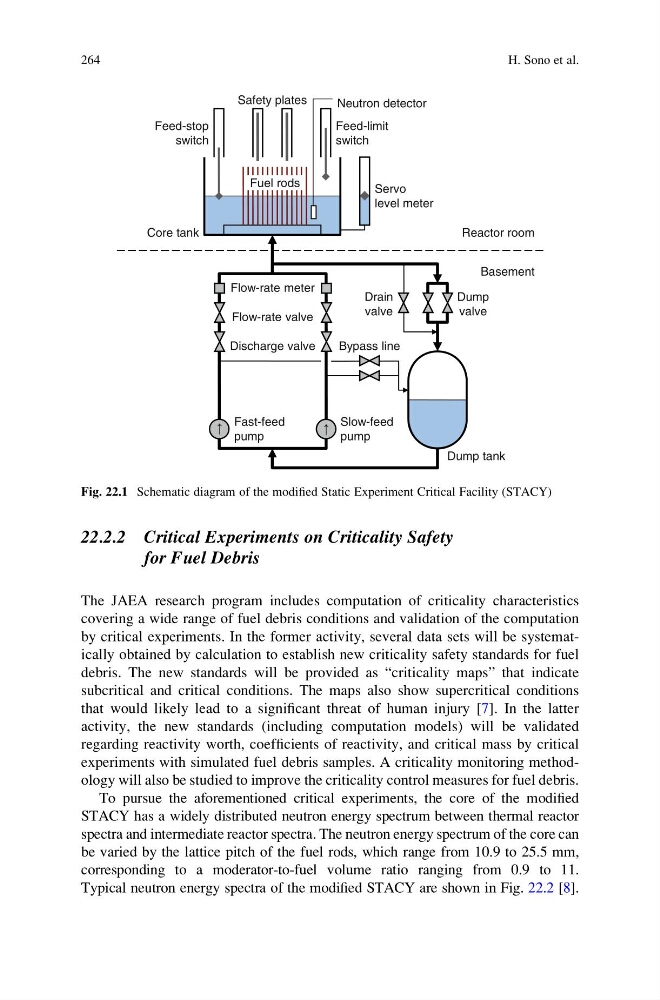
Fig. 22.1 Schematic diagram of the modified Static Experiment Critical Facility (STACY)
264
H. Sono et al.
for Fuel Debris
The JAEA research program includes computation of criticality characteristics
covering a wide range of fuel debris conditions and validation of the computation
by critical experiments. In the former activity, several data sets will be systematically obtained by calculation to establish new criticality safety standards for fuel
debris. The new standards will be provided as “criticality maps” that indicate
subcritical and critical conditions. The maps also show supercritical conditions
that would likely lead to a significant threat of human injury [7]. In the latter
activity, the new standards (including computation models) will be validated
regarding reactivity worth, coefficients of reactivity, and critical mass by critical
experiments with simulated fuel debris samples. A criticality monitoring methodology will also be studied to improve the criticality control measures for fuel debris.
To pursue the aforementioned critical experiments, the core of the modified
STACY has a widely distributed neutron energy spectrum between thermal reactor
spectra and intermediate reactor spectra. The neutron energy spectrum of the core can
be varied by the lattice pitch of the fuel rods, which range from 10.9 to 25.5 mm,
corresponding to a moderator-to-fuel volume ratio ranging from 0.9 to 11.
Typical neutron energy spectra of the modified STACY are shown in Fig. 22.2 [8].
Core tank
Dump tank
Bypass line
Neutron detector
Fast-feed
pump
Slow-feed
pump
Flow-rate valve
Discharge valve
Flow-rate meter
Reactor room
Basement
Drain
valve
Dump
valve
Feed-stop
switch
Feed-limit
switch
Servo
level meter
Fuel rods
Safety plates
Fig. 22.1 Schematic diagram of the modified Static Experiment Critical Facility (STACY)
264
H. Sono et al.