

but assumed to be in the 1990s. A small amount of MOX fuel from this reprocessing
will be utilized in LWRs.
Pu inventory mainly exists in UO 2 -SF. “Pu” in the figure is not “separated” Pu,
but Pu in MOX fresh fuel in this scenario. The total of plutonium is 350 t that is
gradually disposed of to a repository from 2043 until 2105. The trend of MA
inventory is almost the same, but it continues to increase after 2040 because
241 Pu becomes
241 Am with a half-life of 14.35 years.
19.4.2 Result of LWR-PuT
In MOX scenarios, the Rokkasho reprocessing plant (RRP) will be operated with
annual capacity of 800 t and a MOX fabrication plant also (Fig. 19.6). The total
amount of UO 2 -SF reprocessed is 34,500 tHM, slightly larger than the planned
amount of 32,000 tHM. Thus, the present analysis assumes an extension of the RRP
by several years. The MOX loading to a usual LWR is limited to 30 %, although the
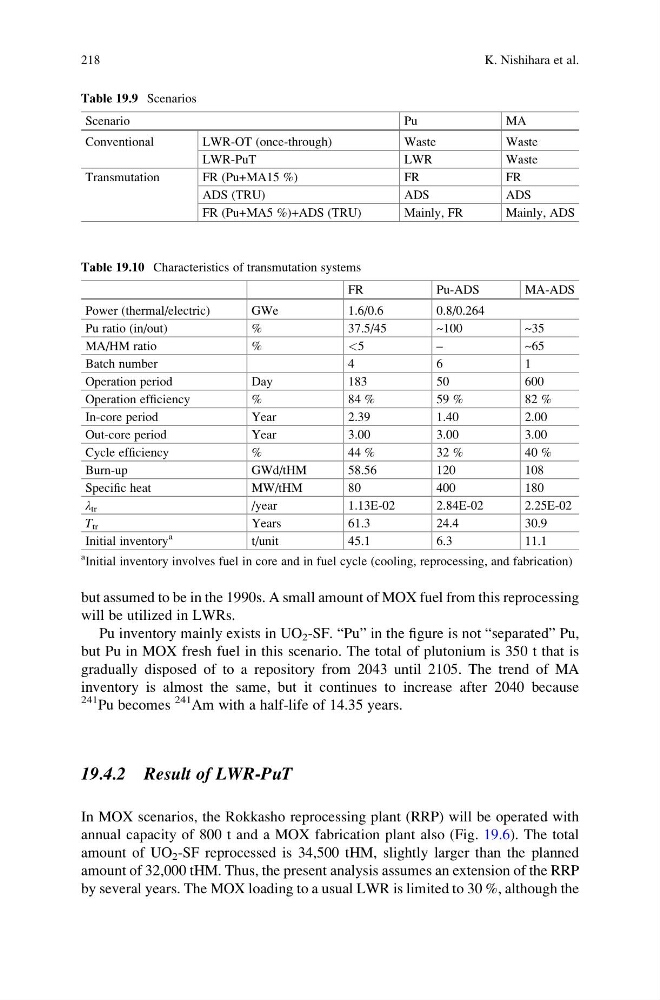
Table 19.10 Characteristics of transmutation systems
FR
Pu-ADS
MA-ADS
Power (thermal/electric)
GWe
1.6/0.6
0.8/0.264
Pu ratio (in/out)
%
37.5/45
~100
~35
MA/HM ratio
%
<5
–
~65
Batch number
4
6
1
Operation period
Day
183
50
600
Operation efficiency
%
84 %
59 %
82 %
In-core period
Year
2.39
1.40
2.00
Out-core period
Year
3.00
3.00
3.00
Cycle efficiency
%
44 %
32 %
40 %
Burn-up
GWd/tHM
58.56
120
108
Specific heat
MW/tHM
80
400
180
λ tr
/year
1.13E-02
2.84E-02
2.25E-02
T tr
Years
61.3
24.4
30.9
Initial inventory
a
t/unit
45.1
6.3
11.1
a
Initial inventory involves fuel in core and in fuel cycle (cooling, reprocessing, and fabrication)
Table 19.9 Scenarios
Scenario
Pu
MA
Conventional
LWR-OT (once-through)
Waste
Waste
LWR-PuT
LWR
Waste
Transmutation
FR (Pu+MA15 %)
FR
FR
ADS (TRU)
ADS
ADS
FR (Pu+MA5 %)+ADS (TRU)
Mainly, FR
Mainly, ADS
218
K. Nishihara et al.
will be utilized in LWRs.
Pu inventory mainly exists in UO 2 -SF. “Pu” in the figure is not “separated” Pu,
but Pu in MOX fresh fuel in this scenario. The total of plutonium is 350 t that is
gradually disposed of to a repository from 2043 until 2105. The trend of MA
inventory is almost the same, but it continues to increase after 2040 because
241 Pu becomes
241 Am with a half-life of 14.35 years.
19.4.2 Result of LWR-PuT
In MOX scenarios, the Rokkasho reprocessing plant (RRP) will be operated with
annual capacity of 800 t and a MOX fabrication plant also (Fig. 19.6). The total
amount of UO 2 -SF reprocessed is 34,500 tHM, slightly larger than the planned
amount of 32,000 tHM. Thus, the present analysis assumes an extension of the RRP
by several years. The MOX loading to a usual LWR is limited to 30 %, although the
Table 19.10 Characteristics of transmutation systems
FR
Pu-ADS
MA-ADS
Power (thermal/electric)
GWe
1.6/0.6
0.8/0.264
Pu ratio (in/out)
%
37.5/45
~100
~35
MA/HM ratio
%
<5
–
~65
Batch number
4
6
1
Operation period
Day
183
50
600
Operation efficiency
%
84 %
59 %
82 %
In-core period
Year
2.39
1.40
2.00
Out-core period
Year
3.00
3.00
3.00
Cycle efficiency
%
44 %
32 %
40 %
Burn-up
GWd/tHM
58.56
120
108
Specific heat
MW/tHM
80
400
180
λ tr
/year
1.13E-02
2.84E-02
2.25E-02
T tr
Years
61.3
24.4
30.9
Initial inventory
a
t/unit
45.1
6.3
11.1
a
Initial inventory involves fuel in core and in fuel cycle (cooling, reprocessing, and fabrication)
Table 19.9 Scenarios
Scenario
Pu
MA
Conventional
LWR-OT (once-through)
Waste
Waste
LWR-PuT
LWR
Waste
Transmutation
FR (Pu+MA15 %)
FR
FR
ADS (TRU)
ADS
ADS
FR (Pu+MA5 %)+ADS (TRU)
Mainly, FR
Mainly, ADS
218
K. Nishihara et al.