

of refueling batches. The adjusting parameter to increase the fissile amount was the
zirconium content in TRU-Zr alloy fuel to keep k-effective ¼ 1.0 at the end of the
cycle.
Table 15.2 shows the summary of the analysis results. The reduction of the core
height from 93 cm to 65 cm resulted in a 12 % decrease of burn-up reactivity swing.
The introduction of a B 4 C shield, where natural boron was assumed, at the core
periphery region resulted in only about a 5 % decrease in burn-up reactivity swing.
On the other hand, the penalty of this countermeasure is the increase of core power
peaking because the leakage of neutrons from the core surface increases. Hence,
this measure was not adopted in the subsequent core design. Regarding the effect of
the number of refueling batches, the larger is the number of refueling batches, the
smaller the burn-up reactivity swing becomes. The effect was approximately a 5 %
decrease in burnup reactivity swing for a 40 % increase in the number of refueling
batches. This measure was not adopted in the subsequent core design because its
effect on the burn-up reactivity swing is small and it leads to significant increase of
core power peaking because of the increased difference of burn-up between most
burnt fuel and fresh fuel.
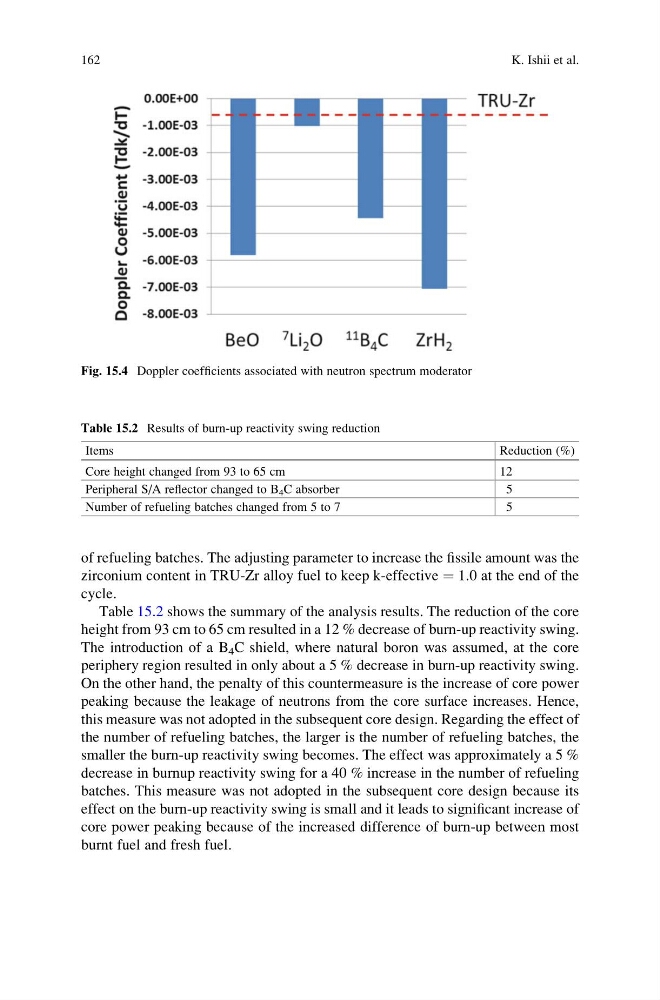
Fig. 15.4 Doppler coefficients associated with neutron spectrum moderator
Table 15.2 Results of burn-up reactivity swing reduction
Items
Reduction (%)
Core height changed from 93 to 65 cm
12
Peripheral S/A reflector changed to B 4 C absorber
5
Number of refueling batches changed from 5 to 7
5
162
K. Ishii et al.
zirconium content in TRU-Zr alloy fuel to keep k-effective ¼ 1.0 at the end of the
cycle.
Table 15.2 shows the summary of the analysis results. The reduction of the core
height from 93 cm to 65 cm resulted in a 12 % decrease of burn-up reactivity swing.
The introduction of a B 4 C shield, where natural boron was assumed, at the core
periphery region resulted in only about a 5 % decrease in burn-up reactivity swing.
On the other hand, the penalty of this countermeasure is the increase of core power
peaking because the leakage of neutrons from the core surface increases. Hence,
this measure was not adopted in the subsequent core design. Regarding the effect of
the number of refueling batches, the larger is the number of refueling batches, the
smaller the burn-up reactivity swing becomes. The effect was approximately a 5 %
decrease in burnup reactivity swing for a 40 % increase in the number of refueling
batches. This measure was not adopted in the subsequent core design because its
effect on the burn-up reactivity swing is small and it leads to significant increase of
core power peaking because of the increased difference of burn-up between most
burnt fuel and fresh fuel.
Fig. 15.4 Doppler coefficients associated with neutron spectrum moderator
Table 15.2 Results of burn-up reactivity swing reduction
Items
Reduction (%)
Core height changed from 93 to 65 cm
12
Peripheral S/A reflector changed to B 4 C absorber
5
Number of refueling batches changed from 5 to 7
5
162
K. Ishii et al.