

averaged with the upper, internal, and lower blankets. Here the breeding ratio is
defined as the number of atoms of fissile plutonium left in the discharged fuel
bundles per fissile plutonium loaded in the initial charged fuel bundles.
The loading pattern of the fuel bundles in the equilibrium core adopts zone
loading with the reflective boundary condition of 60
in the azimuthal direction.
After the control rod scheduling is done, the radial power peaking factor is about 1.2
and the axial power peaking factor is about 1.8, including the blanket zones, which
results in the minimum critical power ratio of 1.3 and the maximum linear heatgenerating rate of 47 kW/m.
The RBWR-AC has a void reactivity coefficient of À2.4 Â 10
À4
Δk/k/%void,
which is comparable with that of the current BWR, about À7 Â 10
À4
Δk/k/%void.
14.2.4 RBWR-TB
The axial fuel bundle configuration of the RBWR-TB is shown in Fig. 14.7. The
axial configuration is similar to that of the RBWR-AC, but the RBWR-TB does not
have a lower blanket because breeding of fissile plutonium is not needed. Other
blanket and fissile zones have different heights from those in the RBWR-AC to
enable multi-recycling of TRUs under the different neutron energy spectrum from
the RBWR-AC. The upper and internal blanket zones of depleted uranium oxides
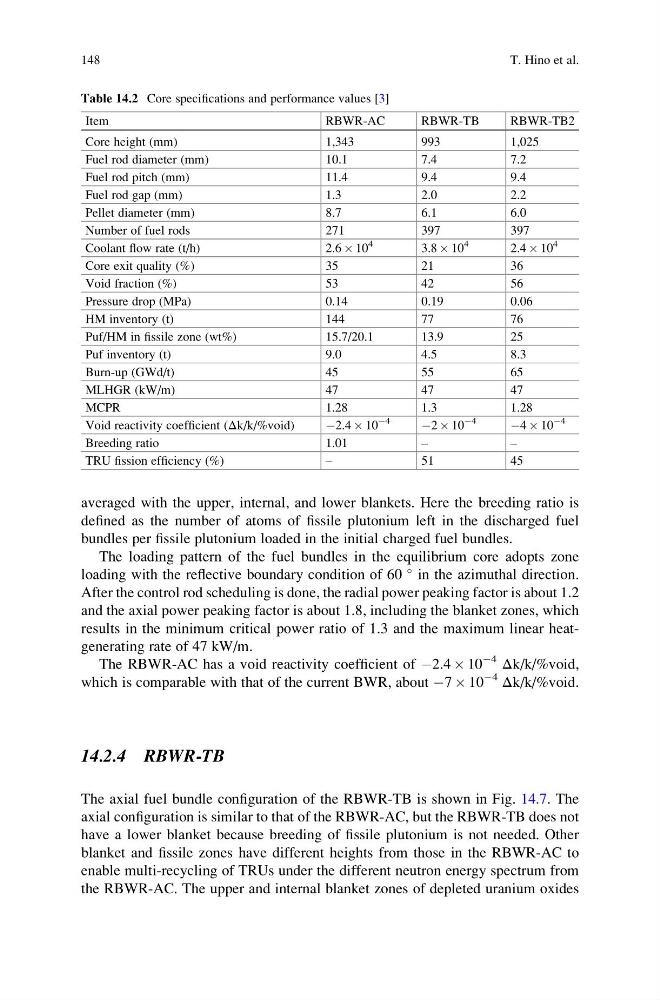
Table 14.2 Core specifications and performance values [3]
Item
RBWR-AC
RBWR-TB
RBWR-TB2
Core height (mm)
1,343
993
1,025
Fuel rod diameter (mm)
10.1
7.4
7.2
Fuel rod pitch (mm)
11.4
9.4
9.4
Fuel rod gap (mm)
1.3
2.0
2.2
Pellet diameter (mm)
8.7
6.1
6.0
Number of fuel rods
271
397
397
Coolant flow rate (t/h)
2.6 Â 10
4
3.8 Â 10
4
2.4 Â 10
4
Core exit quality (%)
35
21
36
Void fraction (%)
53
42
56
Pressure drop (MPa)
0.14
0.19
0.06
HM inventory (t)
144
77
76
Puf/HM in fissile zone (wt%)
15.7/20.1
13.9
25
Puf inventory (t)
9.0
4.5
8.3
Burn-up (GWd/t)
45
55
65
MLHGR (kW/m)
47
47
47
MCPR
1.28
1.3
1.28
Void reactivity coefficient (Δk/k/%void)
À2.4 Â 10
À4
À2 Â 10
À4
À4 Â 10
À4
Breeding ratio
1.01
–
–
TRU fission efficiency (%)
–
51
45
148
T. Hino et al.
defined as the number of atoms of fissile plutonium left in the discharged fuel
bundles per fissile plutonium loaded in the initial charged fuel bundles.
The loading pattern of the fuel bundles in the equilibrium core adopts zone
loading with the reflective boundary condition of 60
in the azimuthal direction.
After the control rod scheduling is done, the radial power peaking factor is about 1.2
and the axial power peaking factor is about 1.8, including the blanket zones, which
results in the minimum critical power ratio of 1.3 and the maximum linear heatgenerating rate of 47 kW/m.
The RBWR-AC has a void reactivity coefficient of À2.4 Â 10
À4
Δk/k/%void,
which is comparable with that of the current BWR, about À7 Â 10
À4
Δk/k/%void.
14.2.4 RBWR-TB
The axial fuel bundle configuration of the RBWR-TB is shown in Fig. 14.7. The
axial configuration is similar to that of the RBWR-AC, but the RBWR-TB does not
have a lower blanket because breeding of fissile plutonium is not needed. Other
blanket and fissile zones have different heights from those in the RBWR-AC to
enable multi-recycling of TRUs under the different neutron energy spectrum from
the RBWR-AC. The upper and internal blanket zones of depleted uranium oxides
Table 14.2 Core specifications and performance values [3]
Item
RBWR-AC
RBWR-TB
RBWR-TB2
Core height (mm)
1,343
993
1,025
Fuel rod diameter (mm)
10.1
7.4
7.2
Fuel rod pitch (mm)
11.4
9.4
9.4
Fuel rod gap (mm)
1.3
2.0
2.2
Pellet diameter (mm)
8.7
6.1
6.0
Number of fuel rods
271
397
397
Coolant flow rate (t/h)
2.6 Â 10
4
3.8 Â 10
4
2.4 Â 10
4
Core exit quality (%)
35
21
36
Void fraction (%)
53
42
56
Pressure drop (MPa)
0.14
0.19
0.06
HM inventory (t)
144
77
76
Puf/HM in fissile zone (wt%)
15.7/20.1
13.9
25
Puf inventory (t)
9.0
4.5
8.3
Burn-up (GWd/t)
45
55
65
MLHGR (kW/m)
47
47
47
MCPR
1.28
1.3
1.28
Void reactivity coefficient (Δk/k/%void)
À2.4 Â 10
À4
À2 Â 10
À4
À4 Â 10
À4
Breeding ratio
1.01
–
–
TRU fission efficiency (%)
–
51
45
148
T. Hino et al.