

216
and to the levers), rigor of LCA (referring to the extent of LCA use) and stakeholder
acceptance (referring to an assumed acceptance or willingness of stakeholders for
LC implementation). The prioritized policy options were subject of further detailed
analyses, described in the following section.
2.2 Identifi cation and Description of Characteristics
of the Policy Options
Characteristics here refer to technical requirements for policy implementation.
These requirements also determine (though not solely) further characteristics of the
policy options like applicability (easiness) or acceptance and thus are relevant to
identify for example potential strengths or threats of the particular options.
For this work, the authors specifi ed six technical requirements, namely methodology,
models, data, tools, quality assurance and communication and described them for
the prioritized policy options. Based on this, they further analyzed the options using
a SWOT
2 analysis to reveal their potential strengths, weaknesses, opportunities and
threats. This analysis was complemented by the RACER
3 analysis, which originates
from the European Commission’s Impact Assessment Guidelines (EC 2009 ) to
assess the value of scientifi c tools for use in policy making based on the criteria
relevance, acceptance, credibility, easiness and robustness. For both the SWOT and
the RACER analysis different stakeholder perspectives were considered obtained
2 SWOT: strengths, weaknesses, opportunities, threats.
3 RACER: relevance, acceptance, credibility, easiness, robustness.
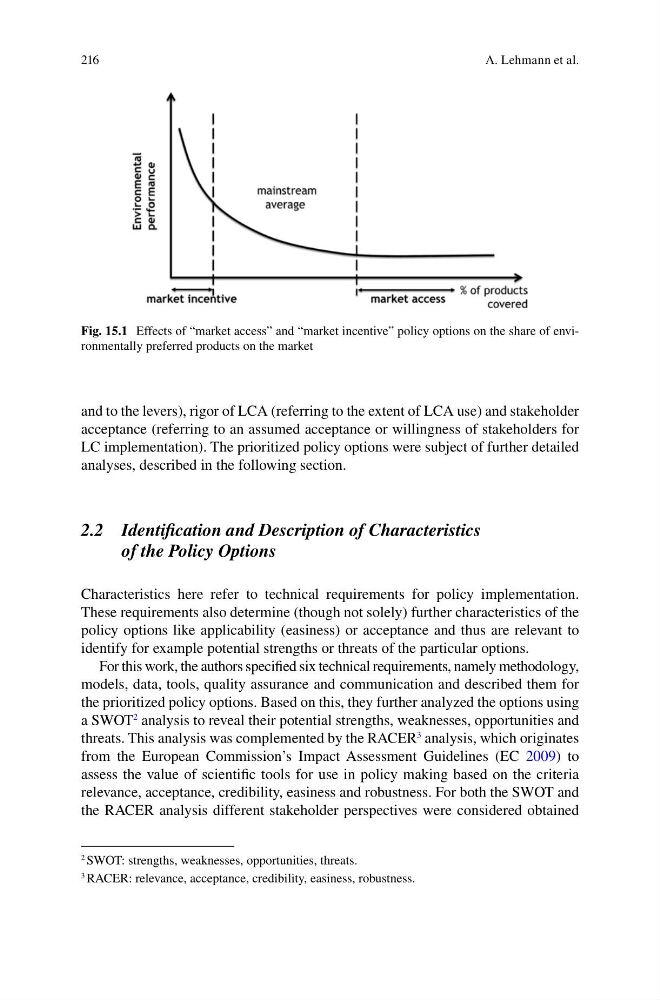
Fig. 15.1 Effects of “market access” and “market incentive” policy options on the share of environmentally preferred products on the market
A. Lehmann et al.
and to the levers), rigor of LCA (referring to the extent of LCA use) and stakeholder
acceptance (referring to an assumed acceptance or willingness of stakeholders for
LC implementation). The prioritized policy options were subject of further detailed
analyses, described in the following section.
2.2 Identifi cation and Description of Characteristics
of the Policy Options
Characteristics here refer to technical requirements for policy implementation.
These requirements also determine (though not solely) further characteristics of the
policy options like applicability (easiness) or acceptance and thus are relevant to
identify for example potential strengths or threats of the particular options.
For this work, the authors specifi ed six technical requirements, namely methodology,
models, data, tools, quality assurance and communication and described them for
the prioritized policy options. Based on this, they further analyzed the options using
a SWOT
2 analysis to reveal their potential strengths, weaknesses, opportunities and
threats. This analysis was complemented by the RACER
3 analysis, which originates
from the European Commission’s Impact Assessment Guidelines (EC 2009 ) to
assess the value of scientifi c tools for use in policy making based on the criteria
relevance, acceptance, credibility, easiness and robustness. For both the SWOT and
the RACER analysis different stakeholder perspectives were considered obtained
2 SWOT: strengths, weaknesses, opportunities, threats.
3 RACER: relevance, acceptance, credibility, easiness, robustness.
Fig. 15.1 Effects of “market access” and “market incentive” policy options on the share of environmentally preferred products on the market
A. Lehmann et al.