

202
the supply chain). Among other objectives it aims to improve environmental
performance and resource effi ciency and support sustainable supply chain practices.
Of direct relevance to LCM is the confl ict-free smelter initiative incorporating a
labor code, certifi cation, inspections and compliance listing. Further along the chain,
manufacturers are encouraged to prefer purchasing from confl ict-free smelters.
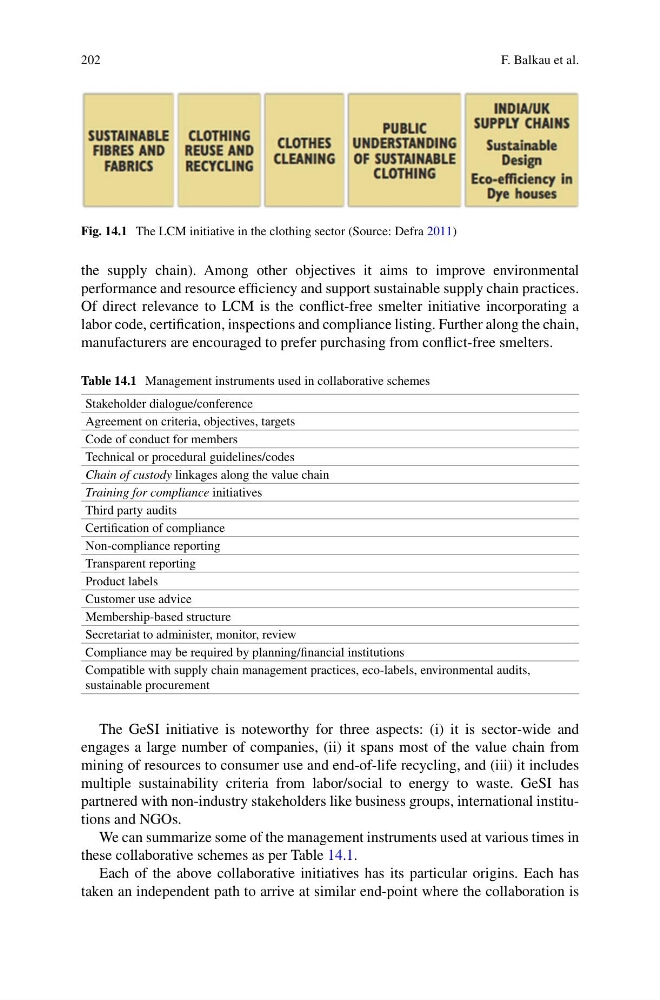
Fig. 14.1 The LCM initiative in the clothing sector (Source: Defra 2011 )
Table 14.1 Management instruments used in collaborative schemes
Stakeholder dialogue/conference
Agreement on criteria, objectives, targets
Code of conduct for members
Technical or procedural guidelines/codes
Chain of custody linkages along the value chain
Training for compliance initiatives
Third party audits
Certifi cation of compliance
Non-compliance reporting
Transparent reporting
Product labels
Customer use advice
Membership-based structure
Secretariat to administer, monitor, review
Compliance may be required by planning/fi nancial institutions
Compatible with supply chain management practices, eco-labels, environmental audits,
sustainable procurement
The GeSI initiative is noteworthy for three aspects: (i) it is sector-wide and
engages a large number of companies, (ii) it spans most of the value chain from
mining of resources to consumer use and end-of-life recycling, and (iii) it includes
multiple sustainability criteria from labor/social to energy to waste. GeSI has
partnered with non-industry stakeholders like business groups, international institutions and NGOs.
We can summarize some of the management instruments used at various times in
these collaborative schemes as per Table 14.1 .
Each of the above collaborative initiatives has its particular origins. Each has
taken an independent path to arrive at similar end-point where the collaboration is
F. Balkau et al.
the supply chain). Among other objectives it aims to improve environmental
performance and resource effi ciency and support sustainable supply chain practices.
Of direct relevance to LCM is the confl ict-free smelter initiative incorporating a
labor code, certifi cation, inspections and compliance listing. Further along the chain,
manufacturers are encouraged to prefer purchasing from confl ict-free smelters.
Fig. 14.1 The LCM initiative in the clothing sector (Source: Defra 2011 )
Table 14.1 Management instruments used in collaborative schemes
Stakeholder dialogue/conference
Agreement on criteria, objectives, targets
Code of conduct for members
Technical or procedural guidelines/codes
Chain of custody linkages along the value chain
Training for compliance initiatives
Third party audits
Certifi cation of compliance
Non-compliance reporting
Transparent reporting
Product labels
Customer use advice
Membership-based structure
Secretariat to administer, monitor, review
Compliance may be required by planning/fi nancial institutions
Compatible with supply chain management practices, eco-labels, environmental audits,
sustainable procurement
The GeSI initiative is noteworthy for three aspects: (i) it is sector-wide and
engages a large number of companies, (ii) it spans most of the value chain from
mining of resources to consumer use and end-of-life recycling, and (iii) it includes
multiple sustainability criteria from labor/social to energy to waste. GeSI has
partnered with non-industry stakeholders like business groups, international institutions and NGOs.
We can summarize some of the management instruments used at various times in
these collaborative schemes as per Table 14.1 .
Each of the above collaborative initiatives has its particular origins. Each has
taken an independent path to arrive at similar end-point where the collaboration is
F. Balkau et al.