

and opportunities. This institutional adaptive capacity is at least as important for the
conservation of biodiversity at the local level as the biological capacity of species to
adapt at the level of individuals (e.g. by changes in phenology), populations (e.g. by
migration) or species (e.g. by evolution).
From the work documented in this book and the project implementation further
insights have been gained for more specific topics. What we consider to be the most
important lessons learned are summarised in the following subchapters.
20.2 Lessons Learned from Modelling, Impact Assessment
and Monitoring
Climate change is often associated with melting glaciers, melting pole caps and
rising sea levels; however, most impacts are more subtle and hidden and thus not as
easy to identify. Several methods can help to generate knowledge about potential
climate change impacts as well as the effectiveness of adaptation measures.
In HABIT-CHANGE modelling of exposure, impact assessment and monitoring
methods have been applied.
Regional climate modelling (see Chap. 2) estimates changes for a possible future
climate. The project results reinforce the expectation that Central and Eastern
Europe is a sensitive region in terms of climate change (Auer et al. 2007). A distinct
trend for temperature rise is projected while a shift of precipitation from summer to
winter becomes visible. Due to considerable regional climate variability a high
spatial resolution of future climate scenarios seems advisable to support local
decision-making. This may increase uncertainty of the extent of expected future
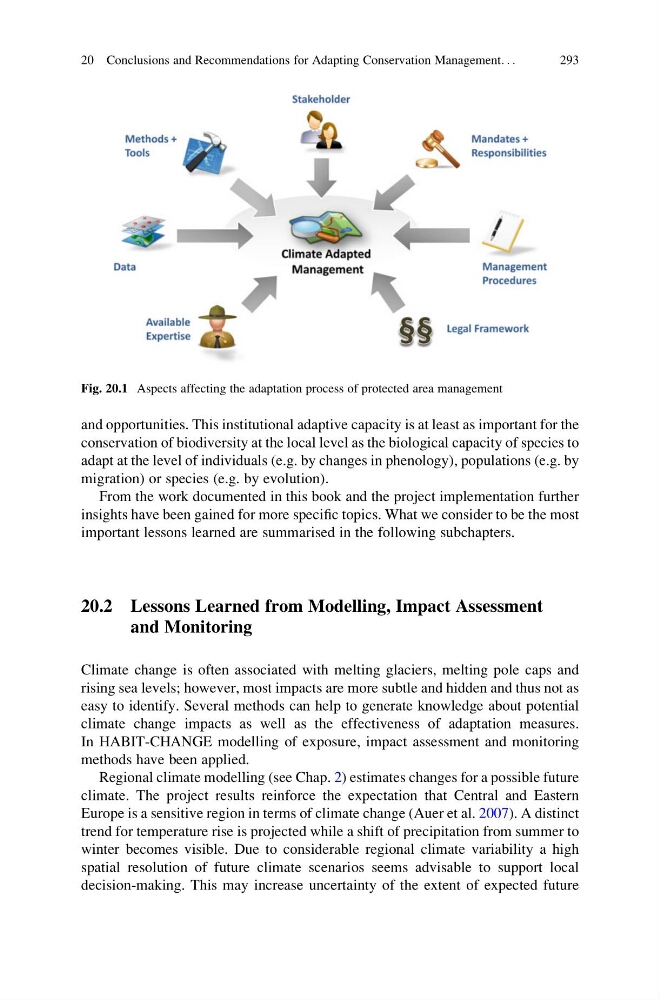
Fig. 20.1 Aspects affecting the adaptation process of protected area management
20 Conclusions and Recommendations for Adapting Conservation Management. . .
293
conservation of biodiversity at the local level as the biological capacity of species to
adapt at the level of individuals (e.g. by changes in phenology), populations (e.g. by
migration) or species (e.g. by evolution).
From the work documented in this book and the project implementation further
insights have been gained for more specific topics. What we consider to be the most
important lessons learned are summarised in the following subchapters.
20.2 Lessons Learned from Modelling, Impact Assessment
and Monitoring
Climate change is often associated with melting glaciers, melting pole caps and
rising sea levels; however, most impacts are more subtle and hidden and thus not as
easy to identify. Several methods can help to generate knowledge about potential
climate change impacts as well as the effectiveness of adaptation measures.
In HABIT-CHANGE modelling of exposure, impact assessment and monitoring
methods have been applied.
Regional climate modelling (see Chap. 2) estimates changes for a possible future
climate. The project results reinforce the expectation that Central and Eastern
Europe is a sensitive region in terms of climate change (Auer et al. 2007). A distinct
trend for temperature rise is projected while a shift of precipitation from summer to
winter becomes visible. Due to considerable regional climate variability a high
spatial resolution of future climate scenarios seems advisable to support local
decision-making. This may increase uncertainty of the extent of expected future
Fig. 20.1 Aspects affecting the adaptation process of protected area management
20 Conclusions and Recommendations for Adapting Conservation Management. . .
293