

Mean annual temperatures (1901–2000) range from 4.0 to 7.5
C depending on
elevation. However, average temperatures are assumed to have already increased
by 0.4–1.0
C between 1951 and 2000. Further temperature increases of 1–3
C and
3–4
C until 2050 and 2071–2100, respectively, are considered as very likely
(cf. Frischbier and Profft 2011). The number of hot days and tropical nights will
thus increase, while frost and ice days become less frequent. From 1971 to 2000, the
forest vegetation period varied between 100 and 150 days per year depending on
elevation. It may increase by 12–17 days until 2041–2070, and by 35–40 days by
2071–2100.
The region currently receives 750–1.200 mm of precipitation per year. Climate
monitoring data and climate projections clearly show a shift of the inter-annual
precipitation patterns with increasing amounts in autumn and winter and decreasing
amounts in spring and summer. This would result in a decreased water supply
during the growing season. At the same time, in combination with increased solar
radiation, frequent heavy rain events associated with surface runoff and incomplete
soil water saturation can result in an 8–14 % increase of the potential evaporation,
which further aggravates the situation. The current climatic water balance
normalised to the vegetation period ranges from 5 to 35 l m
À2 month
À1
(1971–2000). It may decrease by as much as 20 l (2041–2070), indicating potential
water deficits (Frischbier and Profft 2011).
Although expert opinions about the future frequency and intensity of severe
storm events in Central Europe differ widely, there is general agreement on their
often disastrous consequences for forests. In 2007, the winter storm ‘Kyrill’
completely destroyed more than 560 ha of spruce-dominated forests and considerably damaged another 400 ha within the BR. A major spruce bark beetle outbreak
occurred as a result of windthrow and breakage and further deteriorated habitat and
conservation status.
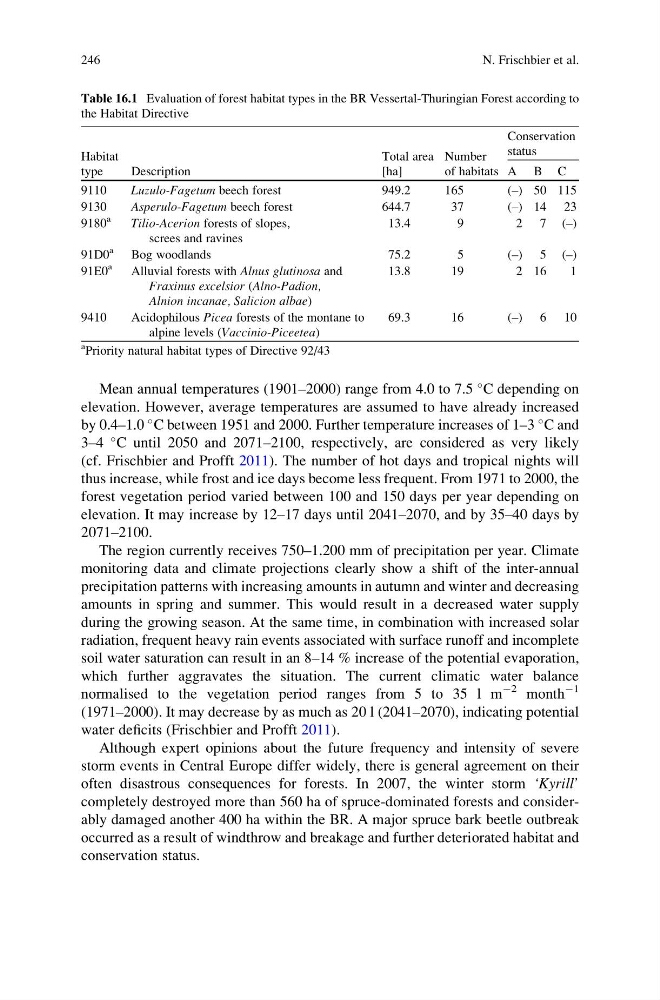
Table 16.1 Evaluation of forest habitat types in the BR Vessertal-Thuringian Forest according to
the Habitat Directive
Habitat
type
Description
Total area
[ha]
Number
of habitats
Conservation
status
A B C
9110
Luzulo-Fagetum beech forest
949.2
165
(–) 50 115
9130
Asperulo-Fagetum beech forest
644.7
37
(–) 14 23
9180
a
Tilio-Acerion forests of slopes,
screes and ravines
13.4
9
2 7 (–)
91D0
a
Bog woodlands
75.2
5
(–) 5 (–)
91E0
a
Alluvial forests with Alnus glutinosa and
Fraxinus excelsior (Alno-Padion,
Alnion incanae, Salicion albae)
13.8
19
2 16
1
9410
Acidophilous Picea forests of the montane to
alpine levels (Vaccinio-Piceetea)
69.3
16
(–) 6 10
a
Priority natural habitat types of Directive 92/43
246
N. Frischbier et al.
C depending on
elevation. However, average temperatures are assumed to have already increased
by 0.4–1.0
C between 1951 and 2000. Further temperature increases of 1–3
C and
3–4
C until 2050 and 2071–2100, respectively, are considered as very likely
(cf. Frischbier and Profft 2011). The number of hot days and tropical nights will
thus increase, while frost and ice days become less frequent. From 1971 to 2000, the
forest vegetation period varied between 100 and 150 days per year depending on
elevation. It may increase by 12–17 days until 2041–2070, and by 35–40 days by
2071–2100.
The region currently receives 750–1.200 mm of precipitation per year. Climate
monitoring data and climate projections clearly show a shift of the inter-annual
precipitation patterns with increasing amounts in autumn and winter and decreasing
amounts in spring and summer. This would result in a decreased water supply
during the growing season. At the same time, in combination with increased solar
radiation, frequent heavy rain events associated with surface runoff and incomplete
soil water saturation can result in an 8–14 % increase of the potential evaporation,
which further aggravates the situation. The current climatic water balance
normalised to the vegetation period ranges from 5 to 35 l m
À2 month
À1
(1971–2000). It may decrease by as much as 20 l (2041–2070), indicating potential
water deficits (Frischbier and Profft 2011).
Although expert opinions about the future frequency and intensity of severe
storm events in Central Europe differ widely, there is general agreement on their
often disastrous consequences for forests. In 2007, the winter storm ‘Kyrill’
completely destroyed more than 560 ha of spruce-dominated forests and considerably damaged another 400 ha within the BR. A major spruce bark beetle outbreak
occurred as a result of windthrow and breakage and further deteriorated habitat and
conservation status.
Table 16.1 Evaluation of forest habitat types in the BR Vessertal-Thuringian Forest according to
the Habitat Directive
Habitat
type
Description
Total area
[ha]
Number
of habitats
Conservation
status
A B C
9110
Luzulo-Fagetum beech forest
949.2
165
(–) 50 115
9130
Asperulo-Fagetum beech forest
644.7
37
(–) 14 23
9180
a
Tilio-Acerion forests of slopes,
screes and ravines
13.4
9
2 7 (–)
91D0
a
Bog woodlands
75.2
5
(–) 5 (–)
91E0
a
Alluvial forests with Alnus glutinosa and
Fraxinus excelsior (Alno-Padion,
Alnion incanae, Salicion albae)
13.8
19
2 16
1
9410
Acidophilous Picea forests of the montane to
alpine levels (Vaccinio-Piceetea)
69.3
16
(–) 6 10
a
Priority natural habitat types of Directive 92/43
246
N. Frischbier et al.