

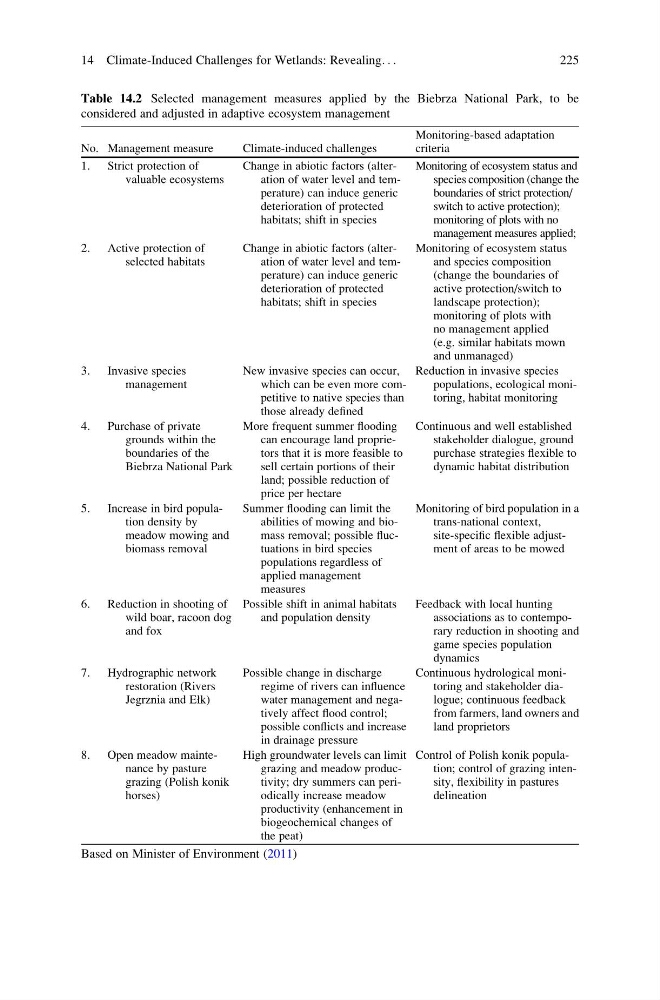
Table 14.2 Selected management measures applied by the Biebrza National Park, to be
considered and adjusted in adaptive ecosystem management
No. Management measure
Climate-induced challenges
Monitoring-based adaptation
criteria
1. Strict protection of
valuable ecosystems
Change in abiotic factors (alteration of water level and temperature) can induce generic
deterioration of protected
habitats; shift in species
Monitoring of ecosystem status and
species composition (change the
boundaries of strict protection/
switch to active protection);
monitoring of plots with no
management measures applied;
2. Active protection of
selected habitats
Change in abiotic factors (alteration of water level and temperature) can induce generic
deterioration of protected
habitats; shift in species
Monitoring of ecosystem status
and species composition
(change the boundaries of
active protection/switch to
landscape protection);
monitoring of plots with
no management applied
(e.g. similar habitats mown
and unmanaged)
3. Invasive species
management
New invasive species can occur,
which can be even more competitive to native species than
those already defined
Reduction in invasive species
populations, ecological monitoring, habitat monitoring
4. Purchase of private
grounds within the
boundaries of the
Biebrza National Park
More frequent summer flooding
can encourage land proprietors that it is more feasible to
sell certain portions of their
land; possible reduction of
price per hectare
Continuous and well established
stakeholder dialogue, ground
purchase strategies flexible to
dynamic habitat distribution
5. Increase in bird population density by
meadow mowing and
biomass removal
Summer flooding can limit the
abilities of mowing and biomass removal; possible fluctuations in bird species
populations regardless of
applied management
measures
Monitoring of bird population in a
trans-national context,
site-specific flexible adjustment of areas to be mowed
6. Reduction in shooting of
wild boar, racoon dog
and fox
Possible shift in animal habitats
and population density
Feedback with local hunting
associations as to contemporary reduction in shooting and
game species population
dynamics
7. Hydrographic network
restoration (Rivers
Jegrznia and Ełk)
Possible change in discharge
regime of rivers can influence
water management and negatively affect flood control;
possible conflicts and increase
in drainage pressure
Continuous hydrological monitoring and stakeholder dialogue; continuous feedback
from farmers, land owners and
land proprietors
8. Open meadow maintenance by pasture
grazing (Polish konik
horses)
High groundwater levels can limit
grazing and meadow productivity; dry summers can periodically increase meadow
productivity (enhancement in
biogeochemical changes of
the peat)
Control of Polish konik population; control of grazing intensity, flexibility in pastures
delineation
Based on Minister of Environment (2011)
14 Climate-Induced Challenges for Wetlands: Revealing. . .
225
considered and adjusted in adaptive ecosystem management
No. Management measure
Climate-induced challenges
Monitoring-based adaptation
criteria
1. Strict protection of
valuable ecosystems
Change in abiotic factors (alteration of water level and temperature) can induce generic
deterioration of protected
habitats; shift in species
Monitoring of ecosystem status and
species composition (change the
boundaries of strict protection/
switch to active protection);
monitoring of plots with no
management measures applied;
2. Active protection of
selected habitats
Change in abiotic factors (alteration of water level and temperature) can induce generic
deterioration of protected
habitats; shift in species
Monitoring of ecosystem status
and species composition
(change the boundaries of
active protection/switch to
landscape protection);
monitoring of plots with
no management applied
(e.g. similar habitats mown
and unmanaged)
3. Invasive species
management
New invasive species can occur,
which can be even more competitive to native species than
those already defined
Reduction in invasive species
populations, ecological monitoring, habitat monitoring
4. Purchase of private
grounds within the
boundaries of the
Biebrza National Park
More frequent summer flooding
can encourage land proprietors that it is more feasible to
sell certain portions of their
land; possible reduction of
price per hectare
Continuous and well established
stakeholder dialogue, ground
purchase strategies flexible to
dynamic habitat distribution
5. Increase in bird population density by
meadow mowing and
biomass removal
Summer flooding can limit the
abilities of mowing and biomass removal; possible fluctuations in bird species
populations regardless of
applied management
measures
Monitoring of bird population in a
trans-national context,
site-specific flexible adjustment of areas to be mowed
6. Reduction in shooting of
wild boar, racoon dog
and fox
Possible shift in animal habitats
and population density
Feedback with local hunting
associations as to contemporary reduction in shooting and
game species population
dynamics
7. Hydrographic network
restoration (Rivers
Jegrznia and Ełk)
Possible change in discharge
regime of rivers can influence
water management and negatively affect flood control;
possible conflicts and increase
in drainage pressure
Continuous hydrological monitoring and stakeholder dialogue; continuous feedback
from farmers, land owners and
land proprietors
8. Open meadow maintenance by pasture
grazing (Polish konik
horses)
High groundwater levels can limit
grazing and meadow productivity; dry summers can periodically increase meadow
productivity (enhancement in
biogeochemical changes of
the peat)
Control of Polish konik population; control of grazing intensity, flexibility in pastures
delineation
Based on Minister of Environment (2011)
14 Climate-Induced Challenges for Wetlands: Revealing. . .
225