

(Cramp and Simmons 1980). It occurs in flocks during autumn and winter, and is
monogamous in breeding period. The rock ptarmigan is a species with short-distance
movements during the year, in late summer it often moves only to higher altitudes
(nival belt) (Cramp and Simmons 1980). In TNP, the species was observed within an
elevation of 1,600–2,600 m a.s.l. during the summer period (Janc ˇar 1997) and between
1,350 and 2,350 m a.s.l. during the winter period (Kmecl 1997). Optimal habitats for
the species are grasslands, interspersed with smaller shrubs, high and small-scale
variation of inclination and exposition. In winter both factors provide mosaics of
variable snow cover and different snow heights, while during summer a variety of
microclimates favour high plant and food diversity (Bossert 1980; Nopp-Mayr and
Zohmann 2008). Size of territories in Alps varies between 10 and 35 ha, while the
distribution, extent and numbers of territories appear to be rather stable for decades
(Bossert 1980, 1995; Favaron et al. 2006). Breeding density varies among years and
areas, and it is mostly estimated from 2 to 7 breeding pair per km
2 (Bossert 1995; Peer
2005; Nopp-Mayr and Zohmann 2008).
Rock ptarmigan is evaluated as least concern species in IUCN Red List due to
extremely large range and population size (BirdLife International 2012) and it is
listed in Annex I of the EU Birds Directive (Direktiva 2009). In the Red Data book
of Slovenia it has a status of vulnerable species (Ur. l. RS 2002).
In contrast to the central distributional area of rock ptarmigan where the species
still occupies most of the original range, some local declines in relatively small
populations in Alps and Pyrenees, on the southern border of its distribution area,
have been noted (Novoa et al. 2008; Revermann et al. 2012; Storch 2007). In some
studies, based on the effect of climate on the rock ptarmigan and its related whitetailed ptarmigan (Lagopus leucurus), climate change has been recognised as one of
the major factors influencing the population dynamics of these species
(e.g. Revermann et al. 2012; Wang et al. 2002).
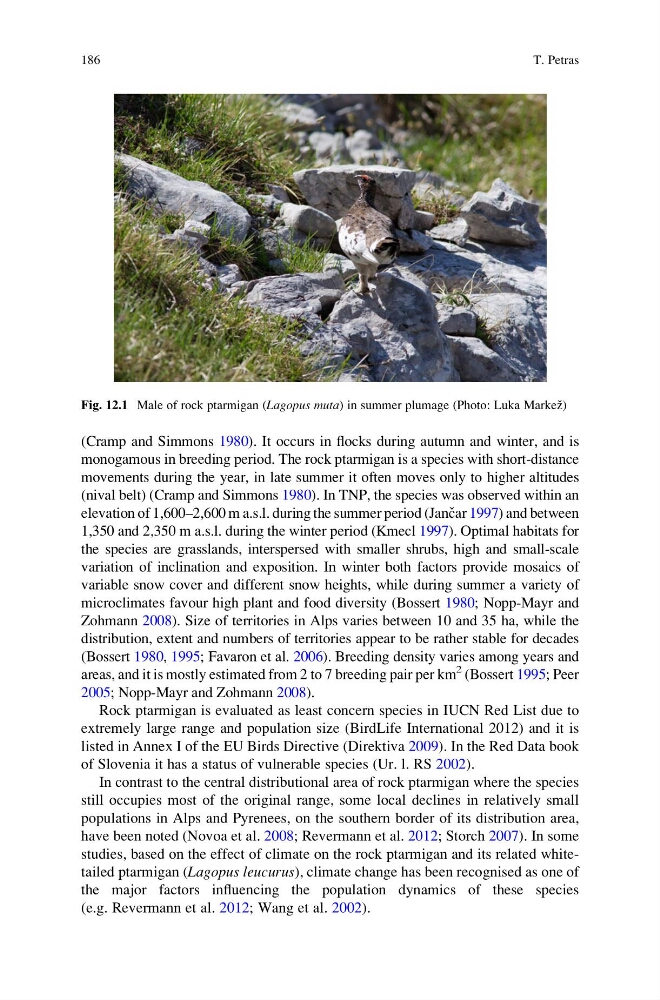
Fig. 12.1 Male of rock ptarmigan (Lagopus muta) in summer plumage (Photo: Luka Markez ˇ)
186
T. Petras
monogamous in breeding period. The rock ptarmigan is a species with short-distance
movements during the year, in late summer it often moves only to higher altitudes
(nival belt) (Cramp and Simmons 1980). In TNP, the species was observed within an
elevation of 1,600–2,600 m a.s.l. during the summer period (Janc ˇar 1997) and between
1,350 and 2,350 m a.s.l. during the winter period (Kmecl 1997). Optimal habitats for
the species are grasslands, interspersed with smaller shrubs, high and small-scale
variation of inclination and exposition. In winter both factors provide mosaics of
variable snow cover and different snow heights, while during summer a variety of
microclimates favour high plant and food diversity (Bossert 1980; Nopp-Mayr and
Zohmann 2008). Size of territories in Alps varies between 10 and 35 ha, while the
distribution, extent and numbers of territories appear to be rather stable for decades
(Bossert 1980, 1995; Favaron et al. 2006). Breeding density varies among years and
areas, and it is mostly estimated from 2 to 7 breeding pair per km
2 (Bossert 1995; Peer
2005; Nopp-Mayr and Zohmann 2008).
Rock ptarmigan is evaluated as least concern species in IUCN Red List due to
extremely large range and population size (BirdLife International 2012) and it is
listed in Annex I of the EU Birds Directive (Direktiva 2009). In the Red Data book
of Slovenia it has a status of vulnerable species (Ur. l. RS 2002).
In contrast to the central distributional area of rock ptarmigan where the species
still occupies most of the original range, some local declines in relatively small
populations in Alps and Pyrenees, on the southern border of its distribution area,
have been noted (Novoa et al. 2008; Revermann et al. 2012; Storch 2007). In some
studies, based on the effect of climate on the rock ptarmigan and its related whitetailed ptarmigan (Lagopus leucurus), climate change has been recognised as one of
the major factors influencing the population dynamics of these species
(e.g. Revermann et al. 2012; Wang et al. 2002).
Fig. 12.1 Male of rock ptarmigan (Lagopus muta) in summer plumage (Photo: Luka Markez ˇ)
186
T. Petras