

and bog woodlands with Pinus mugo and Picea abies. Anyway, this vegetation is
only the transitional phase and among others also the result of natural processes in
the past. The information about vegetation in the history and its gradual changing
could be determined by pollens, which are stored in sediments, like peat layers
(S ˇ ercelj 1996). Furthermore, on the base of stable isotopes of carbon, oxygen and
hydrogen the changes in hydrology and temperature could be determined (Joosten
and Couwenberg 2008). Considering the peatbogs as a place to accumulate the
organic substrate (peat), of which at least 50 % is carbon, they are valuable to
understand environmental changes in the past (Arnold and Libby 1949; S ˇ ercelj
1996; Joosten and Couwenberg 2008).
Peatland ecosystems are characterised by extreme environmental conditions,
like low nutrient supply, seasonally and annually changing humidity, great
day-night variations in air temperature and low pH-values to which only specialists
are adapted (Anderson 2010). Therefore, many endangered species, such as
Drosera rotundifolia, Pinguicula alpina, Menyanthes trifoliata, Carex pauciflora
and Sphagnum sp. are characteristic for these ecosystems. They provide also
important breeding and/or feeding habitats for some animal species, including
Somatochlora arctica, Leucorrhinia dubia (Kotarac 1997), as well as Sorex
minutus, S. alpinus, Scolopax rusticola and Tetrao urogallus, respectively.
Considering the comparatively small area of peat bogs in TNP as well as the
location of S ˇ ijec peat bog at the southern-border of peat bog distribution in Europe,
impacts of climate change will be detected very early. The main management goal
for peatlands in TNP is to conserve the natural dynamics of peatland ecosystems
(Javni zavod Triglavski narodni park 2013). TNP’s peatland monitoring is designed
as a combination of vegetation monitoring by permanent sampling plots and remote
sensing.
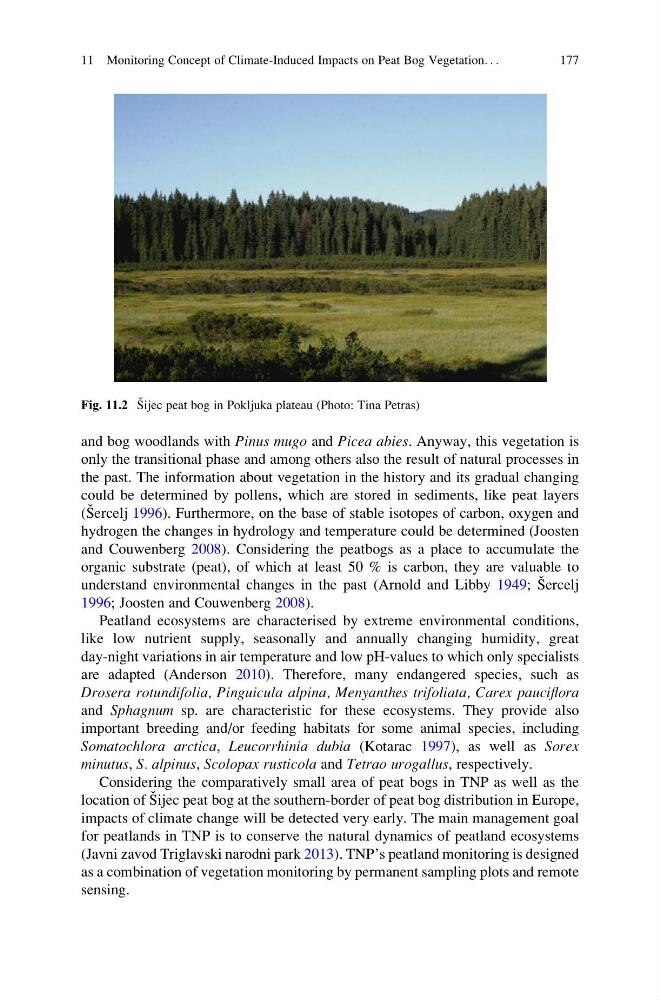
Fig. 11.2 S ˇ ijec peat bog in Pokljuka plateau (Photo: Tina Petras)
11 Monitoring Concept of Climate-Induced Impacts on Peat Bog Vegetation. . .
177
only the transitional phase and among others also the result of natural processes in
the past. The information about vegetation in the history and its gradual changing
could be determined by pollens, which are stored in sediments, like peat layers
(S ˇ ercelj 1996). Furthermore, on the base of stable isotopes of carbon, oxygen and
hydrogen the changes in hydrology and temperature could be determined (Joosten
and Couwenberg 2008). Considering the peatbogs as a place to accumulate the
organic substrate (peat), of which at least 50 % is carbon, they are valuable to
understand environmental changes in the past (Arnold and Libby 1949; S ˇ ercelj
1996; Joosten and Couwenberg 2008).
Peatland ecosystems are characterised by extreme environmental conditions,
like low nutrient supply, seasonally and annually changing humidity, great
day-night variations in air temperature and low pH-values to which only specialists
are adapted (Anderson 2010). Therefore, many endangered species, such as
Drosera rotundifolia, Pinguicula alpina, Menyanthes trifoliata, Carex pauciflora
and Sphagnum sp. are characteristic for these ecosystems. They provide also
important breeding and/or feeding habitats for some animal species, including
Somatochlora arctica, Leucorrhinia dubia (Kotarac 1997), as well as Sorex
minutus, S. alpinus, Scolopax rusticola and Tetrao urogallus, respectively.
Considering the comparatively small area of peat bogs in TNP as well as the
location of S ˇ ijec peat bog at the southern-border of peat bog distribution in Europe,
impacts of climate change will be detected very early. The main management goal
for peatlands in TNP is to conserve the natural dynamics of peatland ecosystems
(Javni zavod Triglavski narodni park 2013). TNP’s peatland monitoring is designed
as a combination of vegetation monitoring by permanent sampling plots and remote
sensing.
Fig. 11.2 S ˇ ijec peat bog in Pokljuka plateau (Photo: Tina Petras)
11 Monitoring Concept of Climate-Induced Impacts on Peat Bog Vegetation. . .
177