

Long-term surveys of vegetation communities will provide a better understanding
of the mechanisms of vegetation change as well as mechanisms of species coexistence (Bakker et al. 1996).
The plateau Pokljuka is located in the eastern Julian Alps, between ca. 1,200 and
1,500 m a.s.l. It is a carst plateau that has become its typical alpine appearance due
to glacial processes (Kunaver 1985). The prevailing vegetation is human influenced
secondary spruce forest, which was replaced due to forestry – on the place of former
beech forest (Anemone trifoliae–Fagetum) (Wraber 1985). The peatbogs in
Pokljuka plateau are one of the most visible remains from the glacial period.
They have developed from former glacial lakes, carved by glacier and, additionally,
filled with thick layer of organic substrate (Piskernik and Martinc ˇic ˇ 1970). The bogs
are lying mostly on carbonate ground, frequently mixed with Chert (Kuntnar and
Martinc ˇic ˇ 2001). The most important factors influencing peatland formation and its
survival, besides topography (plateau surface with a diverse microrelief) (Dierssen
and Dierssen 2001), include climate characteristics such as the precipitationevaporation relationship (Moore and Bellamy 1974 cited in Gignac and Vitt
1994) and low temperatures (Gignac and Vitt 1994).
S ˇ ijec with its surrounding (ca. 30 ha) (Fig. 11.2) is one out of 12 peat bogs on
Pokljuka high plateau. The area is characterised by different vegetation types, like
active raised bogs, alkaline fens, fen meadows, transition mires and quaking bogs,
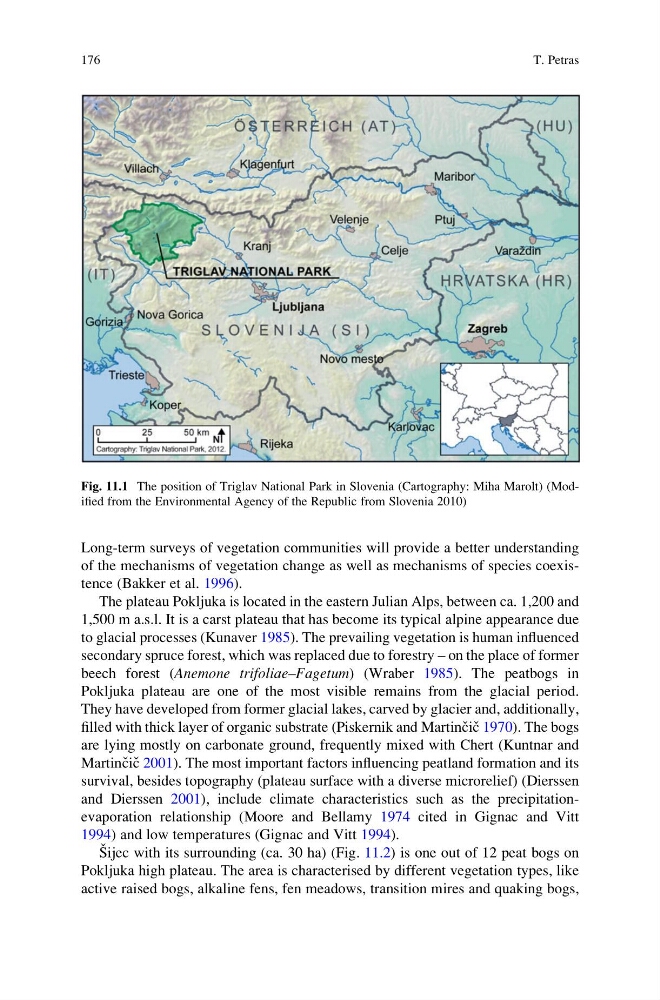
Fig. 11.1 The position of Triglav National Park in Slovenia (Cartography: Miha Marolt) (Modified from the Environmental Agency of the Republic from Slovenia 2010)
176
T. Petras
of the mechanisms of vegetation change as well as mechanisms of species coexistence (Bakker et al. 1996).
The plateau Pokljuka is located in the eastern Julian Alps, between ca. 1,200 and
1,500 m a.s.l. It is a carst plateau that has become its typical alpine appearance due
to glacial processes (Kunaver 1985). The prevailing vegetation is human influenced
secondary spruce forest, which was replaced due to forestry – on the place of former
beech forest (Anemone trifoliae–Fagetum) (Wraber 1985). The peatbogs in
Pokljuka plateau are one of the most visible remains from the glacial period.
They have developed from former glacial lakes, carved by glacier and, additionally,
filled with thick layer of organic substrate (Piskernik and Martinc ˇic ˇ 1970). The bogs
are lying mostly on carbonate ground, frequently mixed with Chert (Kuntnar and
Martinc ˇic ˇ 2001). The most important factors influencing peatland formation and its
survival, besides topography (plateau surface with a diverse microrelief) (Dierssen
and Dierssen 2001), include climate characteristics such as the precipitationevaporation relationship (Moore and Bellamy 1974 cited in Gignac and Vitt
1994) and low temperatures (Gignac and Vitt 1994).
S ˇ ijec with its surrounding (ca. 30 ha) (Fig. 11.2) is one out of 12 peat bogs on
Pokljuka high plateau. The area is characterised by different vegetation types, like
active raised bogs, alkaline fens, fen meadows, transition mires and quaking bogs,
Fig. 11.1 The position of Triglav National Park in Slovenia (Cartography: Miha Marolt) (Modified from the Environmental Agency of the Republic from Slovenia 2010)
176
T. Petras