

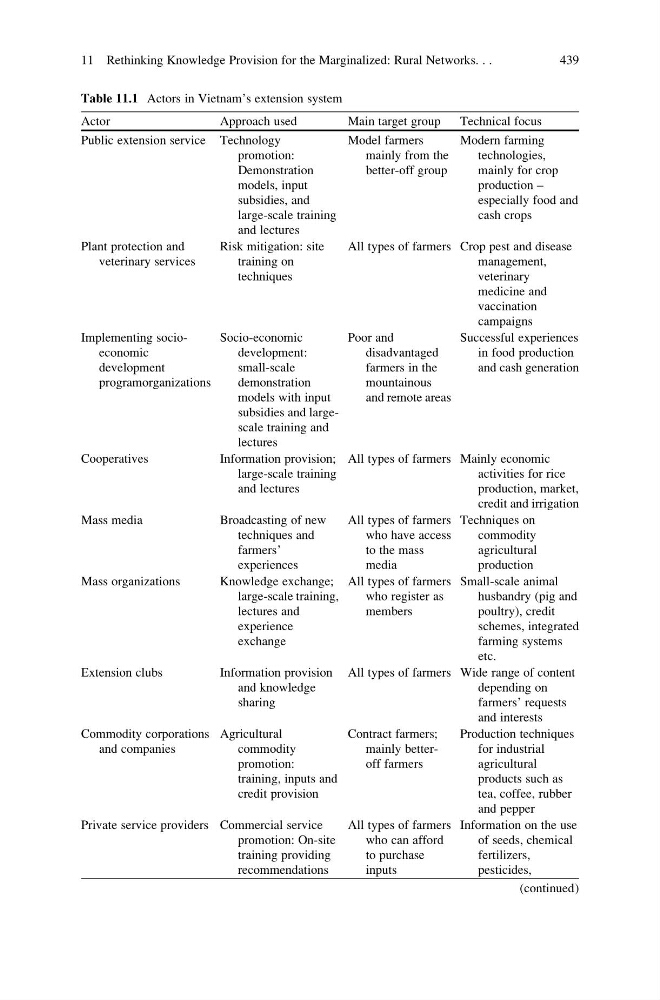
Table 11.1 Actors in Vietnam’s extension system
Actor
Approach used
Main target group
Technical focus
Public extension service Technology
promotion:
Demonstration
models, input
subsidies, and
large-scale training
and lectures
Model farmers
mainly from the
better-off group
Modern farming
technologies,
mainly for crop
production –
especially food and
cash crops
Plant protection and
veterinary services
Risk mitigation: site
training on
techniques
All types of farmers Crop pest and disease
management,
veterinary
medicine and
vaccination
campaigns
Implementing socioeconomic
development
programorganizations
Socio-economic
development:
small-scale
demonstration
models with input
subsidies and largescale training and
lectures
Poor and
disadvantaged
farmers in the
mountainous
and remote areas
Successful experiences
in food production
and cash generation
Cooperatives
Information provision;
large-scale training
and lectures
All types of farmers Mainly economic
activities for rice
production, market,
credit and irrigation
Mass media
Broadcasting of new
techniques and
farmers’
experiences
All types of farmers
who have access
to the mass
media
Techniques on
commodity
agricultural
production
Mass organizations
Knowledge exchange;
large-scale training,
lectures and
experience
exchange
All types of farmers
who register as
members
Small-scale animal
husbandry (pig and
poultry), credit
schemes, integrated
farming systems
etc.
Extension clubs
Information provision
and knowledge
sharing
All types of farmers Wide range of content
depending on
farmers’ requests
and interests
Commodity corporations
and companies
Agricultural
commodity
promotion:
training, inputs and
credit provision
Contract farmers;
mainly betteroff farmers
Production techniques
for industrial
agricultural
products such as
tea, coffee, rubber
and pepper
Private service providers Commercial service
promotion: On-site
training providing
recommendations
All types of farmers
who can afford
to purchase
inputs
Information on the use
of seeds, chemical
fertilizers,
pesticides,
(continued)
11 Rethinking Knowledge Provision for the Marginalized: Rural Networks. . .
439
Actor
Approach used
Main target group
Technical focus
Public extension service Technology
promotion:
Demonstration
models, input
subsidies, and
large-scale training
and lectures
Model farmers
mainly from the
better-off group
Modern farming
technologies,
mainly for crop
production –
especially food and
cash crops
Plant protection and
veterinary services
Risk mitigation: site
training on
techniques
All types of farmers Crop pest and disease
management,
veterinary
medicine and
vaccination
campaigns
Implementing socioeconomic
development
programorganizations
Socio-economic
development:
small-scale
demonstration
models with input
subsidies and largescale training and
lectures
Poor and
disadvantaged
farmers in the
mountainous
and remote areas
Successful experiences
in food production
and cash generation
Cooperatives
Information provision;
large-scale training
and lectures
All types of farmers Mainly economic
activities for rice
production, market,
credit and irrigation
Mass media
Broadcasting of new
techniques and
farmers’
experiences
All types of farmers
who have access
to the mass
media
Techniques on
commodity
agricultural
production
Mass organizations
Knowledge exchange;
large-scale training,
lectures and
experience
exchange
All types of farmers
who register as
members
Small-scale animal
husbandry (pig and
poultry), credit
schemes, integrated
farming systems
etc.
Extension clubs
Information provision
and knowledge
sharing
All types of farmers Wide range of content
depending on
farmers’ requests
and interests
Commodity corporations
and companies
Agricultural
commodity
promotion:
training, inputs and
credit provision
Contract farmers;
mainly betteroff farmers
Production techniques
for industrial
agricultural
products such as
tea, coffee, rubber
and pepper
Private service providers Commercial service
promotion: On-site
training providing
recommendations
All types of farmers
who can afford
to purchase
inputs
Information on the use
of seeds, chemical
fertilizers,
pesticides,
(continued)
11 Rethinking Knowledge Provision for the Marginalized: Rural Networks. . .
439