

In the Mae Sa watershed in Thailand, the project performed studies on the
transport of pesticides at the plot, field and watershed scales. Plot scale experiments
showed that pesticide transport by matrix flow in both vertical and lateral direction
was negligible (Kahl et al. 2007). In an additional experiment on the plot scale
(Ciglasch et al. 2005), it was found that after 1 day of application, all nine applied
pesticides were transported by vertical preferential flow in small fractions
(0.001–2 % of the amount applied) and to a depth of at least 0.55 m in a single
flush. It must be stressed; however, that this was an extreme transport condition,
because directly after application a heavy tropical storm giving 80 mm of rain took
place. As a result, pesticides dissipated quickly in the topsoil during the experiment,
and 10 days after application, only two of the nine pesticides were found in the soil
solution sampled at a depth of 0.55 m. Dimethoate was detectable for about 1 month
and endosulfan in individual samples throughout the entire experiment.
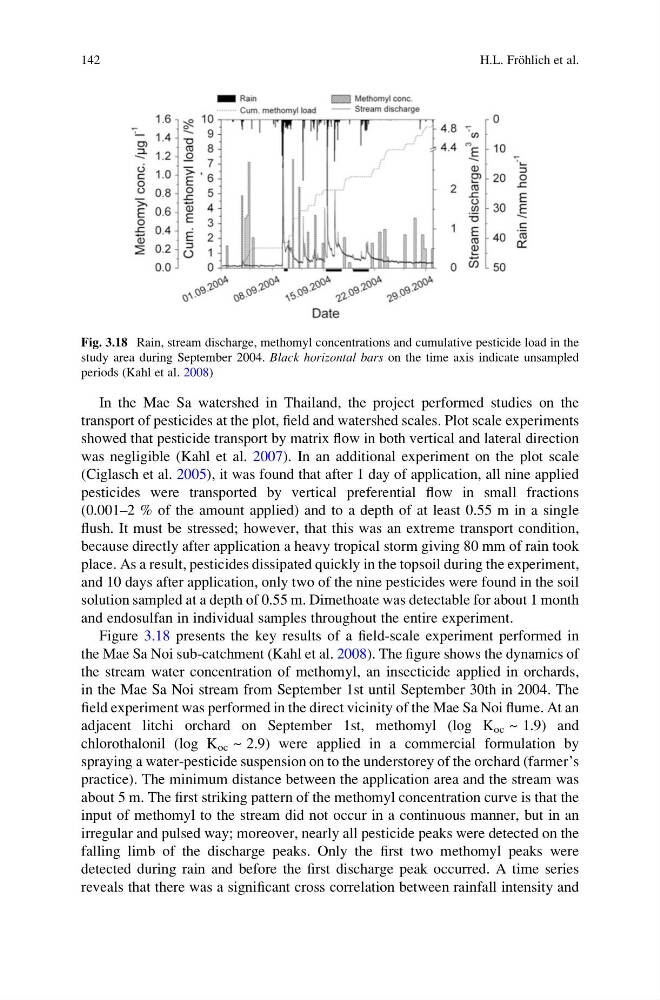
Figure 3.18 presents the key results of a field-scale experiment performed in
the Mae Sa Noi sub-catchment (Kahl et al. 2008). The figure shows the dynamics of
the stream water concentration of methomyl, an insecticide applied in orchards,
in the Mae Sa Noi stream from September 1st until September 30th in 2004. The
field experiment was performed in the direct vicinity of the Mae Sa Noi flume. At an
adjacent litchi orchard on September 1st, methomyl (log K oc ~ 1.9) and
chlorothalonil (log K oc ~ 2.9) were applied in a commercial formulation by
spraying a water-pesticide suspension on to the understorey of the orchard (farmer’s
practice). The minimum distance between the application area and the stream was
about 5 m. The first striking pattern of the methomyl concentration curve is that the
input of methomyl to the stream did not occur in a continuous manner, but in an
irregular and pulsed way; moreover, nearly all pesticide peaks were detected on the
falling limb of the discharge peaks. Only the first two methomyl peaks were
detected during rain and before the first discharge peak occurred. A time series
reveals that there was a significant cross correlation between rainfall intensity and
Fig. 3.18 Rain, stream discharge, methomyl concentrations and cumulative pesticide load in the
study area during September 2004. Black horizontal bars on the time axis indicate unsampled
periods (Kahl et al. 2008)
142
H.L. Fro ¨hlich et al.
transport of pesticides at the plot, field and watershed scales. Plot scale experiments
showed that pesticide transport by matrix flow in both vertical and lateral direction
was negligible (Kahl et al. 2007). In an additional experiment on the plot scale
(Ciglasch et al. 2005), it was found that after 1 day of application, all nine applied
pesticides were transported by vertical preferential flow in small fractions
(0.001–2 % of the amount applied) and to a depth of at least 0.55 m in a single
flush. It must be stressed; however, that this was an extreme transport condition,
because directly after application a heavy tropical storm giving 80 mm of rain took
place. As a result, pesticides dissipated quickly in the topsoil during the experiment,
and 10 days after application, only two of the nine pesticides were found in the soil
solution sampled at a depth of 0.55 m. Dimethoate was detectable for about 1 month
and endosulfan in individual samples throughout the entire experiment.
Figure 3.18 presents the key results of a field-scale experiment performed in
the Mae Sa Noi sub-catchment (Kahl et al. 2008). The figure shows the dynamics of
the stream water concentration of methomyl, an insecticide applied in orchards,
in the Mae Sa Noi stream from September 1st until September 30th in 2004. The
field experiment was performed in the direct vicinity of the Mae Sa Noi flume. At an
adjacent litchi orchard on September 1st, methomyl (log K oc ~ 1.9) and
chlorothalonil (log K oc ~ 2.9) were applied in a commercial formulation by
spraying a water-pesticide suspension on to the understorey of the orchard (farmer’s
practice). The minimum distance between the application area and the stream was
about 5 m. The first striking pattern of the methomyl concentration curve is that the
input of methomyl to the stream did not occur in a continuous manner, but in an
irregular and pulsed way; moreover, nearly all pesticide peaks were detected on the
falling limb of the discharge peaks. Only the first two methomyl peaks were
detected during rain and before the first discharge peak occurred. A time series
reveals that there was a significant cross correlation between rainfall intensity and
Fig. 3.18 Rain, stream discharge, methomyl concentrations and cumulative pesticide load in the
study area during September 2004. Black horizontal bars on the time axis indicate unsampled
periods (Kahl et al. 2008)
142
H.L. Fro ¨hlich et al.