

64
2 Experiments in Pebble Flows
2.4.3 Basic Physics of Quasi-Static Flow
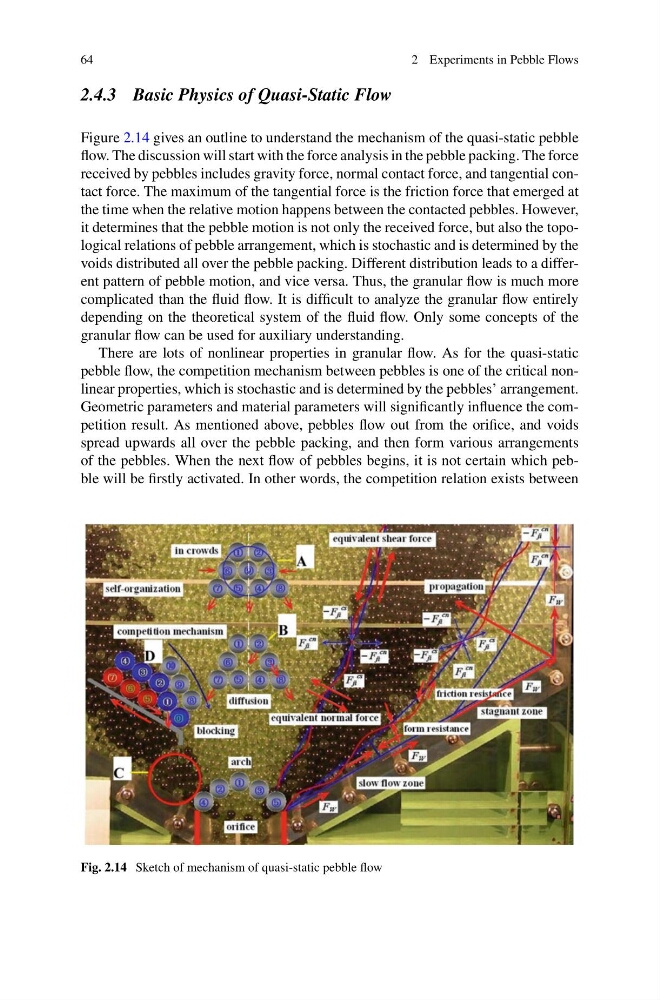
Figure 2.14 gives an outline to understand the mechanism of the quasi-static pebble
flow. The discussion will start with the force analysis in the pebble packing. The force
received by pebbles includes gravity force, normal contact force, and tangential contact force. The maximum of the tangential force is the friction force that emerged at
the time when the relative motion happens between the contacted pebbles. However,
it determines that the pebble motion is not only the received force, but also the topological relations of pebble arrangement, which is stochastic and is determined by the
voids distributed all over the pebble packing. Different distribution leads to a different pattern of pebble motion, and vice versa. Thus, the granular flow is much more
complicated than the fluid flow. It is difficult to analyze the granular flow entirely
depending on the theoretical system of the fluid flow. Only some concepts of the
granular flow can be used for auxiliary understanding.
There are lots of nonlinear properties in granular flow. As for the quasi-static
pebble flow, the competition mechanism between pebbles is one of the critical nonlinear properties, which is stochastic and is determined by the pebbles’ arrangement.
Geometric parameters and material parameters will significantly influence the competition result. As mentioned above, pebbles flow out from the orifice, and voids
spread upwards all over the pebble packing, and then form various arrangements
of the pebbles. When the next flow of pebbles begins, it is not certain which pebble will be firstly activated. In other words, the competition relation exists between
Fig. 2.14 Sketch of mechanism of quasi-static pebble flow
2 Experiments in Pebble Flows
2.4.3 Basic Physics of Quasi-Static Flow
Figure 2.14 gives an outline to understand the mechanism of the quasi-static pebble
flow. The discussion will start with the force analysis in the pebble packing. The force
received by pebbles includes gravity force, normal contact force, and tangential contact force. The maximum of the tangential force is the friction force that emerged at
the time when the relative motion happens between the contacted pebbles. However,
it determines that the pebble motion is not only the received force, but also the topological relations of pebble arrangement, which is stochastic and is determined by the
voids distributed all over the pebble packing. Different distribution leads to a different pattern of pebble motion, and vice versa. Thus, the granular flow is much more
complicated than the fluid flow. It is difficult to analyze the granular flow entirely
depending on the theoretical system of the fluid flow. Only some concepts of the
granular flow can be used for auxiliary understanding.
There are lots of nonlinear properties in granular flow. As for the quasi-static
pebble flow, the competition mechanism between pebbles is one of the critical nonlinear properties, which is stochastic and is determined by the pebbles’ arrangement.
Geometric parameters and material parameters will significantly influence the competition result. As mentioned above, pebbles flow out from the orifice, and voids
spread upwards all over the pebble packing, and then form various arrangements
of the pebbles. When the next flow of pebbles begins, it is not certain which pebble will be firstly activated. In other words, the competition relation exists between
Fig. 2.14 Sketch of mechanism of quasi-static pebble flow