

2.4 Pebble Flow Mechanism Analysis
63
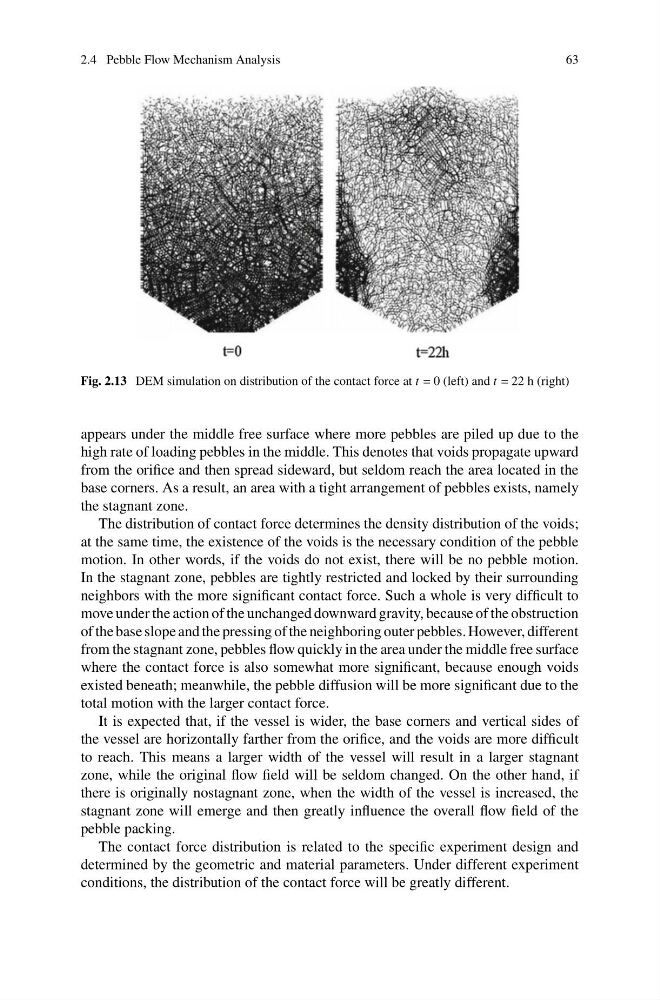
Fig. 2.13 DEM simulation on distribution of the contact force at t = 0 (left) and t = 22 h (right)
appears under the middle free surface where more pebbles are piled up due to the
high rate of loading pebbles in the middle. This denotes that voids propagate upward
from the orifice and then spread sideward, but seldom reach the area located in the
base corners. As a result, an area with a tight arrangement of pebbles exists, namely
the stagnant zone.
The distribution of contact force determines the density distribution of the voids;
at the same time, the existence of the voids is the necessary condition of the pebble
motion. In other words, if the voids do not exist, there will be no pebble motion.
In the stagnant zone, pebbles are tightly restricted and locked by their surrounding
neighbors with the more significant contact force. Such a whole is very difficult to
move under the action of the unchanged downward gravity, because of the obstruction
of the base slope and the pressing of the neighboring outer pebbles. However, different
from the stagnant zone, pebbles flow quickly in the area under the middle free surface
where the contact force is also somewhat more significant, because enough voids
existed beneath; meanwhile, the pebble diffusion will be more significant due to the
total motion with the larger contact force.
It is expected that, if the vessel is wider, the base corners and vertical sides of
the vessel are horizontally farther from the orifice, and the voids are more difficult
to reach. This means a larger width of the vessel will result in a larger stagnant
zone, while the original flow field will be seldom changed. On the other hand, if
there is originally nostagnant zone, when the width of the vessel is increased, the
stagnant zone will emerge and then greatly influence the overall flow field of the
pebble packing.
The contact force distribution is related to the specific experiment design and
determined by the geometric and material parameters. Under different experiment
conditions, the distribution of the contact force will be greatly different.
63
Fig. 2.13 DEM simulation on distribution of the contact force at t = 0 (left) and t = 22 h (right)
appears under the middle free surface where more pebbles are piled up due to the
high rate of loading pebbles in the middle. This denotes that voids propagate upward
from the orifice and then spread sideward, but seldom reach the area located in the
base corners. As a result, an area with a tight arrangement of pebbles exists, namely
the stagnant zone.
The distribution of contact force determines the density distribution of the voids;
at the same time, the existence of the voids is the necessary condition of the pebble
motion. In other words, if the voids do not exist, there will be no pebble motion.
In the stagnant zone, pebbles are tightly restricted and locked by their surrounding
neighbors with the more significant contact force. Such a whole is very difficult to
move under the action of the unchanged downward gravity, because of the obstruction
of the base slope and the pressing of the neighboring outer pebbles. However, different
from the stagnant zone, pebbles flow quickly in the area under the middle free surface
where the contact force is also somewhat more significant, because enough voids
existed beneath; meanwhile, the pebble diffusion will be more significant due to the
total motion with the larger contact force.
It is expected that, if the vessel is wider, the base corners and vertical sides of
the vessel are horizontally farther from the orifice, and the voids are more difficult
to reach. This means a larger width of the vessel will result in a larger stagnant
zone, while the original flow field will be seldom changed. On the other hand, if
there is originally nostagnant zone, when the width of the vessel is increased, the
stagnant zone will emerge and then greatly influence the overall flow field of the
pebble packing.
The contact force distribution is related to the specific experiment design and
determined by the geometric and material parameters. Under different experiment
conditions, the distribution of the contact force will be greatly different.