

7.3 Flow-Corrective Insert Optimization
455
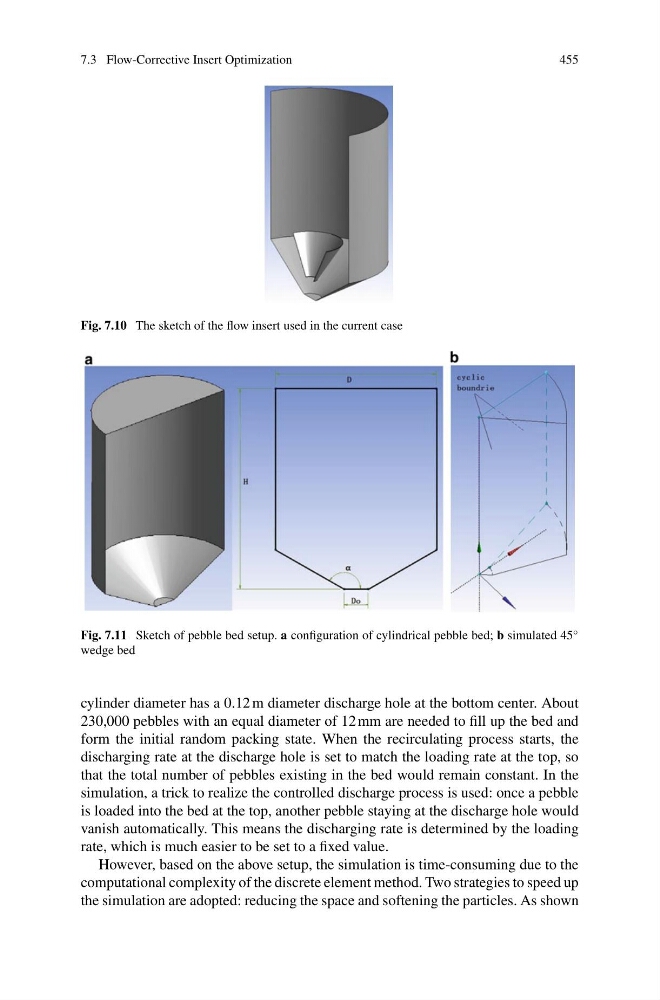
Fig. 7.10 The sketch of the flow insert used in the current case
Fig. 7.11 Sketch of pebble bed setup. a configuration of cylindrical pebble bed; b simulated 45 ◦
wedge bed
cylinder diameter has a 0.12 m diameter discharge hole at the bottom center. About
230,000 pebbles with an equal diameter of 12 mm are needed to fill up the bed and
form the initial random packing state. When the recirculating process starts, the
discharging rate at the discharge hole is set to match the loading rate at the top, so
that the total number of pebbles existing in the bed would remain constant. In the
simulation, a trick to realize the controlled discharge process is used: once a pebble
is loaded into the bed at the top, another pebble staying at the discharge hole would
vanish automatically. This means the discharging rate is determined by the loading
rate, which is much easier to be set to a fixed value.
However, based on the above setup, the simulation is time-consuming due to the
computational complexity of the discrete element method. Two strategies to speed up
the simulation are adopted: reducing the space and softening the particles. As shown
455
Fig. 7.10 The sketch of the flow insert used in the current case
Fig. 7.11 Sketch of pebble bed setup. a configuration of cylindrical pebble bed; b simulated 45 ◦
wedge bed
cylinder diameter has a 0.12 m diameter discharge hole at the bottom center. About
230,000 pebbles with an equal diameter of 12 mm are needed to fill up the bed and
form the initial random packing state. When the recirculating process starts, the
discharging rate at the discharge hole is set to match the loading rate at the top, so
that the total number of pebbles existing in the bed would remain constant. In the
simulation, a trick to realize the controlled discharge process is used: once a pebble
is loaded into the bed at the top, another pebble staying at the discharge hole would
vanish automatically. This means the discharging rate is determined by the loading
rate, which is much easier to be set to a fixed value.
However, based on the above setup, the simulation is time-consuming due to the
computational complexity of the discrete element method. Two strategies to speed up
the simulation are adopted: reducing the space and softening the particles. As shown