

434
6 Applications: Two-Region Pebble Beds
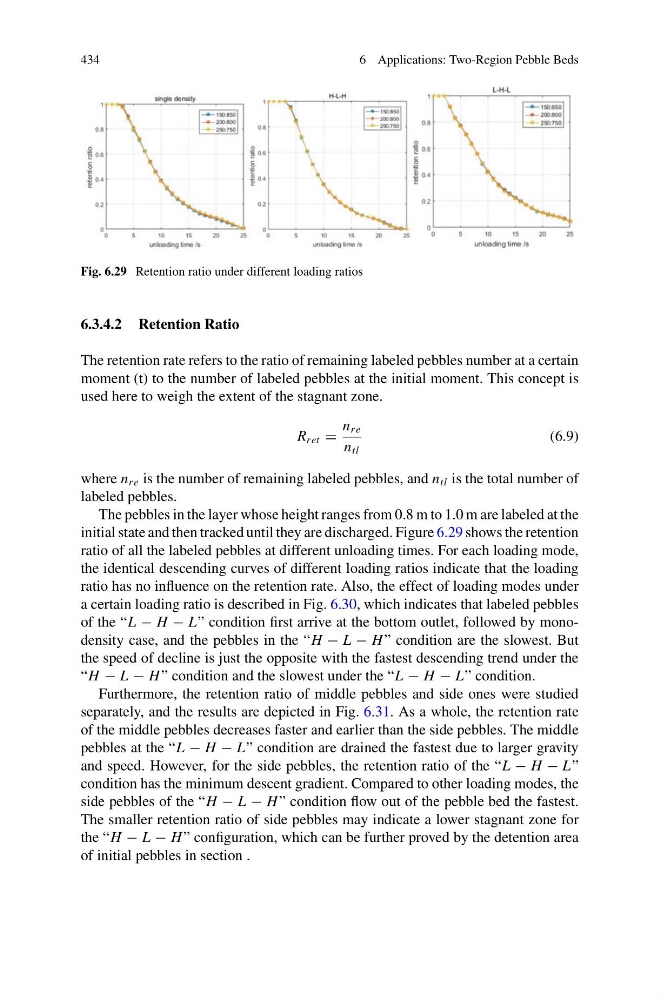
Fig. 6.29 Retention ratio under different loading ratios
6.3.4.2 Retention Ratio
The retention rate refers to the ratio of remaining labeled pebbles number at a certain
moment (t) to the number of labeled pebbles at the initial moment. This concept is
used here to weigh the extent of the stagnant zone.
R ret =
n re
n tl
(6.9)
where n re is the number of remaining labeled pebbles, and n tl is the total number of
labeled pebbles.
The pebbles in the layer whose height ranges from 0.8 m to 1.0 m are labeled at the
initial state and then tracked until they are discharged. Figure 6.29 shows the retention
ratio of all the labeled pebbles at different unloading times. For each loading mode,
the identical descending curves of different loading ratios indicate that the loading
ratio has no influence on the retention rate. Also, the effect of loading modes under
a certain loading ratio is described in Fig. 6.30, which indicates that labeled pebbles
of the “L − H − L” condition first arrive at the bottom outlet, followed by monodensity case, and the pebbles in the “H − L − H ” condition are the slowest. But
the speed of decline is just the opposite with the fastest descending trend under the
“H − L − H ” condition and the slowest under the “L − H − L” condition.
Furthermore, the retention ratio of middle pebbles and side ones were studied
separately, and the results are depicted in Fig. 6.31. As a whole, the retention rate
of the middle pebbles decreases faster and earlier than the side pebbles. The middle
pebbles at the “L − H − L” condition are drained the fastest due to larger gravity
and speed. However, for the side pebbles, the retention ratio of the “L − H − L”
condition has the minimum descent gradient. Compared to other loading modes, the
side pebbles of the “H − L − H ” condition flow out of the pebble bed the fastest.
The smaller retention ratio of side pebbles may indicate a lower stagnant zone for
the “H − L − H ” configuration, which can be further proved by the detention area
of initial pebbles in section .
6 Applications: Two-Region Pebble Beds
Fig. 6.29 Retention ratio under different loading ratios
6.3.4.2 Retention Ratio
The retention rate refers to the ratio of remaining labeled pebbles number at a certain
moment (t) to the number of labeled pebbles at the initial moment. This concept is
used here to weigh the extent of the stagnant zone.
R ret =
n re
n tl
(6.9)
where n re is the number of remaining labeled pebbles, and n tl is the total number of
labeled pebbles.
The pebbles in the layer whose height ranges from 0.8 m to 1.0 m are labeled at the
initial state and then tracked until they are discharged. Figure 6.29 shows the retention
ratio of all the labeled pebbles at different unloading times. For each loading mode,
the identical descending curves of different loading ratios indicate that the loading
ratio has no influence on the retention rate. Also, the effect of loading modes under
a certain loading ratio is described in Fig. 6.30, which indicates that labeled pebbles
of the “L − H − L” condition first arrive at the bottom outlet, followed by monodensity case, and the pebbles in the “H − L − H ” condition are the slowest. But
the speed of decline is just the opposite with the fastest descending trend under the
“H − L − H ” condition and the slowest under the “L − H − L” condition.
Furthermore, the retention ratio of middle pebbles and side ones were studied
separately, and the results are depicted in Fig. 6.31. As a whole, the retention rate
of the middle pebbles decreases faster and earlier than the side pebbles. The middle
pebbles at the “L − H − L” condition are drained the fastest due to larger gravity
and speed. However, for the side pebbles, the retention ratio of the “L − H − L”
condition has the minimum descent gradient. Compared to other loading modes, the
side pebbles of the “H − L − H ” condition flow out of the pebble bed the fastest.
The smaller retention ratio of side pebbles may indicate a lower stagnant zone for
the “H − L − H ” configuration, which can be further proved by the detention area
of initial pebbles in section .