

6.2 Size Effects
417
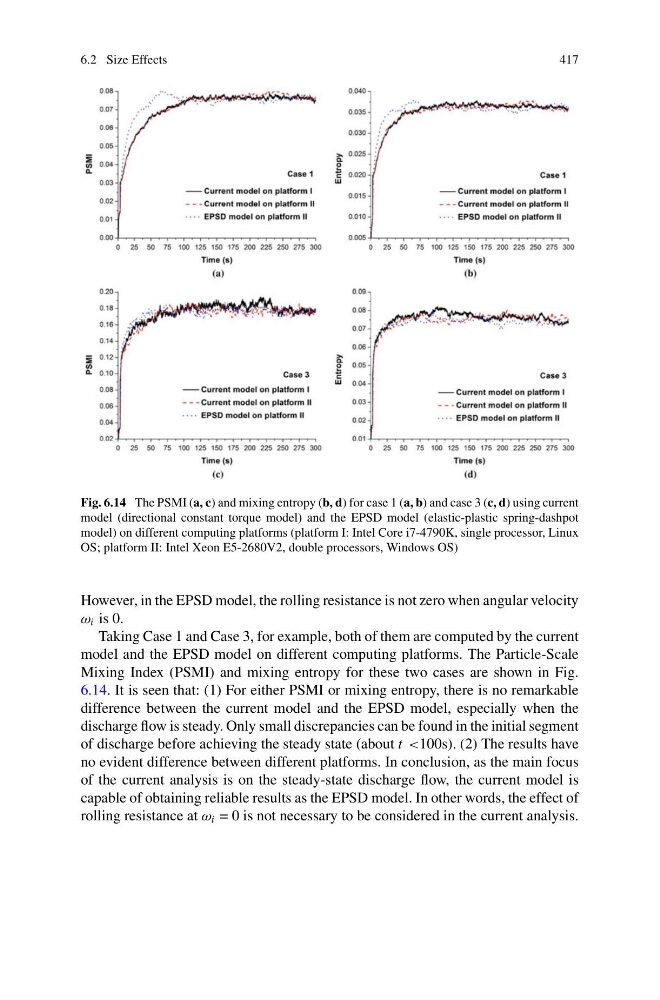
Fig. 6.14 The PSMI (a, c) and mixing entropy (b, d) for case 1 (a, b) and case 3 (c, d) using current
model (directional constant torque model) and the EPSD model (elastic-plastic spring-dashpot
model) on different computing platforms (platform I: Intel Core i7-4790K, single processor, Linux
OS; platform II: Intel Xeon E5-2680V2, double processors, Windows OS)
However, in the EPSD model, the rolling resistance is not zero when angular velocity
ω i is 0.
Taking Case 1 and Case 3, for example, both of them are computed by the current
model and the EPSD model on different computing platforms. The Particle-Scale
Mixing Index (PSMI) and mixing entropy for these two cases are shown in Fig.
6.14. It is seen that: (1) For either PSMI or mixing entropy, there is no remarkable
difference between the current model and the EPSD model, especially when the
discharge flow is steady. Only small discrepancies can be found in the initial segment
of discharge before achieving the steady state (about t <100s). (2) The results have
no evident difference between different platforms. In conclusion, as the main focus
of the current analysis is on the steady-state discharge flow, the current model is
capable of obtaining reliable results as the EPSD model. In other words, the effect of
rolling resistance at ω i = 0 is not necessary to be considered in the current analysis.
417
Fig. 6.14 The PSMI (a, c) and mixing entropy (b, d) for case 1 (a, b) and case 3 (c, d) using current
model (directional constant torque model) and the EPSD model (elastic-plastic spring-dashpot
model) on different computing platforms (platform I: Intel Core i7-4790K, single processor, Linux
OS; platform II: Intel Xeon E5-2680V2, double processors, Windows OS)
However, in the EPSD model, the rolling resistance is not zero when angular velocity
ω i is 0.
Taking Case 1 and Case 3, for example, both of them are computed by the current
model and the EPSD model on different computing platforms. The Particle-Scale
Mixing Index (PSMI) and mixing entropy for these two cases are shown in Fig.
6.14. It is seen that: (1) For either PSMI or mixing entropy, there is no remarkable
difference between the current model and the EPSD model, especially when the
discharge flow is steady. Only small discrepancies can be found in the initial segment
of discharge before achieving the steady state (about t <100s). (2) The results have
no evident difference between different platforms. In conclusion, as the main focus
of the current analysis is on the steady-state discharge flow, the current model is
capable of obtaining reliable results as the EPSD model. In other words, the effect of
rolling resistance at ω i = 0 is not necessary to be considered in the current analysis.