

5.5 Further Issues
367
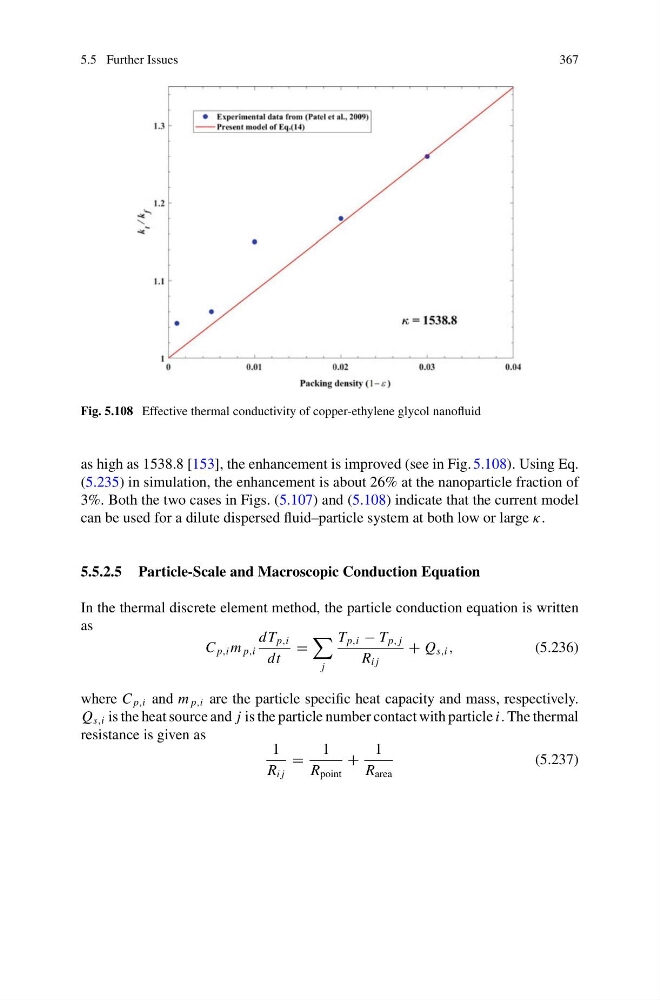
Fig. 5.108 Effective thermal conductivity of copper-ethylene glycol nanofluid
as high as 1538.8 [153], the enhancement is improved (see in Fig. 5.108). Using Eq.
(5.235) in simulation, the enhancement is about 26% at the nanoparticle fraction of
3%. Both the two cases in Figs. (5.107) and (5.108) indicate that the current model
can be used for a dilute dispersed fluid–particle system at both low or large κ.
5.5.2.5 Particle-Scale and Macroscopic Conduction Equation
In the thermal discrete element method, the particle conduction equation is written
as
C p,i m p,i
dT p,i
dt
=
j
T p,i − T p, j
R i j
+ Q s,i ,
(5.236)
where C p,i and m p,i are the particle specific heat capacity and mass, respectively.
Q s,i is the heat source and j is the particle number contact with particle i. The thermal
resistance is given as
1
R i j
=
1
R point
+
1
R area
(5.237)
367
Fig. 5.108 Effective thermal conductivity of copper-ethylene glycol nanofluid
as high as 1538.8 [153], the enhancement is improved (see in Fig. 5.108). Using Eq.
(5.235) in simulation, the enhancement is about 26% at the nanoparticle fraction of
3%. Both the two cases in Figs. (5.107) and (5.108) indicate that the current model
can be used for a dilute dispersed fluid–particle system at both low or large κ.
5.5.2.5 Particle-Scale and Macroscopic Conduction Equation
In the thermal discrete element method, the particle conduction equation is written
as
C p,i m p,i
dT p,i
dt
=
j
T p,i − T p, j
R i j
+ Q s,i ,
(5.236)
where C p,i and m p,i are the particle specific heat capacity and mass, respectively.
Q s,i is the heat source and j is the particle number contact with particle i. The thermal
resistance is given as
1
R i j
=
1
R point
+
1
R area
(5.237)