

5.3 Discrete Modeling of Pebble Radiation
289
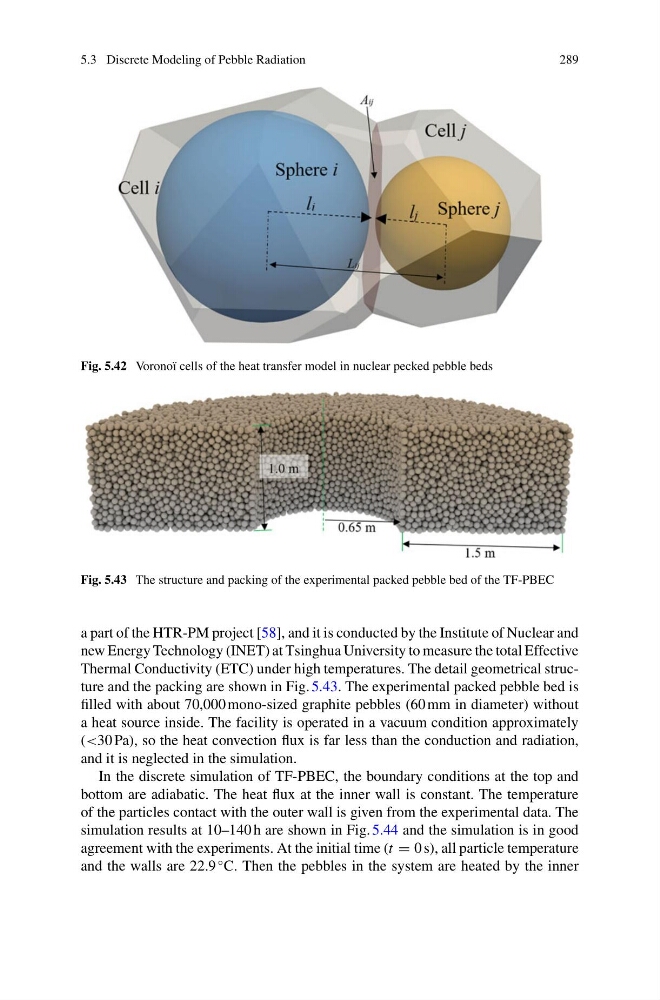
Fig. 5.42 Voronoï cells of the heat transfer model in nuclear pecked pebble beds
Fig. 5.43 The structure and packing of the experimental packed pebble bed of the TF-PBEC
a part of the HTR-PM project [58], and it is conducted by the Institute of Nuclear and
new Energy Technology (INET) at Tsinghua University to measure the total Effective
Thermal Conductivity (ETC) under high temperatures. The detail geometrical structure and the packing are shown in Fig. 5.43. The experimental packed pebble bed is
filled with about 70,000 mono-sized graphite pebbles (60 mm in diameter) without
a heat source inside. The facility is operated in a vacuum condition approximately
(<30 Pa), so the heat convection flux is far less than the conduction and radiation,
and it is neglected in the simulation.
In the discrete simulation of TF-PBEC, the boundary conditions at the top and
bottom are adiabatic. The heat flux at the inner wall is constant. The temperature
of the particles contact with the outer wall is given from the experimental data. The
simulation results at 10–140 h are shown in Fig. 5.44 and the simulation is in good
agreement with the experiments. At the initial time (t = 0 s), all particle temperature
and the walls are 22.9
◦ C. Then the pebbles in the system are heated by the inner
289
Fig. 5.42 Voronoï cells of the heat transfer model in nuclear pecked pebble beds
Fig. 5.43 The structure and packing of the experimental packed pebble bed of the TF-PBEC
a part of the HTR-PM project [58], and it is conducted by the Institute of Nuclear and
new Energy Technology (INET) at Tsinghua University to measure the total Effective
Thermal Conductivity (ETC) under high temperatures. The detail geometrical structure and the packing are shown in Fig. 5.43. The experimental packed pebble bed is
filled with about 70,000 mono-sized graphite pebbles (60 mm in diameter) without
a heat source inside. The facility is operated in a vacuum condition approximately
(<30 Pa), so the heat convection flux is far less than the conduction and radiation,
and it is neglected in the simulation.
In the discrete simulation of TF-PBEC, the boundary conditions at the top and
bottom are adiabatic. The heat flux at the inner wall is constant. The temperature
of the particles contact with the outer wall is given from the experimental data. The
simulation results at 10–140 h are shown in Fig. 5.44 and the simulation is in good
agreement with the experiments. At the initial time (t = 0 s), all particle temperature
and the walls are 22.9
◦ C. Then the pebbles in the system are heated by the inner