

4.2 Gravity-Driven Flow Regime Characterization
177
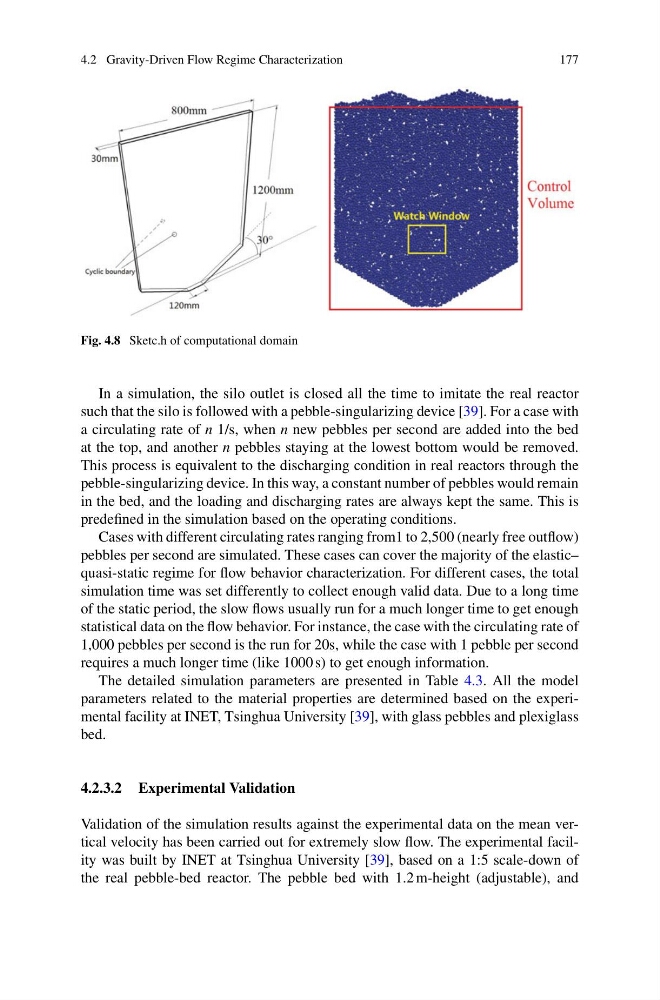
Fig. 4.8 Sketc.h of computational domain
In a simulation, the silo outlet is closed all the time to imitate the real reactor
such that the silo is followed with a pebble-singularizing device [39]. For a case with
a circulating rate of n 1/s, when n new pebbles per second are added into the bed
at the top, and another n pebbles staying at the lowest bottom would be removed.
This process is equivalent to the discharging condition in real reactors through the
pebble-singularizing device. In this way, a constant number of pebbles would remain
in the bed, and the loading and discharging rates are always kept the same. This is
predefined in the simulation based on the operating conditions.
Cases with different circulating rates ranging from1 to 2,500 (nearly free outflow)
pebbles per second are simulated. These cases can cover the majority of the elastic–
quasi-static regime for flow behavior characterization. For different cases, the total
simulation time was set differently to collect enough valid data. Due to a long time
of the static period, the slow flows usually run for a much longer time to get enough
statistical data on the flow behavior. For instance, the case with the circulating rate of
1,000 pebbles per second is the run for 20s, while the case with 1 pebble per second
requires a much longer time (like 1000 s) to get enough information.
The detailed simulation parameters are presented in Table 4.3. All the model
parameters related to the material properties are determined based on the experimental facility at INET, Tsinghua University [39], with glass pebbles and plexiglass
bed.
4.2.3.2 Experimental Validation
Validation of the simulation results against the experimental data on the mean vertical velocity has been carried out for extremely slow flow. The experimental facility was built by INET at Tsinghua University [39], based on a 1:5 scale-down of
the real pebble-bed reactor. The pebble bed with 1.2 m-height (adjustable), and
177
Fig. 4.8 Sketc.h of computational domain
In a simulation, the silo outlet is closed all the time to imitate the real reactor
such that the silo is followed with a pebble-singularizing device [39]. For a case with
a circulating rate of n 1/s, when n new pebbles per second are added into the bed
at the top, and another n pebbles staying at the lowest bottom would be removed.
This process is equivalent to the discharging condition in real reactors through the
pebble-singularizing device. In this way, a constant number of pebbles would remain
in the bed, and the loading and discharging rates are always kept the same. This is
predefined in the simulation based on the operating conditions.
Cases with different circulating rates ranging from1 to 2,500 (nearly free outflow)
pebbles per second are simulated. These cases can cover the majority of the elastic–
quasi-static regime for flow behavior characterization. For different cases, the total
simulation time was set differently to collect enough valid data. Due to a long time
of the static period, the slow flows usually run for a much longer time to get enough
statistical data on the flow behavior. For instance, the case with the circulating rate of
1,000 pebbles per second is the run for 20s, while the case with 1 pebble per second
requires a much longer time (like 1000 s) to get enough information.
The detailed simulation parameters are presented in Table 4.3. All the model
parameters related to the material properties are determined based on the experimental facility at INET, Tsinghua University [39], with glass pebbles and plexiglass
bed.
4.2.3.2 Experimental Validation
Validation of the simulation results against the experimental data on the mean vertical velocity has been carried out for extremely slow flow. The experimental facility was built by INET at Tsinghua University [39], based on a 1:5 scale-down of
the real pebble-bed reactor. The pebble bed with 1.2 m-height (adjustable), and