

110
2 Experiments in Pebble Flows
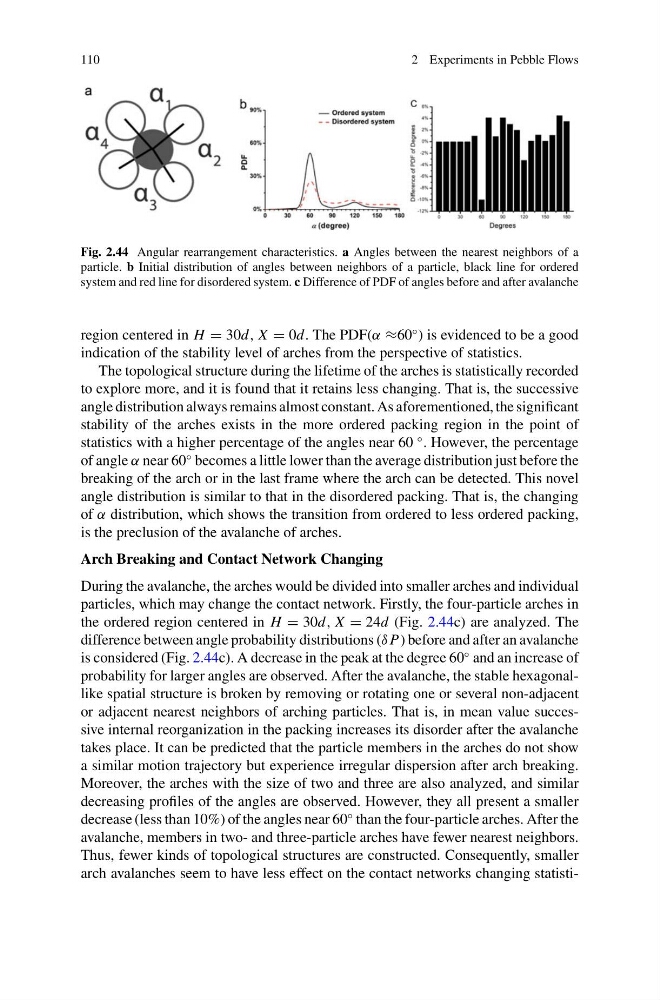
Fig. 2.44 Angular rearrangement characteristics. a Angles between the nearest neighbors of a
particle. b Initial distribution of angles between neighbors of a particle, black line for ordered
system and red line for disordered system. c Difference of PDF of angles before and after avalanche
region centered in H = 30d, X = 0d. The PDF(α ≈60
◦ ) is evidenced to be a good
indication of the stability level of arches from the perspective of statistics.
The topological structure during the lifetime of the arches is statistically recorded
to explore more, and it is found that it retains less changing. That is, the successive
angle distribution always remains almost constant. As aforementioned, the significant
stability of the arches exists in the more ordered packing region in the point of
statistics with a higher percentage of the angles near 60
◦ . However, the percentage
of angle α near 60
◦ becomes a little lower than the average distribution just before the
breaking of the arch or in the last frame where the arch can be detected. This novel
angle distribution is similar to that in the disordered packing. That is, the changing
of α distribution, which shows the transition from ordered to less ordered packing,
is the preclusion of the avalanche of arches.
Arch Breaking and Contact Network Changing
During the avalanche, the arches would be divided into smaller arches and individual
particles, which may change the contact network. Firstly, the four-particle arches in
the ordered region centered in H = 30d, X = 24d (Fig. 2.44c) are analyzed. The
difference between angle probability distributions (δ P) before and after an avalanche
is considered (Fig. 2.44c). A decrease in the peak at the degree 60
◦ and an increase of
probability for larger angles are observed. After the avalanche, the stable hexagonallike spatial structure is broken by removing or rotating one or several non-adjacent
or adjacent nearest neighbors of arching particles. That is, in mean value successive internal reorganization in the packing increases its disorder after the avalanche
takes place. It can be predicted that the particle members in the arches do not show
a similar motion trajectory but experience irregular dispersion after arch breaking.
Moreover, the arches with the size of two and three are also analyzed, and similar
decreasing profiles of the angles are observed. However, they all present a smaller
decrease (less than 10%) of the angles near 60
◦ than the four-particle arches. After the
avalanche, members in two- and three-particle arches have fewer nearest neighbors.
Thus, fewer kinds of topological structures are constructed. Consequently, smaller
arch avalanches seem to have less effect on the contact networks changing statisti-
2 Experiments in Pebble Flows
Fig. 2.44 Angular rearrangement characteristics. a Angles between the nearest neighbors of a
particle. b Initial distribution of angles between neighbors of a particle, black line for ordered
system and red line for disordered system. c Difference of PDF of angles before and after avalanche
region centered in H = 30d, X = 0d. The PDF(α ≈60
◦ ) is evidenced to be a good
indication of the stability level of arches from the perspective of statistics.
The topological structure during the lifetime of the arches is statistically recorded
to explore more, and it is found that it retains less changing. That is, the successive
angle distribution always remains almost constant. As aforementioned, the significant
stability of the arches exists in the more ordered packing region in the point of
statistics with a higher percentage of the angles near 60
◦ . However, the percentage
of angle α near 60
◦ becomes a little lower than the average distribution just before the
breaking of the arch or in the last frame where the arch can be detected. This novel
angle distribution is similar to that in the disordered packing. That is, the changing
of α distribution, which shows the transition from ordered to less ordered packing,
is the preclusion of the avalanche of arches.
Arch Breaking and Contact Network Changing
During the avalanche, the arches would be divided into smaller arches and individual
particles, which may change the contact network. Firstly, the four-particle arches in
the ordered region centered in H = 30d, X = 24d (Fig. 2.44c) are analyzed. The
difference between angle probability distributions (δ P) before and after an avalanche
is considered (Fig. 2.44c). A decrease in the peak at the degree 60
◦ and an increase of
probability for larger angles are observed. After the avalanche, the stable hexagonallike spatial structure is broken by removing or rotating one or several non-adjacent
or adjacent nearest neighbors of arching particles. That is, in mean value successive internal reorganization in the packing increases its disorder after the avalanche
takes place. It can be predicted that the particle members in the arches do not show
a similar motion trajectory but experience irregular dispersion after arch breaking.
Moreover, the arches with the size of two and three are also analyzed, and similar
decreasing profiles of the angles are observed. However, they all present a smaller
decrease (less than 10%) of the angles near 60
◦ than the four-particle arches. After the
avalanche, members in two- and three-particle arches have fewer nearest neighbors.
Thus, fewer kinds of topological structures are constructed. Consequently, smaller
arch avalanches seem to have less effect on the contact networks changing statisti-