

542
V. N. Pustovit and T. V. Shahbazyan
(a)
(b)
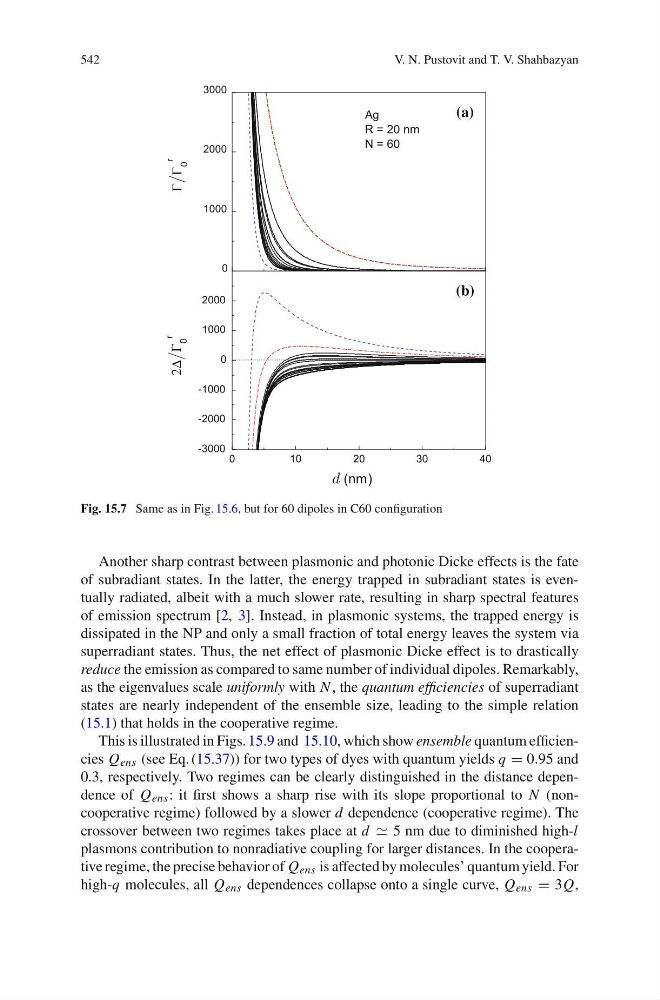
Fig. 15.7 Same as in Fig. 15.6, but for 60 dipoles in C60 configuration
Another sharp contrast between plasmonic and photonic Dicke effects is the fate
of subradiant states. In the latter, the energy trapped in subradiant states is eventually radiated, albeit with a much slower rate, resulting in sharp spectral features
of emission spectrum [2, 3]. Instead, in plasmonic systems, the trapped energy is
dissipated in the NP and only a small fraction of total energy leaves the system via
superradiant states. Thus, the net effect of plasmonic Dicke effect is to drastically
reduce the emission as compared to same number of individual dipoles. Remarkably,
as the eigenvalues scale uniformly with N , the quantum efficiencies of superradiant
states are nearly independent of the ensemble size, leading to the simple relation
(15.1) that holds in the cooperative regime.
This is illustrated in Figs. 15.9 and 15.10, which show ensemble quantum efficiencies Q ens (see Eq. (15.37)) for two types of dyes with quantum yields q = 0.95 and
0.3, respectively. Two regimes can be clearly distinguished in the distance dependence of Q ens : it first shows a sharp rise with its slope proportional to N (noncooperative regime) followed by a slower d dependence (cooperative regime). The
crossover between two regimes takes place at d 5 nm due to diminished high-l
plasmons contribution to nonradiative coupling for larger distances. In the cooperative regime, the precise behavior of Q ens is affected by molecules’ quantum yield. For
high-q molecules, all Q ens dependences collapse onto a single curve, Q ens = 3Q,
V. N. Pustovit and T. V. Shahbazyan
(a)
(b)
Fig. 15.7 Same as in Fig. 15.6, but for 60 dipoles in C60 configuration
Another sharp contrast between plasmonic and photonic Dicke effects is the fate
of subradiant states. In the latter, the energy trapped in subradiant states is eventually radiated, albeit with a much slower rate, resulting in sharp spectral features
of emission spectrum [2, 3]. Instead, in plasmonic systems, the trapped energy is
dissipated in the NP and only a small fraction of total energy leaves the system via
superradiant states. Thus, the net effect of plasmonic Dicke effect is to drastically
reduce the emission as compared to same number of individual dipoles. Remarkably,
as the eigenvalues scale uniformly with N , the quantum efficiencies of superradiant
states are nearly independent of the ensemble size, leading to the simple relation
(15.1) that holds in the cooperative regime.
This is illustrated in Figs. 15.9 and 15.10, which show ensemble quantum efficiencies Q ens (see Eq. (15.37)) for two types of dyes with quantum yields q = 0.95 and
0.3, respectively. Two regimes can be clearly distinguished in the distance dependence of Q ens : it first shows a sharp rise with its slope proportional to N (noncooperative regime) followed by a slower d dependence (cooperative regime). The
crossover between two regimes takes place at d 5 nm due to diminished high-l
plasmons contribution to nonradiative coupling for larger distances. In the cooperative regime, the precise behavior of Q ens is affected by molecules’ quantum yield. For
high-q molecules, all Q ens dependences collapse onto a single curve, Q ens = 3Q,