

14 Plasmonics and Super-Hydrophobicity
507
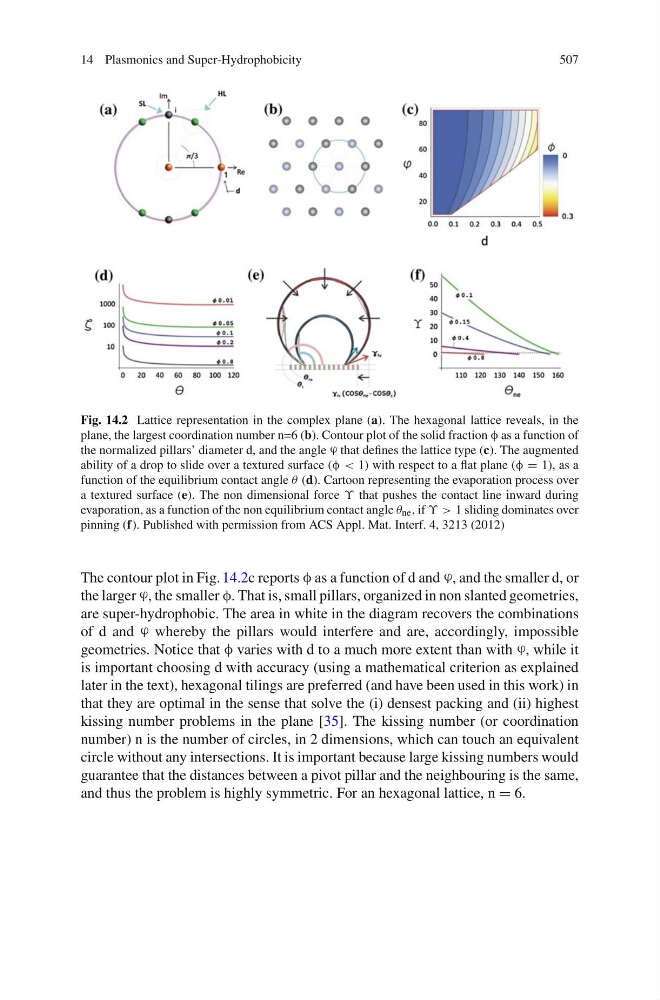
Fig. 14.2 Lattice representation in the complex plane (a). The hexagonal lattice reveals, in the
plane, the largest coordination number n=6 (b). Contour plot of the solid fraction φ as a function of
the normalized pillars’ diameter d, and the angle ϕ that defines the lattice type (c). The augmented
ability of a drop to slide over a textured surface (φ < 1) with respect to a flat plane (φ = 1), as a
function of the equilibrium contact angle ε (d). Cartoon representing the evaporation process over
a textured surface (e). The non dimensional force γ that pushes the contact line inward during
evaporation, as a function of the non equilibrium contact angle ε ne , if γ > 1 sliding dominates over
pinning (f). Published with permission from ACS Appl. Mat. Interf. 4, 3213 (2012)
The contour plot in Fig. 14.2c reports φ as a function of d and ϕ , and the smaller d, or
the larger ϕ , the smaller φ. That is, small pillars, organized in non slanted geometries,
are super-hydrophobic. The area in white in the diagram recovers the combinations
of d and ϕ whereby the pillars would interfere and are, accordingly, impossible
geometries. Notice that φ varies with d to a much more extent than with ϕ , while it
is important choosing d with accuracy (using a mathematical criterion as explained
later in the text), hexagonal tilings are preferred (and have been used in this work) in
that they are optimal in the sense that solve the (i) densest packing and (ii) highest
kissing number problems in the plane [35]. The kissing number (or coordination
number) n is the number of circles, in 2 dimensions, which can touch an equivalent
circle without any intersections. It is important because large kissing numbers would
guarantee that the distances between a pivot pillar and the neighbouring is the same,
and thus the problem is highly symmetric. For an hexagonal lattice, n = 6.
507
Fig. 14.2 Lattice representation in the complex plane (a). The hexagonal lattice reveals, in the
plane, the largest coordination number n=6 (b). Contour plot of the solid fraction φ as a function of
the normalized pillars’ diameter d, and the angle ϕ that defines the lattice type (c). The augmented
ability of a drop to slide over a textured surface (φ < 1) with respect to a flat plane (φ = 1), as a
function of the equilibrium contact angle ε (d). Cartoon representing the evaporation process over
a textured surface (e). The non dimensional force γ that pushes the contact line inward during
evaporation, as a function of the non equilibrium contact angle ε ne , if γ > 1 sliding dominates over
pinning (f). Published with permission from ACS Appl. Mat. Interf. 4, 3213 (2012)
The contour plot in Fig. 14.2c reports φ as a function of d and ϕ , and the smaller d, or
the larger ϕ , the smaller φ. That is, small pillars, organized in non slanted geometries,
are super-hydrophobic. The area in white in the diagram recovers the combinations
of d and ϕ whereby the pillars would interfere and are, accordingly, impossible
geometries. Notice that φ varies with d to a much more extent than with ϕ , while it
is important choosing d with accuracy (using a mathematical criterion as explained
later in the text), hexagonal tilings are preferred (and have been used in this work) in
that they are optimal in the sense that solve the (i) densest packing and (ii) highest
kissing number problems in the plane [35]. The kissing number (or coordination
number) n is the number of circles, in 2 dimensions, which can touch an equivalent
circle without any intersections. It is important because large kissing numbers would
guarantee that the distances between a pivot pillar and the neighbouring is the same,
and thus the problem is highly symmetric. For an hexagonal lattice, n = 6.