

6 Second-Order Nonlinear Optical Properties of Plasmonic Nanostructures
211
(a)
(b)
(c)
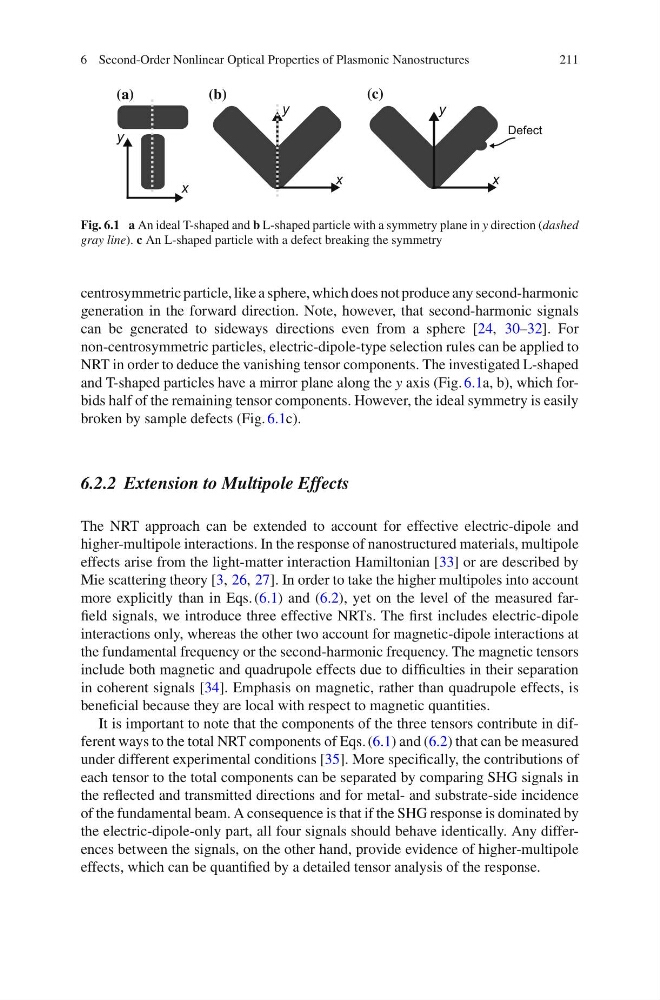
Fig. 6.1 a An ideal T-shaped and b L-shaped particle with a symmetry plane in y direction (dashed
gray line). c An L-shaped particle with a defect breaking the symmetry
centrosymmetric particle, like a sphere, which does not produce any second-harmonic
generation in the forward direction. Note, however, that second-harmonic signals
can be generated to sideways directions even from a sphere [24, 30–32]. For
non-centrosymmetric particles, electric-dipole-type selection rules can be applied to
NRT in order to deduce the vanishing tensor components. The investigated L-shaped
and T-shaped particles have a mirror plane along the y axis (Fig. 6.1a, b), which forbids half of the remaining tensor components. However, the ideal symmetry is easily
broken by sample defects (Fig. 6.1c).
6.2.2 Extension to Multipole Effects
The NRT approach can be extended to account for effective electric-dipole and
higher-multipole interactions. In the response of nanostructured materials, multipole
effects arise from the light-matter interaction Hamiltonian [33] or are described by
Mie scattering theory [3, 26, 27]. In order to take the higher multipoles into account
more explicitly than in Eqs. (6.1) and (6.2), yet on the level of the measured farfield signals, we introduce three effective NRTs. The first includes electric-dipole
interactions only, whereas the other two account for magnetic-dipole interactions at
the fundamental frequency or the second-harmonic frequency. The magnetic tensors
include both magnetic and quadrupole effects due to difficulties in their separation
in coherent signals [34]. Emphasis on magnetic, rather than quadrupole effects, is
beneficial because they are local with respect to magnetic quantities.
It is important to note that the components of the three tensors contribute in different ways to the total NRT components of Eqs. (6.1) and (6.2) that can be measured
under different experimental conditions [35]. More specifically, the contributions of
each tensor to the total components can be separated by comparing SHG signals in
the reflected and transmitted directions and for metal- and substrate-side incidence
of the fundamental beam. A consequence is that if the SHG response is dominated by
the electric-dipole-only part, all four signals should behave identically. Any differences between the signals, on the other hand, provide evidence of higher-multipole
effects, which can be quantified by a detailed tensor analysis of the response.
211
(a)
(b)
(c)
Fig. 6.1 a An ideal T-shaped and b L-shaped particle with a symmetry plane in y direction (dashed
gray line). c An L-shaped particle with a defect breaking the symmetry
centrosymmetric particle, like a sphere, which does not produce any second-harmonic
generation in the forward direction. Note, however, that second-harmonic signals
can be generated to sideways directions even from a sphere [24, 30–32]. For
non-centrosymmetric particles, electric-dipole-type selection rules can be applied to
NRT in order to deduce the vanishing tensor components. The investigated L-shaped
and T-shaped particles have a mirror plane along the y axis (Fig. 6.1a, b), which forbids half of the remaining tensor components. However, the ideal symmetry is easily
broken by sample defects (Fig. 6.1c).
6.2.2 Extension to Multipole Effects
The NRT approach can be extended to account for effective electric-dipole and
higher-multipole interactions. In the response of nanostructured materials, multipole
effects arise from the light-matter interaction Hamiltonian [33] or are described by
Mie scattering theory [3, 26, 27]. In order to take the higher multipoles into account
more explicitly than in Eqs. (6.1) and (6.2), yet on the level of the measured farfield signals, we introduce three effective NRTs. The first includes electric-dipole
interactions only, whereas the other two account for magnetic-dipole interactions at
the fundamental frequency or the second-harmonic frequency. The magnetic tensors
include both magnetic and quadrupole effects due to difficulties in their separation
in coherent signals [34]. Emphasis on magnetic, rather than quadrupole effects, is
beneficial because they are local with respect to magnetic quantities.
It is important to note that the components of the three tensors contribute in different ways to the total NRT components of Eqs. (6.1) and (6.2) that can be measured
under different experimental conditions [35]. More specifically, the contributions of
each tensor to the total components can be separated by comparing SHG signals in
the reflected and transmitted directions and for metal- and substrate-side incidence
of the fundamental beam. A consequence is that if the SHG response is dominated by
the electric-dipole-only part, all four signals should behave identically. Any differences between the signals, on the other hand, provide evidence of higher-multipole
effects, which can be quantified by a detailed tensor analysis of the response.