

134
M. B. Ross et al.
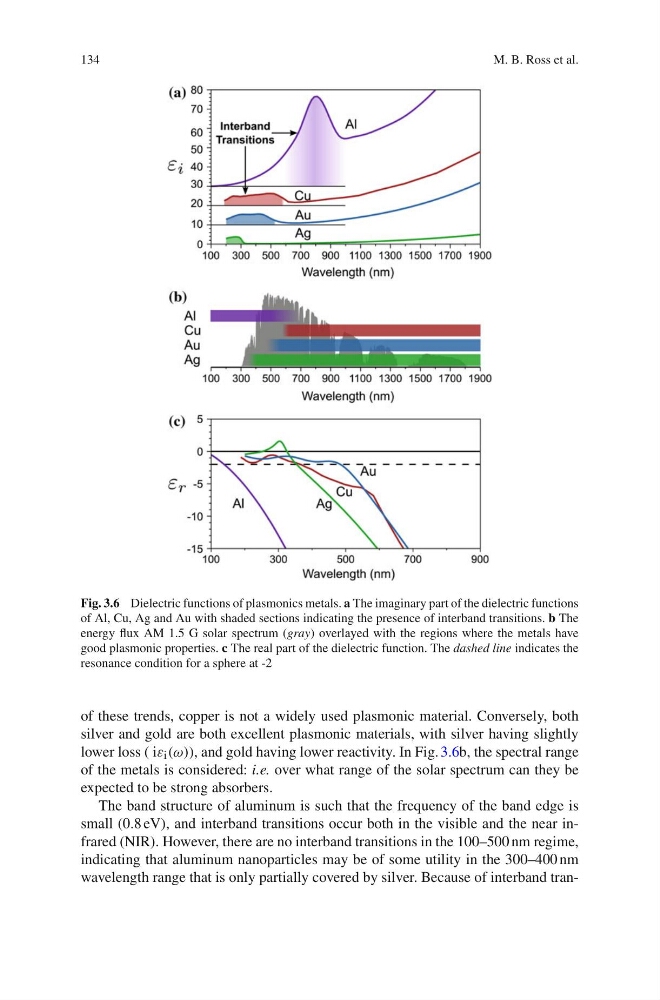
Fig. 3.6 Dielectric functions of plasmonics metals. a The imaginary part of the dielectric functions
of Al, Cu, Ag and Au with shaded sections indicating the presence of interband transitions. b The
energy flux AM 1.5 G solar spectrum (gray) overlayed with the regions where the metals have
good plasmonic properties. c The real part of the dielectric function. The dashed line indicates the
resonance condition for a sphere at -2
of these trends, copper is not a widely used plasmonic material. Conversely, both
silver and gold are both excellent plasmonic materials, with silver having slightly
lower loss ( iλ i (π)), and gold having lower reactivity. In Fig. 3.6b, the spectral range
of the metals is considered: i.e. over what range of the solar spectrum can they be
expected to be strong absorbers.
The band structure of aluminum is such that the frequency of the band edge is
small (0.8 eV), and interband transitions occur both in the visible and the near infrared (NIR). However, there are no interband transitions in the 100–500 nm regime,
indicating that aluminum nanoparticles may be of some utility in the 300–400 nm
wavelength range that is only partially covered by silver. Because of interband tran-
M. B. Ross et al.
Fig. 3.6 Dielectric functions of plasmonics metals. a The imaginary part of the dielectric functions
of Al, Cu, Ag and Au with shaded sections indicating the presence of interband transitions. b The
energy flux AM 1.5 G solar spectrum (gray) overlayed with the regions where the metals have
good plasmonic properties. c The real part of the dielectric function. The dashed line indicates the
resonance condition for a sphere at -2
of these trends, copper is not a widely used plasmonic material. Conversely, both
silver and gold are both excellent plasmonic materials, with silver having slightly
lower loss ( iλ i (π)), and gold having lower reactivity. In Fig. 3.6b, the spectral range
of the metals is considered: i.e. over what range of the solar spectrum can they be
expected to be strong absorbers.
The band structure of aluminum is such that the frequency of the band edge is
small (0.8 eV), and interband transitions occur both in the visible and the near infrared (NIR). However, there are no interband transitions in the 100–500 nm regime,
indicating that aluminum nanoparticles may be of some utility in the 300–400 nm
wavelength range that is only partially covered by silver. Because of interband tran-