

576
R. W. Kessler and W. Kessler
diffusors
light source
pushbroom imager
Imager
samples on a
conveyor belt
sample
Direct illuminaƟon
•
•
•
•
•
•
Geometry, 3d-shape
of sample
ReflecƟon of lamp
Shadows
Specular reflected
light does
not contain any
chemical informaƟon
Indirect illuminaƟon
2d-shape of sample
No specular
reflecƟons
No shadows
Only the diffusive
reflected light contains
chemical informaƟon
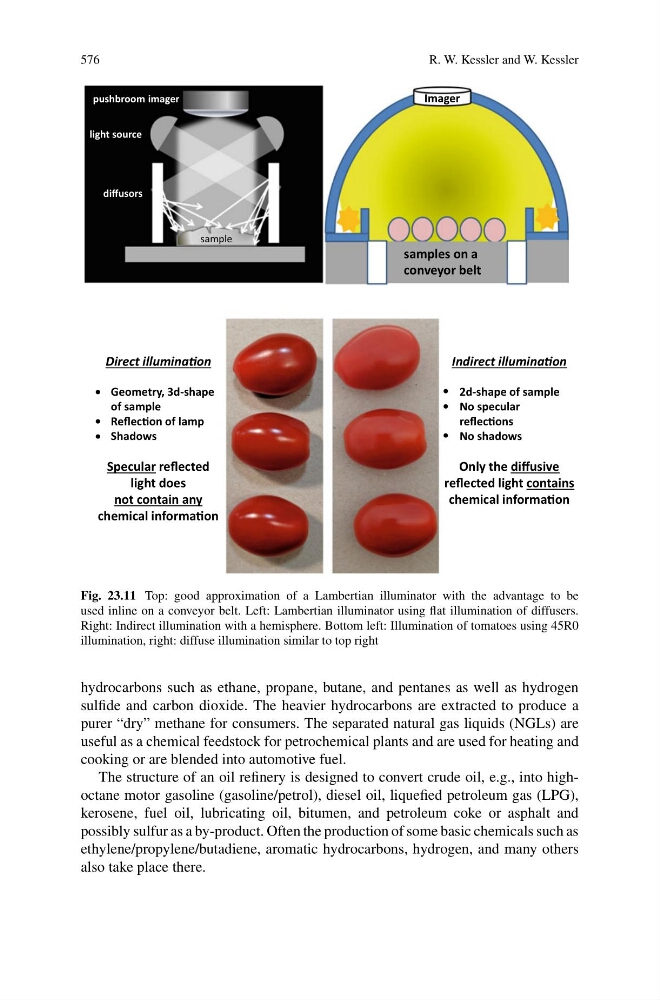
Fig. 23.11 Top: good approximation of a Lambertian illuminator with the advantage to be
used inline on a conveyor belt. Left: Lambertian illuminator using flat illumination of diffusers.
Right: Indirect illumination with a hemisphere. Bottom left: Illumination of tomatoes using 45R0
illumination, right: diffuse illumination similar to top right
hydrocarbons such as ethane, propane, butane, and pentanes as well as hydrogen
sulfide and carbon dioxide. The heavier hydrocarbons are extracted to produce a
purer “dry” methane for consumers. The separated natural gas liquids (NGLs) are
useful as a chemical feedstock for petrochemical plants and are used for heating and
cooking or are blended into automotive fuel.
The structure of an oil refinery is designed to convert crude oil, e.g., into highoctane motor gasoline (gasoline/petrol), diesel oil, liquefied petroleum gas (LPG),
kerosene, fuel oil, lubricating oil, bitumen, and petroleum coke or asphalt and
possibly sulfur as a by-product. Often the production of some basic chemicals such as
ethylene/propylene/butadiene, aromatic hydrocarbons, hydrogen, and many others
also take place there.
R. W. Kessler and W. Kessler
diffusors
light source
pushbroom imager
Imager
samples on a
conveyor belt
sample
Direct illuminaƟon
•
•
•
•
•
•
Geometry, 3d-shape
of sample
ReflecƟon of lamp
Shadows
Specular reflected
light does
not contain any
chemical informaƟon
Indirect illuminaƟon
2d-shape of sample
No specular
reflecƟons
No shadows
Only the diffusive
reflected light contains
chemical informaƟon
Fig. 23.11 Top: good approximation of a Lambertian illuminator with the advantage to be
used inline on a conveyor belt. Left: Lambertian illuminator using flat illumination of diffusers.
Right: Indirect illumination with a hemisphere. Bottom left: Illumination of tomatoes using 45R0
illumination, right: diffuse illumination similar to top right
hydrocarbons such as ethane, propane, butane, and pentanes as well as hydrogen
sulfide and carbon dioxide. The heavier hydrocarbons are extracted to produce a
purer “dry” methane for consumers. The separated natural gas liquids (NGLs) are
useful as a chemical feedstock for petrochemical plants and are used for heating and
cooking or are blended into automotive fuel.
The structure of an oil refinery is designed to convert crude oil, e.g., into highoctane motor gasoline (gasoline/petrol), diesel oil, liquefied petroleum gas (LPG),
kerosene, fuel oil, lubricating oil, bitumen, and petroleum coke or asphalt and
possibly sulfur as a by-product. Often the production of some basic chemicals such as
ethylene/propylene/butadiene, aromatic hydrocarbons, hydrogen, and many others
also take place there.