

23 Inline and Online Process Analytical Technology with an Outlook …
561
The most important aspects with regard to industrial production are summarized
in [1, 21]:
• Personalization: Integration of short-term customer requirements and change
management requirements through digital engineering.
• Flexibilization: reduces lead time and time to market, e.g., through 3D printing
and predictive analysis.
• Decentralization: enables smaller lot sizes down to a lot size of 1.
Powerful algorithms will make it possible to simulate the production route and to
control and optimize the intermediate and final products in real time at all stages of
the manufacturing process. The new PAT sensors are thus a basic technology for the
following processes [1, 4]:
• Rationalization of processes that are not already automated.
• Pro-active process and quality management including predictive maintenance.
• Integration of quality assurance into production while increasing system availability and system reliability.
• Improved product safety and increased production efficiency.
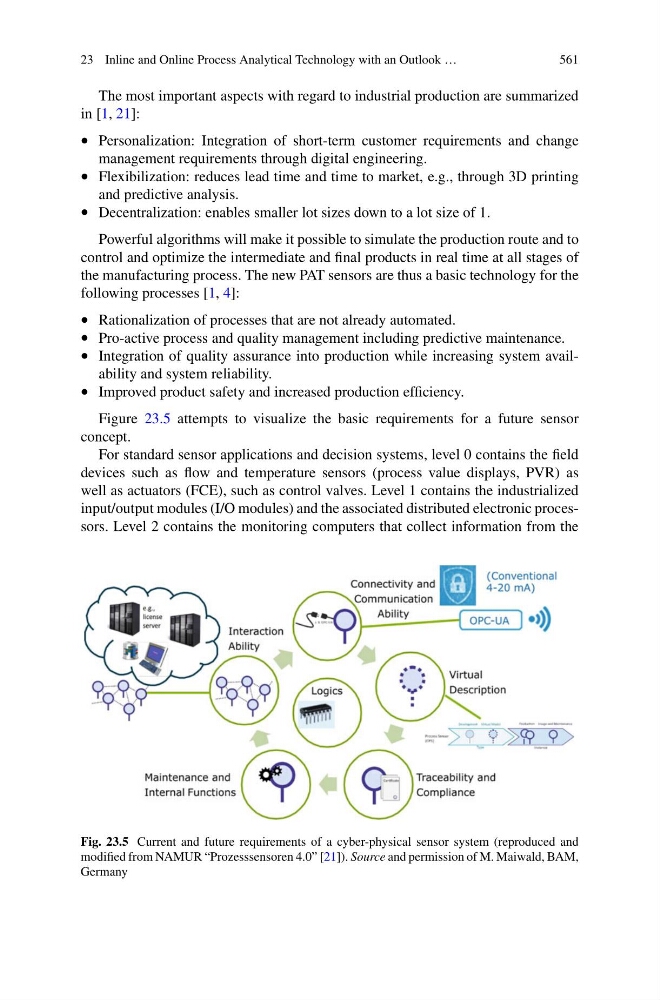
Figure 23.5 attempts to visualize the basic requirements for a future sensor
concept.
For standard sensor applications and decision systems, level 0 contains the field
devices such as flow and temperature sensors (process value displays, PVR) as
well as actuators (FCE), such as control valves. Level 1 contains the industrialized
input/output modules (I/O modules) and the associated distributed electronic processors. Level 2 contains the monitoring computers that collect information from the
Fig. 23.5 Current and future requirements of a cyber-physical sensor system (reproduced and
modified from NAMUR “Prozesssensoren 4.0” [21]). Source and permission of M. Maiwald, BAM,
Germany
561
The most important aspects with regard to industrial production are summarized
in [1, 21]:
• Personalization: Integration of short-term customer requirements and change
management requirements through digital engineering.
• Flexibilization: reduces lead time and time to market, e.g., through 3D printing
and predictive analysis.
• Decentralization: enables smaller lot sizes down to a lot size of 1.
Powerful algorithms will make it possible to simulate the production route and to
control and optimize the intermediate and final products in real time at all stages of
the manufacturing process. The new PAT sensors are thus a basic technology for the
following processes [1, 4]:
• Rationalization of processes that are not already automated.
• Pro-active process and quality management including predictive maintenance.
• Integration of quality assurance into production while increasing system availability and system reliability.
• Improved product safety and increased production efficiency.
Figure 23.5 attempts to visualize the basic requirements for a future sensor
concept.
For standard sensor applications and decision systems, level 0 contains the field
devices such as flow and temperature sensors (process value displays, PVR) as
well as actuators (FCE), such as control valves. Level 1 contains the industrialized
input/output modules (I/O modules) and the associated distributed electronic processors. Level 2 contains the monitoring computers that collect information from the
Fig. 23.5 Current and future requirements of a cyber-physical sensor system (reproduced and
modified from NAMUR “Prozesssensoren 4.0” [21]). Source and permission of M. Maiwald, BAM,
Germany