

23 Inline and Online Process Analytical Technology with an Outlook …
555
Smart
Processing
Fixed
Process
Consistent
Output
Variable
Output
MechanisƟc Models
Causality
CorrelaƟve and DescripƟve Models
Personalized
Product
Flexible
Products
Industrie4.0
Concept
PAT/QbD
Concept
State of
the Art
Smart +
Flexible
Processing
ArƟficial
Intelligence
&
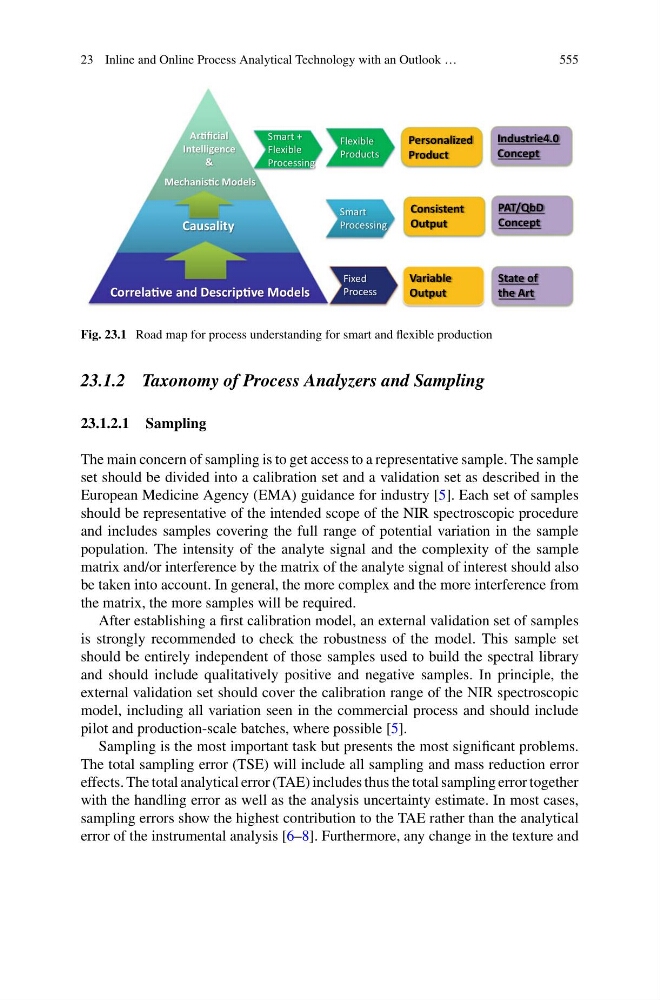
Fig. 23.1 Road map for process understanding for smart and flexible production
23.1.2 Taxonomy of Process Analyzers and Sampling
23.1.2.1 Sampling
The main concern of sampling is to get access to a representative sample. The sample
set should be divided into a calibration set and a validation set as described in the
European Medicine Agency (EMA) guidance for industry [5]. Each set of samples
should be representative of the intended scope of the NIR spectroscopic procedure
and includes samples covering the full range of potential variation in the sample
population. The intensity of the analyte signal and the complexity of the sample
matrix and/or interference by the matrix of the analyte signal of interest should also
be taken into account. In general, the more complex and the more interference from
the matrix, the more samples will be required.
After establishing a first calibration model, an external validation set of samples
is strongly recommended to check the robustness of the model. This sample set
should be entirely independent of those samples used to build the spectral library
and should include qualitatively positive and negative samples. In principle, the
external validation set should cover the calibration range of the NIR spectroscopic
model, including all variation seen in the commercial process and should include
pilot and production-scale batches, where possible [5].
Sampling is the most important task but presents the most significant problems.
The total sampling error (TSE) will include all sampling and mass reduction error
effects. The total analytical error (TAE) includes thus the total sampling error together
with the handling error as well as the analysis uncertainty estimate. In most cases,
sampling errors show the highest contribution to the TAE rather than the analytical
error of the instrumental analysis [6–8]. Furthermore, any change in the texture and
555
Smart
Processing
Fixed
Process
Consistent
Output
Variable
Output
MechanisƟc Models
Causality
CorrelaƟve and DescripƟve Models
Personalized
Product
Flexible
Products
Industrie4.0
Concept
PAT/QbD
Concept
State of
the Art
Smart +
Flexible
Processing
ArƟficial
Intelligence
&
Fig. 23.1 Road map for process understanding for smart and flexible production
23.1.2 Taxonomy of Process Analyzers and Sampling
23.1.2.1 Sampling
The main concern of sampling is to get access to a representative sample. The sample
set should be divided into a calibration set and a validation set as described in the
European Medicine Agency (EMA) guidance for industry [5]. Each set of samples
should be representative of the intended scope of the NIR spectroscopic procedure
and includes samples covering the full range of potential variation in the sample
population. The intensity of the analyte signal and the complexity of the sample
matrix and/or interference by the matrix of the analyte signal of interest should also
be taken into account. In general, the more complex and the more interference from
the matrix, the more samples will be required.
After establishing a first calibration model, an external validation set of samples
is strongly recommended to check the robustness of the model. This sample set
should be entirely independent of those samples used to build the spectral library
and should include qualitatively positive and negative samples. In principle, the
external validation set should cover the calibration range of the NIR spectroscopic
model, including all variation seen in the commercial process and should include
pilot and production-scale batches, where possible [5].
Sampling is the most important task but presents the most significant problems.
The total sampling error (TSE) will include all sampling and mass reduction error
effects. The total analytical error (TAE) includes thus the total sampling error together
with the handling error as well as the analysis uncertainty estimate. In most cases,
sampling errors show the highest contribution to the TAE rather than the analytical
error of the instrumental analysis [6–8]. Furthermore, any change in the texture and