

3 Theoretical Models of Light Scattering and Absorption
45
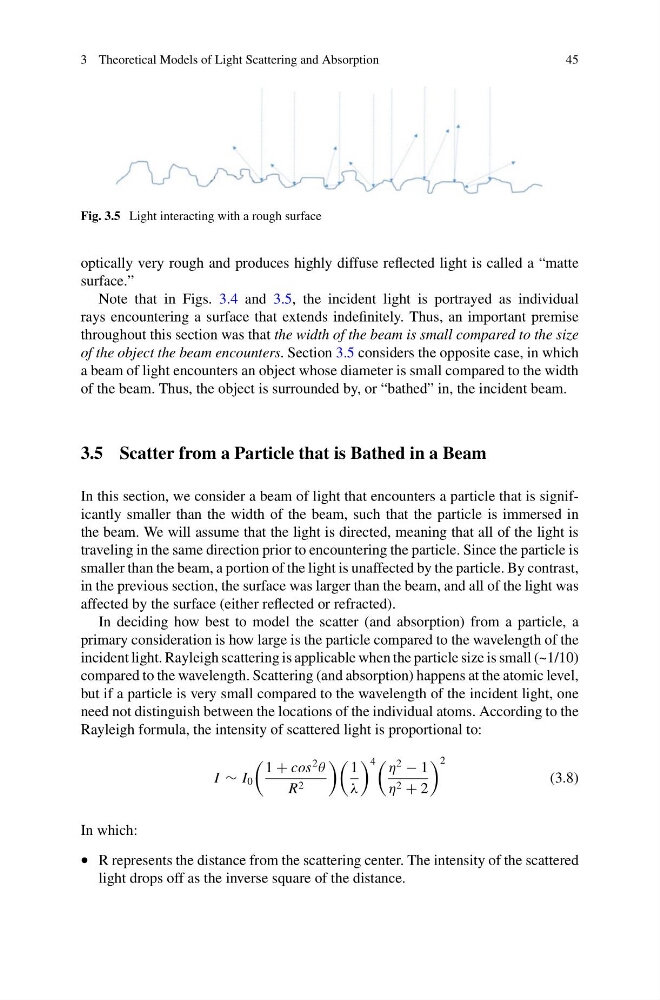
Fig. 3.5 Light interacting with a rough surface
optically very rough and produces highly diffuse reflected light is called a “matte
surface.”
Note that in Figs. 3.4 and 3.5, the incident light is portrayed as individual
rays encountering a surface that extends indefinitely. Thus, an important premise
throughout this section was that the width of the beam is small compared to the size
of the object the beam encounters. Section 3.5 considers the opposite case, in which
a beam of light encounters an object whose diameter is small compared to the width
of the beam. Thus, the object is surrounded by, or “bathed” in, the incident beam.
3.5 Scatter from a Particle that is Bathed in a Beam
In this section, we consider a beam of light that encounters a particle that is significantly smaller than the width of the beam, such that the particle is immersed in
the beam. We will assume that the light is directed, meaning that all of the light is
traveling in the same direction prior to encountering the particle. Since the particle is
smaller than the beam, a portion of the light is unaffected by the particle. By contrast,
in the previous section, the surface was larger than the beam, and all of the light was
affected by the surface (either reflected or refracted).
In deciding how best to model the scatter (and absorption) from a particle, a
primary consideration is how large is the particle compared to the wavelength of the
incident light. Rayleigh scattering is applicable when the particle size is small (~1/10)
compared to the wavelength. Scattering (and absorption) happens at the atomic level,
but if a particle is very small compared to the wavelength of the incident light, one
need not distinguish between the locations of the individual atoms. According to the
Rayleigh formula, the intensity of scattered light is proportional to:
I ∼ I 0
1 + cos
2
θ
R 2
1
λ
4 η
2
− 1
η 2 + 2
2
(3.8)
In which:
• R represents the distance from the scattering center. The intensity of the scattered
light drops off as the inverse square of the distance.
45
Fig. 3.5 Light interacting with a rough surface
optically very rough and produces highly diffuse reflected light is called a “matte
surface.”
Note that in Figs. 3.4 and 3.5, the incident light is portrayed as individual
rays encountering a surface that extends indefinitely. Thus, an important premise
throughout this section was that the width of the beam is small compared to the size
of the object the beam encounters. Section 3.5 considers the opposite case, in which
a beam of light encounters an object whose diameter is small compared to the width
of the beam. Thus, the object is surrounded by, or “bathed” in, the incident beam.
3.5 Scatter from a Particle that is Bathed in a Beam
In this section, we consider a beam of light that encounters a particle that is significantly smaller than the width of the beam, such that the particle is immersed in
the beam. We will assume that the light is directed, meaning that all of the light is
traveling in the same direction prior to encountering the particle. Since the particle is
smaller than the beam, a portion of the light is unaffected by the particle. By contrast,
in the previous section, the surface was larger than the beam, and all of the light was
affected by the surface (either reflected or refracted).
In deciding how best to model the scatter (and absorption) from a particle, a
primary consideration is how large is the particle compared to the wavelength of the
incident light. Rayleigh scattering is applicable when the particle size is small (~1/10)
compared to the wavelength. Scattering (and absorption) happens at the atomic level,
but if a particle is very small compared to the wavelength of the incident light, one
need not distinguish between the locations of the individual atoms. According to the
Rayleigh formula, the intensity of scattered light is proportional to:
I ∼ I 0
1 + cos
2
θ
R 2
1
λ
4 η
2
− 1
η 2 + 2
2
(3.8)
In which:
• R represents the distance from the scattering center. The intensity of the scattered
light drops off as the inverse square of the distance.