

20 Medical Applications of NIR Spectroscopy
449
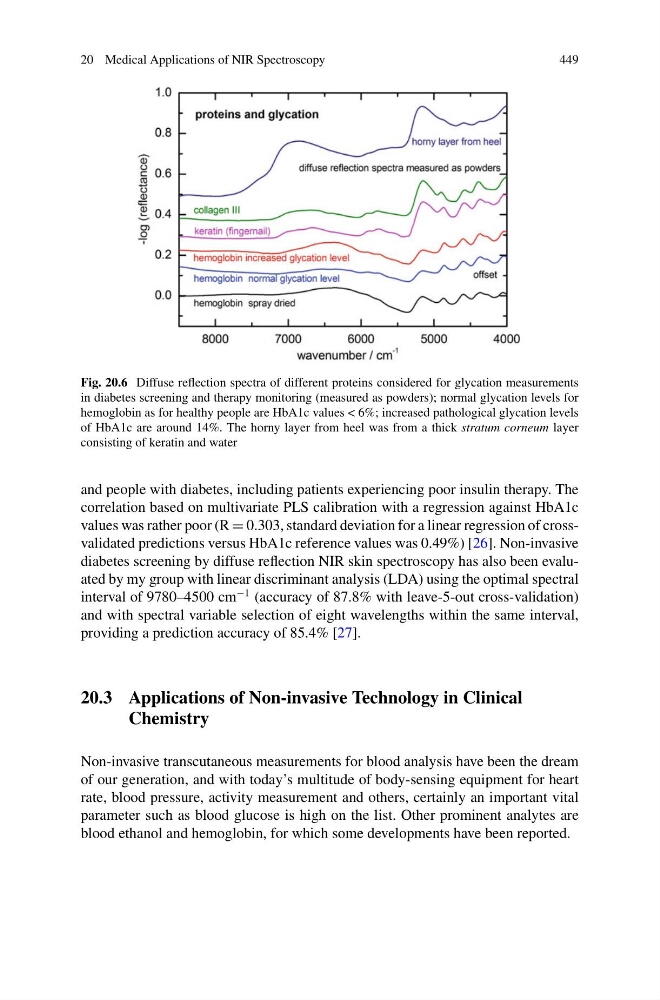
Fig. 20.6 Diffuse reflection spectra of different proteins considered for glycation measurements
in diabetes screening and therapy monitoring (measured as powders); normal glycation levels for
hemoglobin as for healthy people are HbA1c values < 6%; increased pathological glycation levels
of HbA1c are around 14%. The horny layer from heel was from a thick stratum corneum layer
consisting of keratin and water
and people with diabetes, including patients experiencing poor insulin therapy. The
correlation based on multivariate PLS calibration with a regression against HbA1c
values was rather poor (R = 0.303, standard deviation for a linear regression of crossvalidated predictions versus HbA1c reference values was 0.49%) [26]. Non-invasive
diabetes screening by diffuse reflection NIR skin spectroscopy has also been evaluated by my group with linear discriminant analysis (LDA) using the optimal spectral
interval of 9780–4500 cm
−1 (accuracy of 87.8% with leave-5-out cross-validation)
and with spectral variable selection of eight wavelengths within the same interval,
providing a prediction accuracy of 85.4% [27].
20.3 Applications of Non-invasive Technology in Clinical
Chemistry
Non-invasive transcutaneous measurements for blood analysis have been the dream
of our generation, and with today’s multitude of body-sensing equipment for heart
rate, blood pressure, activity measurement and others, certainly an important vital
parameter such as blood glucose is high on the list. Other prominent analytes are
blood ethanol and hemoglobin, for which some developments have been reported.
449
Fig. 20.6 Diffuse reflection spectra of different proteins considered for glycation measurements
in diabetes screening and therapy monitoring (measured as powders); normal glycation levels for
hemoglobin as for healthy people are HbA1c values < 6%; increased pathological glycation levels
of HbA1c are around 14%. The horny layer from heel was from a thick stratum corneum layer
consisting of keratin and water
and people with diabetes, including patients experiencing poor insulin therapy. The
correlation based on multivariate PLS calibration with a regression against HbA1c
values was rather poor (R = 0.303, standard deviation for a linear regression of crossvalidated predictions versus HbA1c reference values was 0.49%) [26]. Non-invasive
diabetes screening by diffuse reflection NIR skin spectroscopy has also been evaluated by my group with linear discriminant analysis (LDA) using the optimal spectral
interval of 9780–4500 cm
−1 (accuracy of 87.8% with leave-5-out cross-validation)
and with spectral variable selection of eight wavelengths within the same interval,
providing a prediction accuracy of 85.4% [27].
20.3 Applications of Non-invasive Technology in Clinical
Chemistry
Non-invasive transcutaneous measurements for blood analysis have been the dream
of our generation, and with today’s multitude of body-sensing equipment for heart
rate, blood pressure, activity measurement and others, certainly an important vital
parameter such as blood glucose is high on the list. Other prominent analytes are
blood ethanol and hemoglobin, for which some developments have been reported.