

17 Information and Communication Technology in Agriculture
383
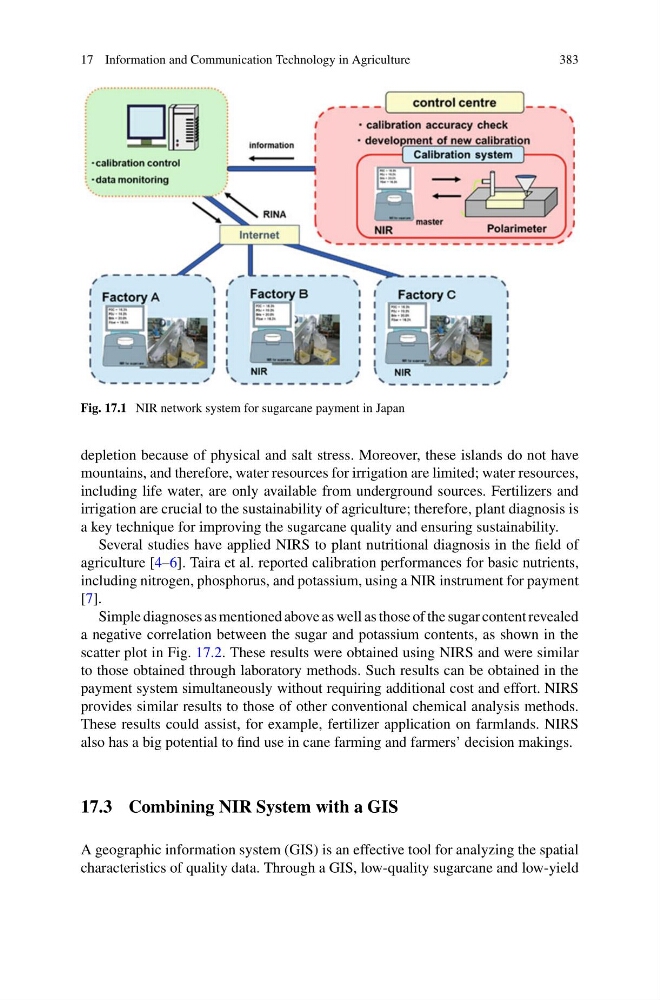
Fig. 17.1 NIR network system for sugarcane payment in Japan
depletion because of physical and salt stress. Moreover, these islands do not have
mountains, and therefore, water resources for irrigation are limited; water resources,
including life water, are only available from underground sources. Fertilizers and
irrigation are crucial to the sustainability of agriculture; therefore, plant diagnosis is
a key technique for improving the sugarcane quality and ensuring sustainability.
Several studies have applied NIRS to plant nutritional diagnosis in the field of
agriculture [4–6]. Taira et al. reported calibration performances for basic nutrients,
including nitrogen, phosphorus, and potassium, using a NIR instrument for payment
[7].
Simple diagnoses as mentioned above as well as those of the sugar content revealed
a negative correlation between the sugar and potassium contents, as shown in the
scatter plot in Fig. 17.2. These results were obtained using NIRS and were similar
to those obtained through laboratory methods. Such results can be obtained in the
payment system simultaneously without requiring additional cost and effort. NIRS
provides similar results to those of other conventional chemical analysis methods.
These results could assist, for example, fertilizer application on farmlands. NIRS
also has a big potential to find use in cane farming and farmers’ decision makings.
17.3 Combining NIR System with a GIS
A geographic information system (GIS) is an effective tool for analyzing the spatial
characteristics of quality data. Through a GIS, low-quality sugarcane and low-yield
383
Fig. 17.1 NIR network system for sugarcane payment in Japan
depletion because of physical and salt stress. Moreover, these islands do not have
mountains, and therefore, water resources for irrigation are limited; water resources,
including life water, are only available from underground sources. Fertilizers and
irrigation are crucial to the sustainability of agriculture; therefore, plant diagnosis is
a key technique for improving the sugarcane quality and ensuring sustainability.
Several studies have applied NIRS to plant nutritional diagnosis in the field of
agriculture [4–6]. Taira et al. reported calibration performances for basic nutrients,
including nitrogen, phosphorus, and potassium, using a NIR instrument for payment
[7].
Simple diagnoses as mentioned above as well as those of the sugar content revealed
a negative correlation between the sugar and potassium contents, as shown in the
scatter plot in Fig. 17.2. These results were obtained using NIRS and were similar
to those obtained through laboratory methods. Such results can be obtained in the
payment system simultaneously without requiring additional cost and effort. NIRS
provides similar results to those of other conventional chemical analysis methods.
These results could assist, for example, fertilizer application on farmlands. NIRS
also has a big potential to find use in cane farming and farmers’ decision makings.
17.3 Combining NIR System with a GIS
A geographic information system (GIS) is an effective tool for analyzing the spatial
characteristics of quality data. Through a GIS, low-quality sugarcane and low-yield