

16 Wooden Material and Environmental Sciences
369
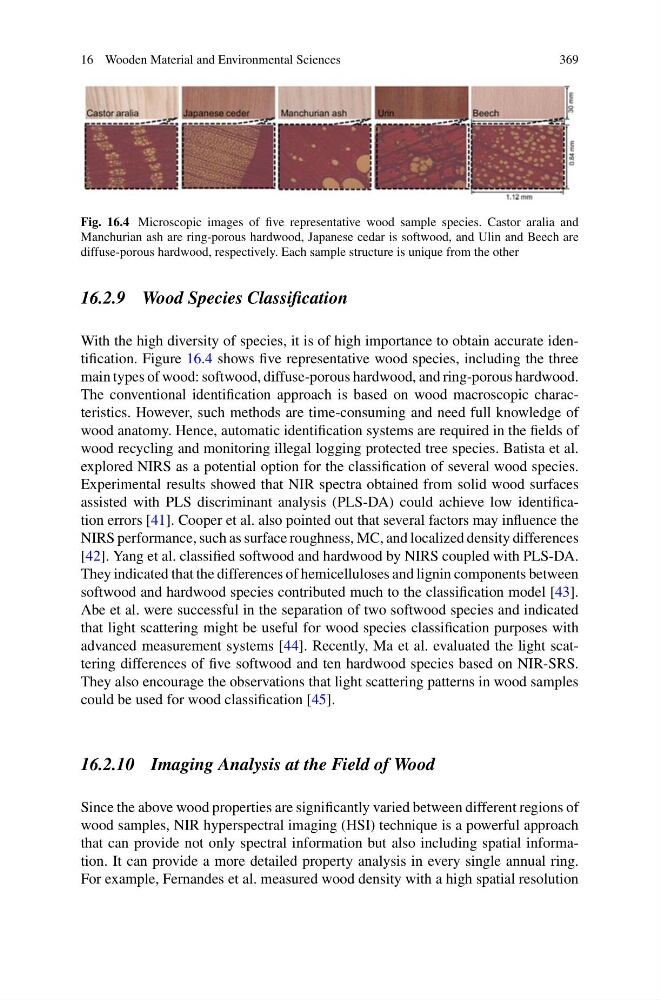
Fig. 16.4 Microscopic images of five representative wood sample species. Castor aralia and
Manchurian ash are ring-porous hardwood, Japanese cedar is softwood, and Ulin and Beech are
diffuse-porous hardwood, respectively. Each sample structure is unique from the other
16.2.9 Wood Species Classification
With the high diversity of species, it is of high importance to obtain accurate identification. Figure 16.4 shows five representative wood species, including the three
main types of wood: softwood, diffuse-porous hardwood, and ring-porous hardwood.
The conventional identification approach is based on wood macroscopic characteristics. However, such methods are time-consuming and need full knowledge of
wood anatomy. Hence, automatic identification systems are required in the fields of
wood recycling and monitoring illegal logging protected tree species. Batista et al.
explored NIRS as a potential option for the classification of several wood species.
Experimental results showed that NIR spectra obtained from solid wood surfaces
assisted with PLS discriminant analysis (PLS-DA) could achieve low identification errors [41]. Cooper et al. also pointed out that several factors may influence the
NIRS performance, such as surface roughness, MC, and localized density differences
[42]. Yang et al. classified softwood and hardwood by NIRS coupled with PLS-DA.
They indicated that the differences of hemicelluloses and lignin components between
softwood and hardwood species contributed much to the classification model [43].
Abe et al. were successful in the separation of two softwood species and indicated
that light scattering might be useful for wood species classification purposes with
advanced measurement systems [44]. Recently, Ma et al. evaluated the light scattering differences of five softwood and ten hardwood species based on NIR-SRS.
They also encourage the observations that light scattering patterns in wood samples
could be used for wood classification [45].
16.2.10 Imaging Analysis at the Field of Wood
Since the above wood properties are significantly varied between different regions of
wood samples, NIR hyperspectral imaging (HSI) technique is a powerful approach
that can provide not only spectral information but also including spatial information. It can provide a more detailed property analysis in every single annual ring.
For example, Fernandes et al. measured wood density with a high spatial resolution
369
Fig. 16.4 Microscopic images of five representative wood sample species. Castor aralia and
Manchurian ash are ring-porous hardwood, Japanese cedar is softwood, and Ulin and Beech are
diffuse-porous hardwood, respectively. Each sample structure is unique from the other
16.2.9 Wood Species Classification
With the high diversity of species, it is of high importance to obtain accurate identification. Figure 16.4 shows five representative wood species, including the three
main types of wood: softwood, diffuse-porous hardwood, and ring-porous hardwood.
The conventional identification approach is based on wood macroscopic characteristics. However, such methods are time-consuming and need full knowledge of
wood anatomy. Hence, automatic identification systems are required in the fields of
wood recycling and monitoring illegal logging protected tree species. Batista et al.
explored NIRS as a potential option for the classification of several wood species.
Experimental results showed that NIR spectra obtained from solid wood surfaces
assisted with PLS discriminant analysis (PLS-DA) could achieve low identification errors [41]. Cooper et al. also pointed out that several factors may influence the
NIRS performance, such as surface roughness, MC, and localized density differences
[42]. Yang et al. classified softwood and hardwood by NIRS coupled with PLS-DA.
They indicated that the differences of hemicelluloses and lignin components between
softwood and hardwood species contributed much to the classification model [43].
Abe et al. were successful in the separation of two softwood species and indicated
that light scattering might be useful for wood species classification purposes with
advanced measurement systems [44]. Recently, Ma et al. evaluated the light scattering differences of five softwood and ten hardwood species based on NIR-SRS.
They also encourage the observations that light scattering patterns in wood samples
could be used for wood classification [45].
16.2.10 Imaging Analysis at the Field of Wood
Since the above wood properties are significantly varied between different regions of
wood samples, NIR hyperspectral imaging (HSI) technique is a powerful approach
that can provide not only spectral information but also including spatial information. It can provide a more detailed property analysis in every single annual ring.
For example, Fernandes et al. measured wood density with a high spatial resolution