

336
B. Vincent and P. Dardenne
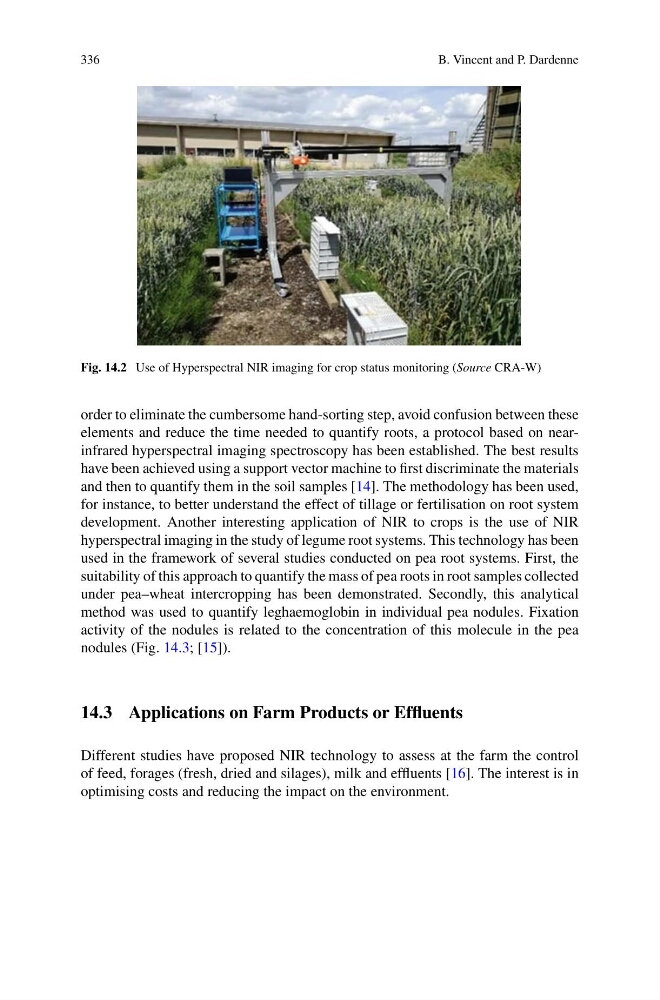
Fig. 14.2 Use of Hyperspectral NIR imaging for crop status monitoring (Source CRA-W)
order to eliminate the cumbersome hand-sorting step, avoid confusion between these
elements and reduce the time needed to quantify roots, a protocol based on nearinfrared hyperspectral imaging spectroscopy has been established. The best results
have been achieved using a support vector machine to first discriminate the materials
and then to quantify them in the soil samples [14]. The methodology has been used,
for instance, to better understand the effect of tillage or fertilisation on root system
development. Another interesting application of NIR to crops is the use of NIR
hyperspectral imaging in the study of legume root systems. This technology has been
used in the framework of several studies conducted on pea root systems. First, the
suitability of this approach to quantify the mass of pea roots in root samples collected
under pea–wheat intercropping has been demonstrated. Secondly, this analytical
method was used to quantify leghaemoglobin in individual pea nodules. Fixation
activity of the nodules is related to the concentration of this molecule in the pea
nodules (Fig. 14.3; [15]).
14.3 Applications on Farm Products or Effluents
Different studies have proposed NIR technology to assess at the farm the control
of feed, forages (fresh, dried and silages), milk and effluents [16]. The interest is in
optimising costs and reducing the impact on the environment.
B. Vincent and P. Dardenne
Fig. 14.2 Use of Hyperspectral NIR imaging for crop status monitoring (Source CRA-W)
order to eliminate the cumbersome hand-sorting step, avoid confusion between these
elements and reduce the time needed to quantify roots, a protocol based on nearinfrared hyperspectral imaging spectroscopy has been established. The best results
have been achieved using a support vector machine to first discriminate the materials
and then to quantify them in the soil samples [14]. The methodology has been used,
for instance, to better understand the effect of tillage or fertilisation on root system
development. Another interesting application of NIR to crops is the use of NIR
hyperspectral imaging in the study of legume root systems. This technology has been
used in the framework of several studies conducted on pea root systems. First, the
suitability of this approach to quantify the mass of pea roots in root samples collected
under pea–wheat intercropping has been demonstrated. Secondly, this analytical
method was used to quantify leghaemoglobin in individual pea nodules. Fixation
activity of the nodules is related to the concentration of this molecule in the pea
nodules (Fig. 14.3; [15]).
14.3 Applications on Farm Products or Effluents
Different studies have proposed NIR technology to assess at the farm the control
of feed, forages (fresh, dried and silages), milk and effluents [16]. The interest is in
optimising costs and reducing the impact on the environment.